Posted on Leave a comment

Rope Access Safety Standards Every Client Should Know

rope access safety

When it comes to working at heights, safety isn’t optional — it’s everything. If you’re hiring a rope access provider, knowing the standards they adhere to can save lives, reduce downtime, and protect your investment. But with so many companies claiming “safe practices,” how do you separate the certified experts from the amateurs?


IRATA Certification: The Gold Standard

The Industrial Rope Access Trade Association (IRATA) certification is widely recognized worldwide. It ensures that technicians are trained, assessed, and competent to carry out rope access work safely. At Evolution Access, all rope technicians are IRATA certified, which means every climb, inspection, and repair follows international protocols.

Why does it matter? Imagine a high-rise facade or an offshore structure. A small mistake could be catastrophic. Certification ensures every move is checked, monitored, and backed by industry best practices.


Safety Planning & Rescue Protocols

Safety isn’t just about ropes and harnesses. A reputable rope access company implements a detailed site-specific safety plan. This includes:

  • Pre-inspection of anchors and access points
  • Emergency rescue plans and drills
  • Continuous monitoring of weather conditions and risks

At Evolution Access, every project begins with a thorough risk assessment, and rescue protocols are tested before work begins. It’s like having a safety net before stepping on the tightrope — literally.


Equipment Standards & Maintenance

Ever wondered how reliable rope access gear really is? Certified providers use only industry-approved harnesses, ropes, and descent devices. But it doesn’t stop there — regular inspections, maintenance, and replacement schedules are critical.

Evolution Access adheres to EN and ISO standards for all equipment, and each rope, harness, and pulley is checked before every project. This ensures that your team and site stay protected, even in challenging environments like offshore platforms or industrial plants.


Why Compliance Matters for B2B Clients

For corporate clients, insurers, and project managers, rope access safety isn’t just a box to tick — it’s a legal and operational requirement. Choosing a certified provider like Evolution Access minimizes liabilities, insurance risks, and project delays. Plus, a certified approach boosts confidence for employees and stakeholders, showing you value both safety and efficiency.

  • Learn more about our Rope Access Services
  • Explore our Industrial Maintenance Solutions
  • Check out Our Training Programs

FAQs

  1. What certifications should rope access technicians have?
    Rope access technicians should be IRATA certified, which ensures they have completed formal training, passed assessments, and can operate safely in high-risk environments.
  2. How often is rope access equipment inspected?
    All ropes, harnesses, and descent devices must be inspected before every job and undergo scheduled maintenance according to EN and ISO standards to prevent equipment failure.
  3. What is included in a rope access safety plan?
    A proper safety plan includes risk assessment, rescue protocols, anchor inspections, continuous monitoring, and contingency procedures. Evolution Access ensures every site has a comprehensive plan before work starts.
Posted on Leave a comment

Why Choose Rope Access for Offshore & Onshore Projects in Oil, Marine or Renewable Sectors?

offshore and onshore rope access

When it comes to maintaining assets in the oil & gas, marine, and renewable energy sectors, challenges like extreme weather, restricted access, and hazardous environments are part of everyday operations. Traditional access methods—like scaffolding or heavy lifting platforms—often slow down work, increase risk, and drive-up costs.

This is exactly why rope access has become the preferred choice for offshore rigs, ships, refineries, ports, wind turbines, and energy facilities. And companies like Evolution Access Technologies deliver these solutions with certified IRATA professionals and industry-proven safety systems.
offshore and onshore rope access


  1. Rope Access Is Built for Hard-to-Reach Environments

Offshore platforms, floating vessels, and wind farms have countless areas where installing scaffolding is nearly impossible. Rope access teams can reach verticals, confined spaces, high elevations, underdecks, turbine blades, hulls, and structural frameworks with unmatched speed.

Because rope access relies on compact equipment and trained technicians, it avoids logistical complications like:

  • Heavy transport
  • Structure modifications
  • Shutdowns required for scaffolding
  • Long erection and dismantling hours

This makes rope access ideal for time-critical maintenance in offshore and coastal environments.


  1. It Reduces Project Downtime & Operational Costs

Offshore shutdowns can cost millions. Rope access cuts those hours dramatically by allowing technicians to be deployed quickly without disrupting ongoing operations.

Rope access eliminates:

  • Material & labour required for scaffolding
  • Crane or MEWP mobilization
  • Permit delays
  • Long setup/teardown time

For the oil, marine, and renewable sectors, this translates to faster turnaround, lower operational costs, and minimal disruption to production.


  1. Safety Standards Are Higher Than Most Traditional Methods

Contrary to outdated assumptions, rope access is statistically one of the safest access methods in the world. IRATA certification, redundant rope systems, continuous monitoring, strict rescue preparedness, and advanced training ensure extremely low incident rates.

Evolution Access follows:

  • IRATA best practices
  • International safety compliance
  • Advanced rescue protocols
  • Specialized offshore & confined space procedures

This makes rope access the right choice for hazardous and sensitive environments like FPSOs, rigs, ship hulls, turbine blades, chimneys, bridges, and jetties.


  1. Perfect for Inspection, NDT, Repairs & Preventive Maintenance

Whether it’s corrosion treatment, bolting, welding, blade repair, hull inspection, ultrasonic NDT, or coating application—rope access allows technicians to perform complex tasks safely and efficiently.

This versatility is why rope access dominates in:

  • Wind turbine inspections
  • Offshore rig maintenance
  • Ship repair & hull cleaning
  • Jetty & port structure repairs
  • Tank & refinery NDT


Frequently Asked Questions (FAQ)

  1. Why is rope access preferred in offshore projects?

Because offshore structures are complex and weather-exposed, rope access provides faster, safer, and more flexible access than scaffolding or cranes, while reducing cost and minimizing downtime.

  1. Is rope access safe for wind turbine and marine maintenance?

Yes. Rope access uses IRATA-certified professionals, redundant rope systems, and strict safety procedures—making it ideal for turbine blades, towers, hulls, jetties, and port structures.

  1. What services can be done through rope access?

Inspection, NDT, welding, coating, cleaning, repair, confined-space tasks, blade maintenance, thickness testing, and corrosion prevention—making it suitable for offshore, marine, and renewable assets.

Posted on Leave a comment

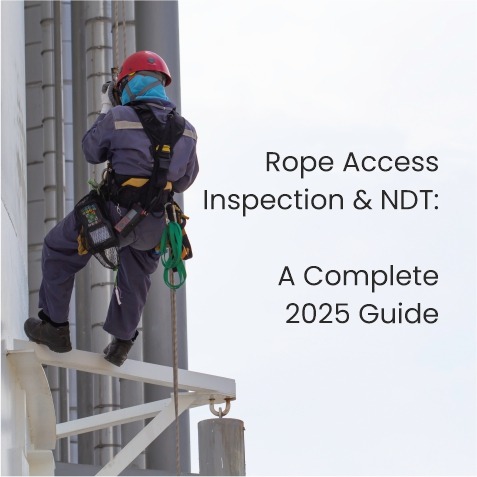
Rope Access Inspection & NDT: A Complete 2025 Guide

rope access

When it comes to maintaining complex industrial structures, rope access inspection and NDT (Non-Destructive Testing) have become the preferred choice for maintenance managers worldwide. Whether it’s a refinery column, wind turbine blade, offshore rig, bridge span or high-rise façade—rope access allows technicians to reach difficult areas safely, quickly, and with minimal downtime.

At Evolution Access, our IRATA-certified teams combine rope access efficiency with advanced NDT techniques to deliver precise, reliable inspection results that help facility managers plan maintenance with confidence.


Why Rope Access for Inspection?

Traditional access methods like scaffolding or heavy equipment can take days to install—delaying maintenance and increasing operational costs. Rope access solves this by offering:

  • Fast setup and dismantling
  • Minimal disruption to operations
  • Safe access to confined, elevated and complex environments
  • Cost savings up to 50% compared to scaffolding
  • Highly trained IRATA-certified teams

It’s not just about reaching the location—it’s about performing high-precision inspections while suspended safely.


How Rope Access NDT Actually Works

NDT is carried out while technicians are securely positioned using rope access systems. Here’s how the process flows:

  1. Site Assessment & Risk Planning

Before any work begins, the team conducts a full risk assessment and rescue plan. This ensures compliance with IRATA guidelines, local safety regulations, and client requirements.
(https://evolution-access.com/who-we-are/


  1. Positioning the Technicians

Rope access allows technicians to land exactly where inspection is required—no matter how awkward the geometry. Using two-rope systems (working + safety rope), they can move vertically, horizontally, or diagonally with full control.


  1. Performing the NDT

Depending on the structure and material, Evolution Access specialists use advanced techniques such as:

  • Ultrasonic Testing (UT) – detects internal defects, wall thickness loss, corrosion
  • Magnetic Particle Testing (MPT) – identifies cracks on ferrous surfaces
  • Dye Penetrant Testing (PT) – great for surface cracks in welds & joints
  • Visual Inspection (VI) – detailed condition assessments
  • Coating & Surface Integrity Checks

The advantage? NDT is done without dismantling equipment — saving huge time and cost.

  1. Reporting & Maintenance Recommendations

Every job ends with a detailed inspection report, photographic evidence, and actionable recommendations for your maintenance schedule.
(https://evolution-access.com/services/other-services/)


Why This Method Builds Trust

For maintenance managers, accuracy and safety matter more than anything else. Rope access NDT ensures:

  • Reliable inspection in hard-to-reach areas
  • Less downtime for production
  • Lower operational costs
  • Compliance with global IRATA and industry standards

This is why Evolution Access continues to support oil & gas, marine, civil, renewable and industrial sectors with professional rope access inspection services.


FAQs

  1. Is rope access safe for NDT work on large industrial structures?

Yes. Rope access is considered one of the safest work-at-height methods when performed by IRATA-certified technicians. Evolution Access follows strict two-rope systems, rescue planning, and industry-standard safety protocols.

  1. What types of NDT can be performed using rope access?

Almost all key techniques: Ultrasonic Testing, Magnetic Particle Testing, Dye Penetrant Testing, Visual Surveys, and Coating Inspections—making it ideal for refineries, offshore platforms, wind turbines, steel structures, and high-rise assets.

  1. How does rope access save costs compared to scaffolding?

Rope access eliminates scaffold erection, manpower, transport, and dismantling costs. This reduces overall project time and can cut inspection costs by up to 50%, especially for short-duration or hard-to-reach tasks.

Posted on Leave a comment

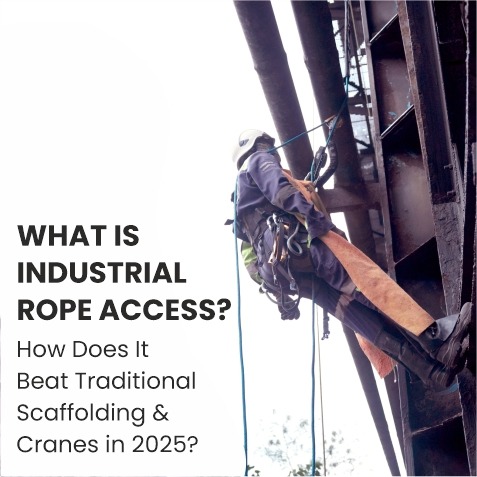
What Is Industrial Rope Access? How Does It Beat Traditional Scaffolding & Cranes in 2025?

Industrial rope access has become one of the most efficient ways to perform inspection, repair, maintenance, and high-altitude work — especially in environments where traditional scaffolding or cranes create delays, high costs, and major site disruptions. In 2025, industries across offshore platforms, marine structures, wind farms, high-rise buildings, and infrastructure projects are choosing rope access because it delivers fast, controlled, low-impact access with unmatched safety.

At Evolution Access, rope access is performed by certified IRATA technicians who combine advanced safety systems with precise operational skills, making it a reliable solution for even the most complex sites.

industrial rope access
______________________________________________________________________________________________________________


What Exactly Is Industrial Rope Access?

Industrial rope access is a method where trained technicians use a dual-rope system (main working rope + backup safety rope) to access difficult-to-reach areas. Instead of constructing large platforms or deploying heavy machinery, technicians descend, ascend, or position themselves using harnesses and equipment designed according to international safety standards.

The system is flexible, mobile, and suitable for:

  • Offshore structures
  • Vessel hulls & marine assets
  • Refineries & power plants
  • Wind turbines & renewable infrastructure
  • Bridges & high-rise façades
  • Confined-space environments

Explore Evolution Access services here: https://evolution-access.com
______________________________________________________________________________________________________________


Why Rope Access Beats Scaffolding in 2025

Traditional scaffolding is stable and useful, but it demands time, manpower, permissions, and significant space. For reference, scaffolding providers build excellent engineered systems — but those systems still require hours or days to install.


Rope access eliminates that delay.

Technicians can be deployed within minutes, not days. There is no need for heavy installation, dismantling, or transport. For short-duration tasks such as inspection, NDT, cleaning, painting, and maintenance, rope access is dramatically faster and more cost-effective.

Key advantages over scaffolding:

  • Zero structural footprint
  • No blocking of walkways/operations
  • High flexibility on uneven or limited-access sites
  • Ideal for offshore environments where scaffolding is impractical

______________________________________________________________________________________________________________


Why Rope Access Beats Cranes & Heavy Lifting Equipment

Cranes are powerful and essential for lifting heavy loads. Companies provide world-class crane & hoist systems — but cranes are not ideal for precise hands-on work like inspection or maintenance.

Rope access excels where human control and close-up access are required. It enables:

  • Rapid personnel positioning
  • Minimal setup time
  • Zero ground disturbance
  • Safe operations in confined or sensitive zones

For buildings with complex shapes, offshore rigs with narrow platforms, or towers exposed to wind, rope access offers precise access that cranes cannot match.

______________________________________________________________________________________________________________


The 2025 Advantage: Safer, Faster, Smarter

In 2025, industries demand solutions that reduce downtime and risk.
Rope access gives you:

  • Exceptional safety (dual-rope fail-safe system)
  • Lower cost of access
  • Faster job completion
  • Minimal operational interruption
  • Highly trained IRATA-certified technicians

This combination makes rope access not just an alternative — but the preferred method for maintenance and inspection.

______________________________________________________________________________________________________________


FAQs

  1. Is industrial rope access safe for high-risk sites like offshore rigs or wind turbines?

Yes. Rope access follows IRATA-level safety systems, uses dual-rope protection, and is globally recognized as one of the safest access methods with extremely low incident rates.

  1. Can rope access replace scaffolding or cranes completely?

Not always. Scaffolding and cranes have their place. Rope access is ideal for inspection, maintenance, repair, and difficult-reach areas — while scaffolding is suited for long-duration construction, and cranes for lifting loads.

  1. How long does it take to deploy a rope access team?

Most rope access jobs begin within minutes of arrival. No large-scale assembly is required, making it much faster than scaffolding or crane setup.


Posted on Leave a comment

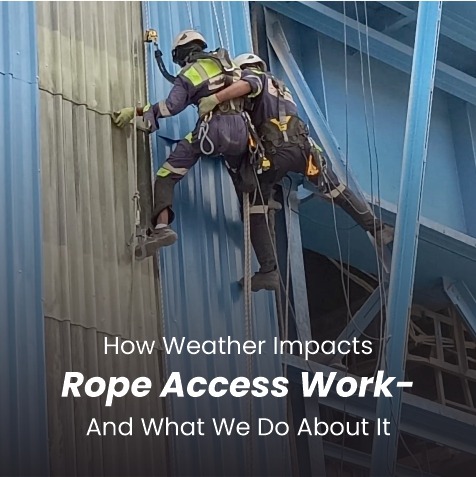
How Weather Impacts Rope Access Work — And What We Do About It

rope access

The forecast said clear skies. But now, 30 stores up with the city sprawling below, the wind is starting to howl. It whips around the edge of the building, turning a routine inspection into a battle against an invisible force. Your gear is secure, your training is locked in, but nature has decided to change the rules of the game. This is a moment every rope access technician knows well. Working at height isn’t just about ropes and harnesses; it’s a constant negotiation with the elements.

Most people see a finished project—a gleaming window, a secure panel, a freshly painted facade. They don’t see the meticulous planning that goes into making sure the work can happen safely, especially when the weather decides not to cooperate. So, how do we handle the wind, rain, and heat that are part of the job? It comes down to preparation, procedure, and an unwavering respect for Mother Nature.


The Unseen Opponent: Battling the Wind

Wind is arguably the most significant weather factor in rope access. It doesn’t have to be a gale-force storm to pose a serious risk.

  • The Risks:
    • Uncontrolled Swings: A strong gust can turn a technician into a pendulum, risking impact against the structure, windows, or other obstacles.
    • Material Hazards: Wind can snatch tools, equipment, or building materials, turning them into dangerous projectiles for anyone below.
    • Communication Breakdown: The roar of the wind can make it impossible to hear commands or warnings, compromising team safety.
  • Our Mitigation Strategy:
    • Constant Monitoring: We don’t just check the morning forecast. We use live, on-site anemometers (wind speed meters) and hyper-local weather apps to get real-time data.
    • Setting Strict Limits: Every project has a pre-defined maximum wind speed limit. If the gusts exceed that number, work is paused. There is no negotiation on this.
    • Secure Everything: All tools and equipment are tethered, and materials are secured before ascent. We operate on a “zero-drop” policy, regardless of the weather.


Working in the Wet: The Challenge of Rain

Rain introduces a new set of challenges that affect everything from grip to visibility. Working through a downpour isn’t just uncomfortable; it’s hazardous.

  • The Risks:
    • Slippery Surfaces: Both the structure’s surface and the ropes themselves can become incredibly slick, compromising grip and footing.
    • Reduced Visibility: Heavy rain can make it difficult to see anchor points, potential hazards, or team members.
    • Water Ingress: For jobs like sealant application or painting, rain can ruin the work, leading to costly rework.
  • Our Mitigation Strategy:
    • Assessing the Surface: Before starting, we assess how the specific work surface (glass, metal, concrete) reacts to water.
    • Specialized Gear: We use ropes with low water absorption and wear high-grip gloves and footwear designed for wet conditions.
    • Work-Specific Pauses: While some inspection work might be possible in light rain, tasks requiring dry surfaces are immediately postponed. We plan our work phases around the forecast to maximize productivity in dry windows.


Temperature Extremes: From Searing Heat to Biting Cold

Extreme temperatures directly impact the technician’s physical and mental performance, which is a critical safety factor.

  • The Risks:
    • Heat Exhaustion & Dehydration: Working on a sunbaked facade can quickly lead to heatstroke, impairing judgment and physical ability.
    • Cold Stress & Frostbite: In cold weather, dexterity suffers. Numb fingers make it difficult to operate equipment safely, and the risk of hypothermia is real.
    • Equipment Integrity: Extreme temperatures can also affect the performance of certain materials and equipment.
  • Our Mitigation Strategy:
    • Hydration & Shade Protocols: In hot weather, mandatory water breaks, electrolyte supplements, and scheduling work to avoid the peak sun hours are standard practice.
    • Layered & Insulated Gear: For cold environments, we use thermal base layers and insulated gloves that still allow for fine motor skills.
    • Work/Rest Cycles: We implement strict work/rest cycles in extreme temperatures to prevent fatigue and allow the body to recover, ensuring our team remains alert and focused.


Professionals Don’t Gamble with the Weather

Ultimately, working safely at height means accepting that you can’t control the weather—but you can always control your response to it. A professional rope access team doesn’t take chances. We don’t “tough it out” when conditions are unsafe. We plan, we monitor, and we have the discipline to make the right call, every single time.

This commitment to safety and preparedness is what allows us to operate effectively in challenging environments where others can’t.

Have a high-access project where conditions are a concern?

Don’t leave it to chance. Contact Evolution Access today to discuss how our expert team can get your job done safely and efficiently, no matter what the forecast says.

Posted on Leave a comment

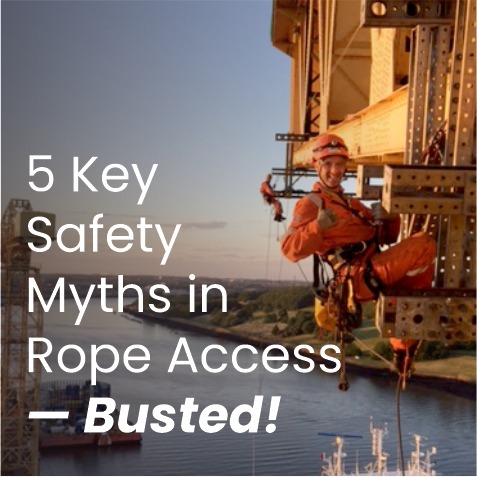
5 Key Safety Myths in Rope Access — Busted!

rope access

You’ve seen them before. The men and women suspended hundreds of feet in the air against the glass of a skyscraper or the side of a bridge, looking like something out of a spy movie. And if you’re like most people, a few thoughts probably crossed your mind: “That looks dangerous,” or “Are they crazy?” or the classic, “I could never do that.”

It’s an understandable reaction. Rope access looks extreme, and our brains are wired to see a person on a rope and immediately think “risk.” But what if we told you that, statistically, a properly trained rope access technician is often safer than a worker standing on traditional scaffolding?

The truth is, professional rope access is one of the safest industries in the world, thanks to rigorous training, redundant systems, and an unwavering commitment to safety protocols. It’s time to separate the Hollywood-fueled fiction from the on-the-job reality. Let’s bust five of the biggest safety myths, one by one.


Myth 1: “It’s all just one rope! If it snaps, you fall.”

The Reality: This is the most common misconception, and it’s 100% false. Every professional rope access technician operates on a mandatory two-rope system.

  • The Working Line: This is the primary rope that bears the technician’s weight and allows them to ascend and descend.
  • The Safety Line (or Backup Line): This second rope is connected to a separate anchor point and a different harness attachment. It runs alongside the working line and is attached to a backup device that will automatically engage and arrest a fall if the main line ever fails.

Think of it like flying a modern passenger jet. There isn’t just one engine; there are backups for the backups. The two-rope system is the fundamental principle of our industry, ensuring that a single point of failure is never catastrophic.

Myth 2: “The equipment must wear out quickly and be unreliable.”

The Reality: Rope access gear is the opposite of disposable; it’s meticulously engineered, incredibly robust, and obsessively inspected.

Think of it less like regular climbing rope and more like the critical components of an aircraft.

  • Rigorous Standards: All gear—from ropes and harnesses to carabiners and descenders—is manufactured to meet or exceed strict international safety standards (like those from IRATA).
  • Daily Inspections: Before a single boot leaves the ground, every piece of equipment for the day’s work is thoroughly inspected by the technician using it.
  • Formal Logging: Every item has a logged history. We track its age, usage hours, and inspection records. If a piece of gear shows even minor signs of excessive wear or is involved in a significant event (like arresting a fall), it’s retired immediately.

Myth 3: “It must be a job for reckless adrenaline junkies.”

The Reality: This couldn’t be further from the truth. The people drawn to professional rope access are typically calm, methodical, and detail-oriented problem solvers.

You won’t find daredevils on our crews. You’ll find skilled tradespeople—welders, inspectors, and maintenance experts—who have chosen rope access as the safest and most efficient way to do their job at height. The training process weeds out anyone looking for a cheap thrill. It rewards slow, deliberate, and safe movements. An effective technician is a cautious one.

Myth 4: “You need superhuman strength to do rope access work.”

The Reality: Rope access is about technique, not brute force. The system is designed to be incredibly efficient.

Modern equipment uses clever physics involving cams, levers, and friction devices to make ascending and descending surprisingly low-effort. It’s more about understanding the mechanics of the gear and using your body weight intelligently. While a good level of fitness is required, the job relies far more on technical skill and mental focus than on raw physical power.

Myth 5: “Scaffolding or a crane is always the safer option.”

The Reality: While traditional methods have their place, rope access often presents a lower overall risk profile for a project.

  • Fewer Drop Hazards: Scaffolding creates a large, multi-level platform where tools or materials can be accidentally kicked off, endangering people below. A rope access technician keeps their tools attached directly to their harness.
  • Minimal Disruption: Building and dismantling large scaffolding structures introduces its own set of risks and can take days, creating a prolonged hazard zone. Rope access teams can rig their ropes and be at the work site in a matter of hours, and they are completely gone when the job is done.
  • Less Equipment Failure: Scaffolding collapses and crane failures, while rare, can be catastrophic events involving massive amounts of weight and energy. The failure of a rope access system, thanks to the redundant two-rope principle, is almost statistically zero.

See Past the Myth, See the Safety

Rope access might look like a high-wire act, but it’s actually a carefully calculated science. It’s a method built from the ground up on the principle of redundancy and practiced by meticulous professionals. It’s not just a way to get to hard-to-reach places; it’s the proven safest and most efficient way to do it.

Have a complex project at height? Don’t let myths hold you back from finding the smartest solution.

Contact the experts at Evolution Access today. We’d be happy to assess your needs and show you how our commitment to safety can make your next project a success.

Posted on Leave a comment

Rope Access Innovations: How Evolving Standards & Tech Are Shaping 2025?

rope access

Imagine a coastal oil terminal in Gujarat. A steel structure stands over the water—salt-laden air, relentless monsoon humidity. A customer calls: “We need an urgent inspection on the jetty beams. In two days, a ship docks.”
Scaffolding would take days. A crane can’t reach. The clock’s ticking.
Enter Evolution Access: within 48 hours, IRATA‑certified rope technicians are on site, bolted in. In a day they’ve inspected, identified corrosion, performed minor repairs, and applied protective coatings—while the terminal stayed live and the ship docked on time.
That’s the real‑world power of rope access today—fast, safe, precise.

IRATA 2025: Fresh Standards, Elevated Safety

In early 2025, IRATA (the International Rope Access Trade Association) continues refining the IRATA Code of Practice (ICoP) and training methods, especially in response to evolving industrial-complexity and safety concerns. Evolution Access, as an IRATA member, updates its procedures accordingly:

  • Mandatory scenario-based rescue drills at Level II & III more frequent
  • Use of new materials and anchor-testing protocols
  • Digital logging of safety data and training records

These updates reinforce safety culture, reduce “man-at-risk” hours, and keep Evolution Access aligned with global best practice.

Non‑Destructive Testing (NDT): Smarter, Safer Inspection

Rope access teams at Evolution now routinely combine climbing skill with on‑spot NDT:

  • Ultrasonic Thickness Testing (UT): measures material thickness, monitoring corrosion under harsh coastal conditions
  • Magnetic Particle & Dye Penetrant Inspection: reveal surface cracks without dismantling structures
  • Eddy‑Current Testing: detects near-surface flaws in metals

These NDT techniques, when deployed from rope access positions, let teams inspect and analyse damage precisely and rapidly—without bulky gear or scaffolding.

Remote Inspection Tech: Drones, Sensors, & Robotics

2025 sees wider adoption of remote tools in rope access workflows, and Evolution Access is integrating these innovations on the ground:

a) Rugged Drones with Cameras & LiDAR Sensors

Drones like the Flyability Elios 3 or Flybotix Asio X are used to survey confined or elevated spaces—turbine blades, cooling towers, ship’s undersides. They capture high-resolution video and even LiDAR scans in one pass, reducing reliance on human access into risky zones.

Example: a cooling tower inspection that once required cranes and scaffold now takes just a few hours—monitored remotely with drones, then the rope team addresses the identified hot spots directly.

b) Ultrasonic Remote Sensors & Fixed Arrays

Sensors can now be mounted semi-permanently on structures: they monitor wall thickness continuously, uploading trends to dashboards and alerting operations when corrosion passes certain thresholds. This minimizes the need for repeated climb‑based visits, enabling targeted rope access only when intervention is needed

Evolution Access advises clients on sensor deployment, then supplements data analysis with on‑site visual and ultrasonic spot checks via rope access.

c) Robotic NDT Crawlers & In‑Line Inspection Tools

When inspecting tanks or pipelines internally, Evolution Access collaborates with remote robotic NDT tools—tethered or free-moving crawlers fitted with EMAT, MFL, or Eddy‑Current sensors. This reduces human exposure inside confined spaces while still capturing data for structural integrity assessment

How Evolution Access Blends Rope Access + Tech

Let’s follow a recent real-life scenario—no fiction, only fact-driven workflow:

Project: Offshore Wind Turbine Blade Check

  • Drone Survey First

    A drone flies the blade and tower, capturing gigapixel images and LiDAR. Automated defect detection software flags delamination, cracks or surface erosion.

  • Data Review & Planning

    The rope access team reviews report remotely, plans target areas for hands‑on follow‑up.

  • Rope Access Inspection & NDT

    Certified IRATA rope teams descend to inspect flagged zones. They perform ultrasonic thickness tests, dye-penetrant crack checks, and visual confirmation.

  • Repairs & Coating

    Based on test results, minor repairs—welding, surface prep, repainting—are completed right away.

  • Sensor Setup (if needed)

    If corrosion is ongoing, ultrasonic remote sensors are installed for real-time health tracking.

  • Reporting & Trend Monitoring

    Evolution Access delivers a digital report: drone imagery, test data, repair notes, and sensor trend curves. Clients receive clear timelines for next touch points.

This blended method saves clients time, cuts cost, improves safety—and reduces plant shutdown impact.

Safety & Efficiency Gains: Why It Matters Today

In 2025, industry pressures demand faster turnarounds, stringent safety, and minimal operational interruption. Evolution Access delivers:

  • Up to 40–60% savings vs scaffolding-based inspect/repair workflows (case studies from ports, tanks, turbines)
  • 40% faster or safer inspections when drone-aided compared to traditional methods in confined or hazardous zones
  • Better data quality and decision-making through integrated drones and analytics for early detection

The 2025 Evolution Access Edge

Evolution Access is distinctive because:

  • IRATA Alignment & Certification: full compliance with the latest IRATA standards, safety-first mindset
  • In‑House Rope + Trade Teams: technicians trained in access, inspection, welding, NDT—all in one crew
  • Integrated Tech Capability: drone operations, sensor advisory, remote NDT coordination with robotics
  • Strong Track Record: projects across oil & gas, marine, renewables, civil & geotechnical sectors in India and beyond

Conclusion: The Future Anchored in 2025

As industries evolve, so do access demands. In 2025, rope access isn’t just climbing—it is precision inspection, data-driven decision making, and minimally invasive intervention.

Evolution Access sits at the intersection of:

  • IRATA’s continuously evolving safety standards
  • Cutting-edge NDT and sensor technology
  • Drone- and robotics-mediated inspection
  • Onsite rope‑based trades and repair delivery

The result? Safer, smarter, faster outcomes for clients who need to maintain infrastructure without disruption.

If you’re dealing with high-risk structures, coastal environments, confined components—or skilled maintenance under pressure—this blended model offers the best of modern inspection.

Posted on Leave a comment

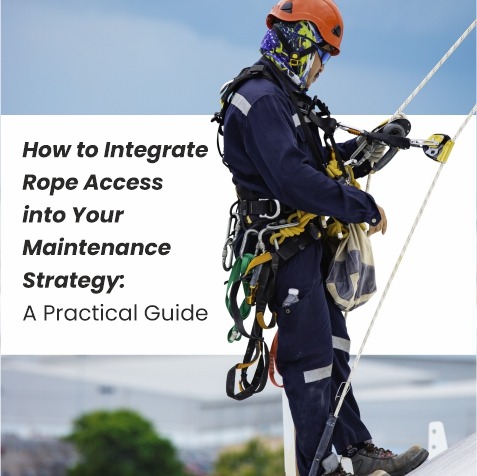
How to Integrate Rope Access into Your Maintenance Strategy: A Practical Guide

rope access

Why Rope Access Is Changing the Game

Picture this: You’re managing a massive industrial site—a wind turbine, a refinery tank, or maybe a high-rise façade. Your team needs to handle maintenance tasks like cleaning, inspection, painting, or repairs.

In the past, your options were bulky scaffolding, cranes, or MEWPs (Mobile Elevating Work Platforms). These work, but they come with baggage—long setup times, high costs, safety concerns, and major site disruption.

Enter rope access—a technique born from industrial climbing. Using a dual-rope system (one for work, one for safety), trained technicians can move up, down, and across structures quickly and securely. It’s fast, flexible, and leaves a light footprint, making it the go-to solution for tight schedules or tricky locations.

When Rope Access Makes More Sense

Rope access isn’t always the answer, but it’s the smart choice when:

  • Speed matters – Rope systems can be set up in hours, not days.
  • Space is tight – Works where cranes and scaffolding simply can’t fit.
  • Downtime must be minimized – Jobs are often done 30–50% faster.
  • Safety is critical – Certified technicians follow strict protocols and use backup systems.
  • Disruption must stay low – Minimal noise, no heavy machinery, and no blocked pathways.

That said, scaffolding or cranes might still be better for:

  • Heavy-duty jobs needing large staging areas
  • Long-term projects where scaffolding provides weeks of stable access
  • Tasks involving heavy materials or internal lifts

The Rope Access Process: From Start to Finish
1. Define the job

What needs doing—inspection, repairs, or a deep clean? How high? How complex? Are there time limits or operational constraints?

2. Compare access methods

Make a simple checklist:

  • Setup time
  • Cost
  • Safety
  • Downtime
  • Environmental impact

(Often, you’ll find rope access is quicker, safer, and cheaper—especially for short-term jobs.)

3. Choose certified professionals

Only work with IRATA or SPRAT-certified Ask for:

  • Method statements & risk assessments
  • Proof of technician levels (Level 1, 2, or 3)
  • Rescue plans and insurance

4. Site visit & planning

Your provider inspects the site, identifies safe anchor points, and creates a clear risk assessment and method statement (RAMS)—including equipment lists and emergency procedures.

5. The work begins

A small team rigs rope and gets to work. Because ropes can be moved easily, jobs like inspections, cleaning, and light repairs happen efficiently, with minimal disruption to the site.

6. Wrap-up & review

Once the job’s done, everything is dismantled in minutes. You get a completion report with any issues flagged and suggestions for future maintenance.

Rope Access vs. Traditional Methods

Here’s how rope access stacks up against scaffolding and cranes:

Metric

Rope Access

Scaffolding / Crane

Setup time

Minutes to hours

Days

Crew size

Small team, minimal gear

Large crew, heavy equipment

Cost

30–70% cheaper

Higher (labour + rentals)

Downtime

Minimal

Often significant

Safety

Very low (backup ropes, training)

Moderate

Flexibility

Works on awkward shapes & spaces

Limited reach

Environmental impact

Low noise & material use

High materials, noise, traffic

The bottom line: Rope access can save time, reduce costs, and improve safety.

What to Look for in a Rope Access Partner

A cheap quote isn’t enough—you need professionalism and global safety standards.

Look for:

  • IRATA-certified companies with proven audits
  • Technicians trained to Level 1, 2, or 3 (with Level 3 overseeing safety)
  • Full method statements and rescue plans for every job
  • Insurance and proper equipment (no cutting corners)

For example, Evolution Access stands out by combining rapid deployment, minimal ground footprint, and strict IRATA compliance—serving sectors from wind energy and marine to oil & gas and infrastructure.

A Real-World Example

Imagine a solar farm operator needing blade repairs on 30 turbines.

  1. Old way: Scaffolding or cranes, taking 6–8 weeks per turbine—plus weather delays, blocked access, and massive costs.
  2. Rope access way: A small IRATA-certified crew rigs each turbine in under an hour, completing cleaning, inspection, and repairs in 1–2 days per turbine.
  • Project finished in under 3 weeks
  • Costs cut by 40–60%
  • Minimal downtime and environmental disruption

Technicians even caught early signs of corrosion—helping the operator shift to preventive maintenance instead of costly reactive fixes.

How to Make Rope Access Part of Your Maintenance Plan

Don’t think of rope access as a one-time fix. Build it into your long-term strategy:

  1. Audit your assets – Find the tricky, high-maintenance areas.
  2. Create a decision matrix – Compare methods by cost, time, safety, and impact.
  3. Pre-qualify providers – Build a network of trusted IRATA-certified partners.
  4. Plan proactive inspections – Use rope access for regular low-cost checks.
  5. Log inspection data – Feed findings into your asset management software.
  6. Review & refine – Track results, adjust, and improve for the next job.

Why Choose Evolution Access

If you’re reading this on Evolution Access, here’s why we’re the right partner:

  • Expertise across industries: renewables, oil & gas, marine, and infrastructure
  • IRATA-aligned training and strict safety protocols
  • Fast, efficient setups with minimal disruption
  • Full inspection & reporting capabilities—NDT, thermal imaging, coatings, and more

Final Thoughts

Rope access isn’t just another maintenance option—it’s a smarter way to work.

  • Faster – Less setup, less downtime
  • Safer – Certified technicians, strict safety measures
  • Cheaper – Lower overall project costs
  • Cleaner – Minimal noise, mess, and site disruption

By integrating rope access into your maintenance strategy, you’re not just fixing problems—you’re future-proofing your operations.

If you manage assets where time, safety, and efficiency matter, rope access isn’t just the right choice—it’s the strategic choice.

Contact Us:

Address Location

  • GK Terminal, Floor 1 & 2 Poonamallee High Road, Nerkundram Chennai, Tamil Nadu 600107

Email Address

Phone Number

Posted on Leave a comment

How to Train Your Team to Meet Rope Access Safety Requirements

rope-access-safety-requirements

Rope access is a highly efficient method for performing work at height, especially in industries like construction, maintenance, offshore operations, and industrial cleaning. However, with great height comes great responsibility—and that’s where rope access safety requirements play a critical role.
Training your team to meet these safety standards isn’t just about compliance; it’s about ensuring that your workers go home safely at the end of every day. Below is a step-by-step guide on how to effectively train your team while meeting the industry’s best safety practices.

rope-access-safety-requirements

1. Understand the Core Rope Access Safety Requirements

Before you start training your team, it’s important to understand the safety framework that governs rope access. These include both international guidelines (like IRATA) and local safety standards.

Key safety requirements include:

•  Proper use of personal protective equipment (PPE)
•  Adequate fall protection systems
•  Dual-rope system: working rope + safety rope
•  Regular inspection and maintenance of equipment
•  Emergency rescue procedures
•  Supervision by certified rope access technicians

💡 Tip: Familiarize yourself with ISO 22846 standards, which are globally recognized for rope access safety practices.


2. Begin with a Risk Assessment Session

Start every training module with a job hazard analysis or risk assessment. This helps workers understand the dangers associated with rope access and prepares them mentally for safety practices.

What to cover in risk assessment training:

•  Identifying potential fall hazards
•  Evaluating structural integrity of anchor points
•  Assessing environmental conditions (wind, rain, dust, etc.)
•  Planning for emergencies and evacuation procedures

When teams understand the “why” behind safety protocols, compliance becomes a habit—not a burden.


3. Choose the Right Rope Access Training Provider

Training should always be delivered by a certified training body. Organizations such as IRATA (Industrial Rope Access Trade Association) are globally recognized for setting industry standards.

What to look for in a training provider:

•  IRATA certified instructors
•  On-site practical training setups
•  Emphasis on hands-on experience
•  Clear levels of certification (Level 1 to Level 3)
•  Training on rescue techniques and emergency response

Opt for providers who offer post-training assessments and certifications, as this builds both credibility and confidence.


4. Focus on Hands-On Practical Training

Nothing prepares your team better than real-world simulation. Theoretical knowledge is essential, but rope access work is a physical job.

Teams must be trained in:

•  Proper rope ascending and descending techniques
•  Using fall arrest systems and work-positioning gear
•  Anchor point selection and rigging
•  Controlled maneuvering around structures
•  Mid-air work positioning and task execution

Include:

•  Obstacle navigation drills
•  Controlled drops and mock rescues
•  Suspension trauma awareness

Practical training not only improves skills but also boosts worker confidence at height.


5. Emphasize Equipment Familiarity and Maintenance

One of the most overlooked areas in rope access training is equipment care. A well-trained worker must know how to inspect, use, and store gear correctly.

Training topics should include:

•  Understanding load ratings and certifications of ropes and harnesses
•  Performing pre-use and periodic equipment inspections
•  Identifying wear and tear, rust, or damage
•  Cleaning, drying, and storage procedures
•  Logging equipment usage for accountability

Remember: even the strongest rope is only as safe as its last inspection.


6. Teach Team Communication and Supervision Roles

Rope access work is never done solo. There’s always a team involved—so communication and supervision that must be part of your safety training.

Train your team on:

•  Using two-way radios or hand signals
•  Establishing command roles (e.g., lead technician, safety officer)
•  Checking and double-checking anchor setups
•  Verbal callouts for safety confirmations (e.g., “on rope”, “descending”)
•  Keeping visual or auditory contact during tasks

Supervisors (often IRATA Level 3 technicians) must be trained to manage safety checklists, oversee procedures, and act immediately during emergencies.


7. Include Rescue and Emergency Response Training

No rope access training is complete without an emphasis on rescue preparedness. Your team must know what to do if someone becomes unconscious, stuck, or experiences suspension trauma.

Rescue training should cover:

•  Self-rescue using prusik or mechanical ascenders
•  Assisted rescues from vertical and horizontal setups
•  Use of rescue kits (pulleys, descenders, haul systems)
•  Simulated emergency drills under timed conditions
•  Communicating with emergency response teams

A prepared team reduces panic and increases the chances of a safe outcome during critical situations.


8. Conduct Regular Refresher Courses

Even the best-trained workers need refresher training to stay sharp. Rope access isn’t a “train once and forget” type of skill.

How often?

•  Every 6 to 12 months depending on the work environment
•  Immediately after any incident or near miss
•  When introducing new equipment or techniques

Include short quizzes, practical tests, and surprise safety drills to keep your team alert and responsive.


9. Build a Culture of Safety

Training doesn’t stop in the classroom. A safety-first mindset must be integrated into your company culture.

Encourage:

•  Daily toolbox talks
•  Open communication about safety concerns
•  Recognition programs for following safety protocols
•  Reporting of hazards or near-miss incidents without fear of punishment

Make rope access safety a shared responsibility—not just an individual task.


Conclusion:

Meeting rope access safety requirements isn’t just about certifications—it’s about protecting lives. Training your team to follow the best practices ensures efficiency, reduces accidents, and boosts trust in your company’s commitment to safety.
From understanding risk assessments to mastering emergency rescues, comprehensive training transforms your workforce into a skilled and safety-conscious team.

Need Help with Rope Access Safety Training?

At Evolution access, we offer expert-led rope access training designed to meet all regulatory and industry standards. Whether you’re looking to upskill your team or need complete certification packages, we’ve got you covered.
📞 Contact us today to schedule your training session or learn more about our rope access safety solutions.

Posted on Leave a comment

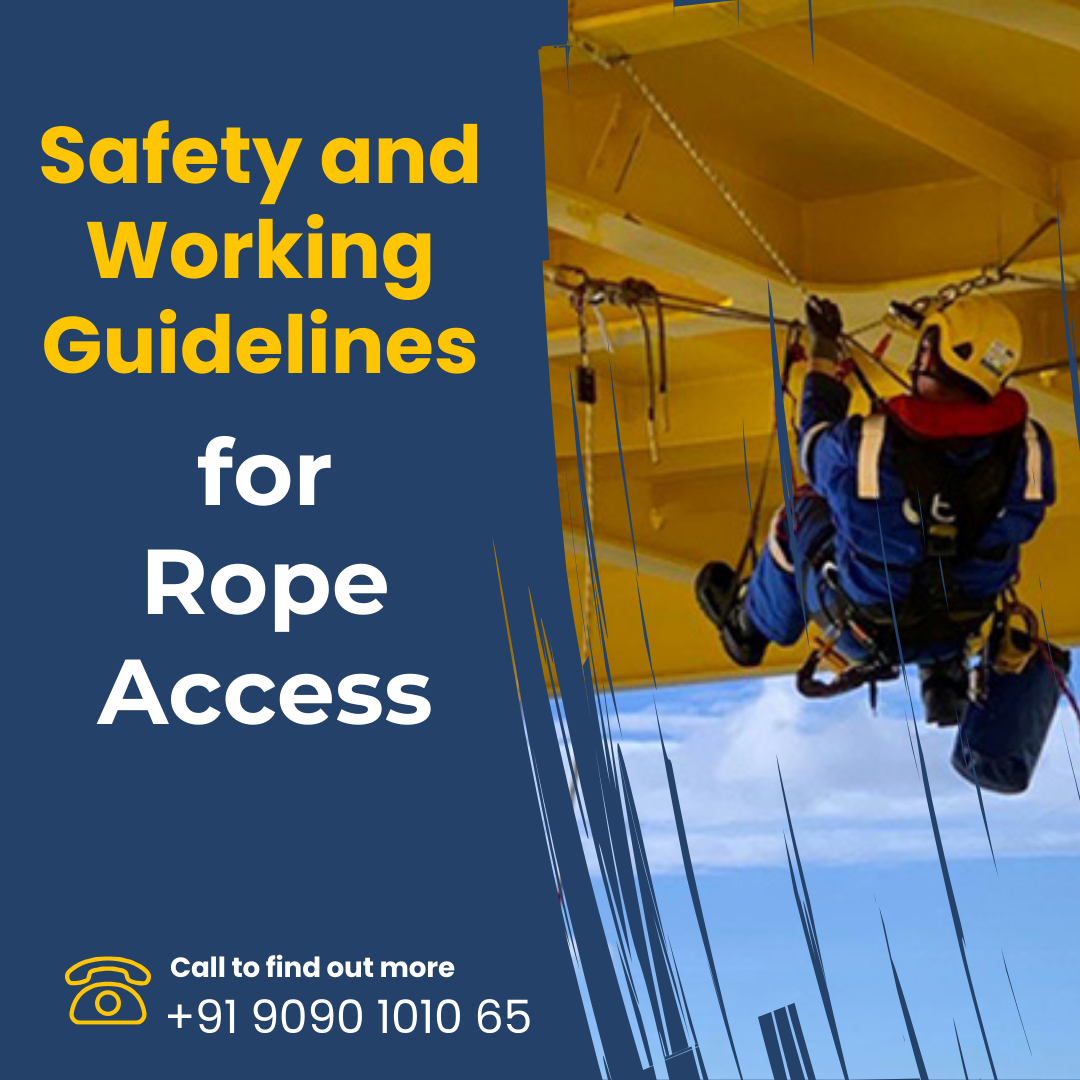
Safety and Working Guidelines for Rope Access

rope-access-safety

Rope access has proven vital for conducting maintenance and repairs on high-rise buildings, bridges, and tall structures. However, the safety of workers in this field is of paramount importance. That’s why understanding the safety guidelines and working procedures for rope access is crucial for anyone involved in these tasks.

Whether you’re a rope access technician, a safety supervisor, or simply curious about this innovative method, this article will provide you with the essential information you need. From equipment inspection and proper harness usage to risk management and emergency procedures, we’ll cover all the key aspects to ensure a safe and successful rope access operation.
rope-access-safety

The Importance of Safety in Rope Access

Rope access work involves technicians operating at great heights, often in challenging and unpredictable environments. Therefore, safety must be the top priority in any rope access operation. Adhering to strict safety guidelines can minimize potential risks and ensure the well-being of workers.

One of the primary safety factors for rope access is using personal protective equipment (PPE). PPE includes helmets, harnesses, gloves, and safety glasses. These pieces of equipment are specifically designed to provide protection against falls, impacts, and other potential hazards. All PPE must be thoroughly inspected before each use to ensure it is in proper working condition. Regular maintenance and replacement of worn-out equipment are also critical to maintaining safety standards.

Rope access techniques and best practices also significantly ensure safety. Technicians must be trained in proper rope handling, knot tying, and anchor point selection. They should know about different types of ropes and their strengths and limitations. Implementing safe techniques, such as the Two-Rope Technique (2RT) or the Three-Rope Technique (3RT), can further enhance the security of rope access operations.

Risk assessment and hazard identification are crucial steps in maintaining a safe work environment in rope access. Before starting any project, a thorough site evaluation must be conducted to identify potential risks and develop appropriate control measures. This includes assessing weather conditions, identifying unstable structures, and analyzing potential falling objects. Regular communication between technicians and safety supervisors is essential to ensure that risks are continuously monitored and mitigated during the operation.

Ultimately, the importance of safety in rope access must be addressed. By prioritizing safety at every step, workers can confidently carry out their tasks and minimize the risk of accidents or injuries.

Personal Protective Equipment (PPE) for Rope Access

Personal protective equipment (PPE) is a crucial component of ensuring the safety of rope access technicians. It is a barrier between the worker and potential hazards, protecting in case of falls, impacts, or other accidents. Here are some essential PPE items used in rope access:

1. Harness: A harness is the primary equipment that connects the technician to the rope system. It should be well-fitted and comfortable, allowing for a full range of movement while providing adequate support. Before each use, the harness should be regularly inspected, including checking for any signs of wear or damage.

2. Helmet: A helmet protects the head from falling objects or impacts. It should be worn at all times during rope access operations. Inspect the helmet for any cracks or signs of damage and replace it if necessary.

3. Gloves: Gloves provide hand protection, allowing technicians to grip ropes and other equipment firmly. They should be made of durable material that offers both dexterity and resistance to abrasion. Inspect gloves for any signs of wear or tear and replace them if necessary.

4. Safety Glasses: Safety glasses protect the eyes from debris, dust, or other flying particles. They should be impact-resistant and provide a clear vision. Regularly clean the lenses and inspect for any scratches or damage.

5. Safety Boots: Safety boots with slip-resistant soles provide stability and protection against falls. They should have reinforced toes and soles to prevent injuries from falling objects or sharp edges.

Remember, PPE is only adequate if it is appropriately used and maintained. Technicians should be trained on the correct way to wear and adjust their equipment. Regular pre- and post-use inspections are essential to identify any signs of wear or damage. Damaged equipment should be replaced immediately to ensure the technician’s safety.

Rope Access Techniques and Best Practices

Rope access techniques and best practices are fundamental to the safe and efficient execution of tasks at height. By following established procedures, technicians can minimize risks and optimize their productivity. Here are some basic techniques and best practices for rope access:

1. Rope Handling: Proper rope handling is crucial to ensure the stability and integrity of the rope system. Technicians should be trained in coiling, uncoiling, and managing ropes to prevent tangles or knots that could compromise safety. Using rope protectors and edge guards can minimize wear and tear on the ropes.

2. Anchor Point Selection: Selecting suitable anchor points is essential for the stability and security of the rope system. Anchor points should be strong, stable, and capable of withstanding the expected load. Technicians should be trained to identify and evaluate anchor points, ensuring they meet the required standards.

3. Knot Tying: Proficiency in various knot-tying techniques is essential for rope access technicians. The knot choice depends on the task and the load it will bear. Knots should be adequately secured to prevent slippage or failure. Regular practice and training in knot tying are necessary to maintain proficiency.

4. Communication: Clear and effective communication between technicians and safety supervisors is vital during rope access operations. Technicians should be trained to use standardized communication signals and ensure they understand the supervisor’s instructions or warnings. Regular check-ins and updates should be conducted to maintain a safe working environment.

5. Safety Checks: Regular safety checks should be performed throughout the rope access operation. Technicians should inspect their equipment, including harnesses, ropes, and anchor points, to identify signs of wear or damage. They should also check for proper connections and tension in the rope system. Any issues or concerns should be reported and addressed immediately.

By following these techniques and best practices, rope access technicians can ensure the safety and efficiency of their work. Regular training and practice are essential to maintaining proficiency in these techniques and staying up-to-date with the latest industry standards.

Emergency Procedures and Rescue Techniques in Rope Access

Despite robust safety measures, emergencies can still occur during rope access operations. Therefore, it is essential to have well-defined emergency procedures and rescue techniques in place to respond promptly and effectively. Here are some critical aspects of emergency procedures and rescue techniques in rope access:

1. Emergency Preparedness: Before starting any rope access project, ensure all workers are familiar with emergency procedures. This includes knowing the location of emergency exits, assembly points, and first aid facilities. Establish a transparent chain of command and assign responsibilities for emergency response.

2. Communication: Effective communication is crucial during emergencies. Establish a system for clear and concise communication between all personnel involved in the rope access operation. This may include using radios, hand signals, or other communication devices. Ensure that all workers understand the communication protocols and can convey information accurately.

3. Evacuation Procedures: Develop evacuation procedures specific to the rope access operation and the site. This may involve establishing designated evacuation routes, identifying safe anchor points for rescue, and training technicians in self-rescue techniques. Regular drills and practice sessions should be conducted to familiarize workers with the evacuation procedures.

4. Rescue Techniques: Train technicians in rescue techniques to safely retrieve a fellow worker in case of an emergency. This may involve techniques such as ascending or descending to reach the stranded worker, using specialized rescue equipment, or performing a controlled descent. Regular training and practice are essential to maintain proficiency in these techniques.

5. First Aid and Medical Support: Ensure that first aid kits are readily available at the worksite and that workers are trained in basic first aid procedures. Establish protocols for contacting emergency medical services and providing necessary information about the location and nature of the emergency. Consider the potential challenges of accessing medical support in high-rise or remote locations.

Rope access projects can respond swiftly and effectively in emergencies with well-defined emergency procedures and trained personnel. Regular drills and practice sessions help maintain readiness and ensure all workers know their roles and responsibilities.

Training and Certification for Rope Access Technicians

Proper training and certification are essential for rope access technicians to perform their tasks safely and efficiently. Training programs provide technicians with the necessary knowledge and skills to navigate the unique challenges of working at heights. Here are some critical aspects of training and certification for rope access technicians:

1. Training Programs: Look for training programs compliant with international standards, such as those established by the Industrial Rope Access Trade Association (IRATA) or the Society of Professional Rope Access Technicians (SPRAT). These programs typically cover equipment usage, rope handling, knot tying, rescue techniques, and safety procedures. Training should include both theoretical knowledge and practical hands-on experience.

2. Certification Levels: Training programs often have different certification levels, each representing a specific skill set and level of experience. These levels may include beginner, intermediate, and advanced certifications. Technicians should progress through these levels as they gain experience and demonstrate proficiency in the required skills. Certification is typically valid for a certain period and may require renewal or retesting.

3. Continuing Education: Rope access techniques and safety standards evolve. Through continuing education programs, Technicians must stay current with the latest industry developments. These programs may cover new equipment, updated regulations, or emerging best practices. Staying informed and continuously improving skills ensures technicians maintain competence and adapt to changing industry requirements.

4. On-the-Job Experience: While formal training programs provide a solid foundation, on-the-job experience is invaluable for rope access technicians. It allows technicians to apply their knowledge in real-world scenarios and further develop their skills. Working alongside experienced technicians and mentors enhances learning and prepares technicians for various challenges they may encounter in their careers.

Training and certification programs are essential for ensuring the competence and safety of rope access technicians. By investing in quality training and providing opportunities for continuing education, companies can enhance the professionalism of their workforce and deliver high-quality rope access services.

Conclusion: The Future of Rope Access Safety and Its Impact on Various Industries

As the demand for rope access services grows, safety guidelines and working procedures become increasingly crucial. The future of rope access safety lies in continuously improving training programs, equipment advancements, and industry standards. By investing in research and development, companies can further enhance the safety and efficiency of rope access operations.

Rope access techniques have already made a significant impact on various industries. Maintenance and inspections of high-rise buildings, wind turbines, oil rigs, and bridges have become more cost-effective and efficient with rope access. However, it is essential to recognize that safety should always be the top priority in these operations.

The ongoing collaboration between industry stakeholders, regulatory bodies, and training organizations will continue to advance safety guidelines and working procedures in rope access. By sharing knowledge, exchanging best practices, and conducting research, the industry can ensure that rope access remains safe and reliable for performing maintenance and repairs at heights.

In conclusion, safety and working guidelines for rope access are critical for protecting workers and ensuring the success of projects in this field. Rope access technicians can carry out their tasks confidently and efficiently by prioritizing safety, utilizing proper equipment, following best practices, conducting thorough risk assessments, and being prepared for emergencies. Continuous training, certification, and industry collaboration are critical to the future of rope access safety and its positive impact on various industries.

Commonly Asked Questions:

 What are the advantages of rope access ?

 What is rope access inspection ?