



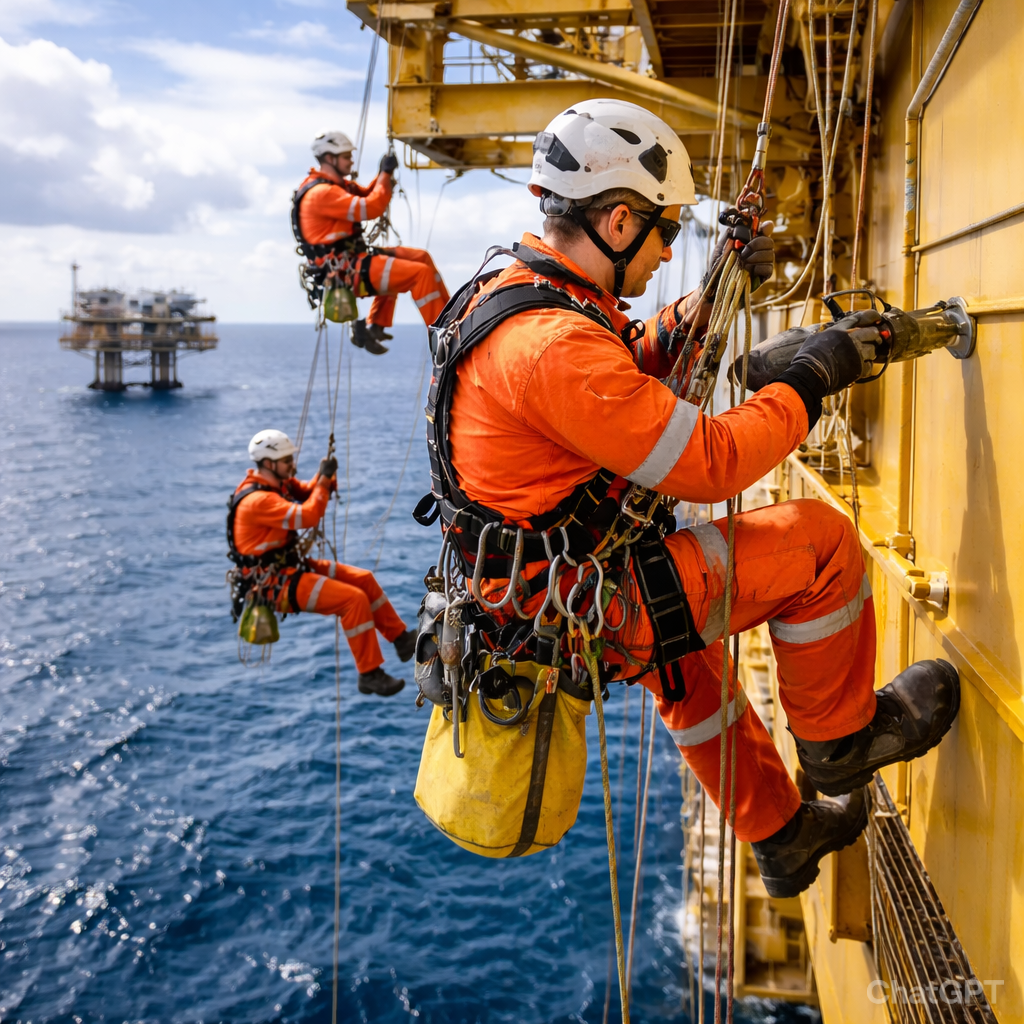
Understanding the Splash Zone Challenge
Offshore rope access is essential for working in the splash zone—one of the most aggressive environments on any offshore structure. Positioned where seawater, oxygen, and continuous wave impact converge, this area faces accelerated corrosion, coating deterioration, and structural fatigue. Regular inspections are critical, yet traditional access methods such as scaffolding or workboats can be hazardous, time-consuming, and heavily dependent on weather conditions.
______________________________________________________________________________________________________________
Why Conventional Inspection Methods Fall Short
-
Limited Accessibility
Offshore platforms, jackets, and wind turbine foundations often have complex geometries. Setting up large access systems around these areas is time-consuming and may require partial shutdowns or vessel support.
-
High Operational Costs
Using cranes, barges, or heavy access equipment increases logistics costs and extends inspection timelines, making frequent monitoring difficult.
______________________________________________________________________________________________________________
How Rope Access Solves Splash Zone Inspection Problems
-
Rapid Deployment in Harsh Conditions
Rope access technicians can mobilize quickly with minimal equipment. This allows inspections to start faster and adapt to changing offshore weather windows.
-
Close-Proximity Structural Assessment
Technicians can position themselves precisely to inspect weld seams, corrosion spots, marine growth, and protective coatings. This level of control improves inspection accuracy and helps identify early damage.
-
Reduced Impact on Ongoing Operations
Since rope access requires minimal deck space and fewer personnel, inspections can often continue while normal offshore activities remain operational.
______________________________________________________________________________________________________________
Safety Advantages in Dynamic Marine Environments
-
Controlled and Certified Work Systems
Modern rope access follows strict international safety standards, including dual-rope protection and continuous supervision. Compared to suspended platforms or temporary structures exposed to waves, rope systems provide greater stability and controlled movement during splash zone work.
______________________________________________________________________________________________________________
Final Perspective
Splash zones are among the most vulnerable parts of offshore infrastructure, demanding regular and precise inspection. Rope access offers a practical solution by combining speed, flexibility, and safety in challenging marine conditions. By enabling efficient inspections without major operational disruption, it helps asset owners maintain structural integrity, extend service life, and ensure safer offshore operations.