Posted on Leave a comment

When & Why Should You Train Your Workforce for Rope Access?

rope access

Working at height is one of the most critical and high-risk operations across industries — from offshore oil rigs to high-rise commercial buildings. While hiring certified professionals is essential, investing in your own workforce’s rope access and height-safety training can transform your team’s efficiency, safety, and productivity.


The Power of IRATA-Standard Training

IRATA-certified training isn’t just a certificate on the wall. It’s a comprehensive program that ensures your staff can safely plan, execute, and monitor rope-access tasks. Employees trained under Evolution Access Training gain practical skills in risk assessment, emergency rescue, and safe work techniques — empowering them to handle complex tasks confidently.

Not only does this reduce the likelihood of accidents, but it also ensures compliance with international safety standards, giving your company credibility and reliability in competitive bids.


Boost Efficiency and Reduce Downtime

Imagine a maintenance project in a warehouse, refinery, or offshore platform. Workers unfamiliar with rope access may require additional scaffolding, extra personnel, or extended project timelines. By contrast, a trained workforce can complete tasks faster, safer, and with fewer resources, minimizing downtime and project delays.

IRATA-standard training equips your team to adapt to challenging conditions, plan their rope access setup, and execute work with precision. This means projects are completed efficiently, safely, and on schedule — a direct benefit to your bottom line.


Build In-House Capability

Relying solely on external contractors can be costly and limit flexibility. With internal training, your organization gains a skilled, certified workforce that can respond to emergencies, handle routine inspections, and perform maintenance without waiting for third-party services.

Investing in in-house rope access capability also demonstrates commitment to employee safety, boosts morale, and reinforces a culture of professionalism and accountability across the organization.


Strategic Benefits for Your Business
  1. Cost Savings: Reduce dependency on external contractors and expensive equipment rentals.
  2. Safety & Compliance: Ensure your team follows global best practices and legal safety standards.
  3. Operational Flexibility: Adapt quickly to project demands without delays.
  4. Reputation: Clients and stakeholders notice companies with trai

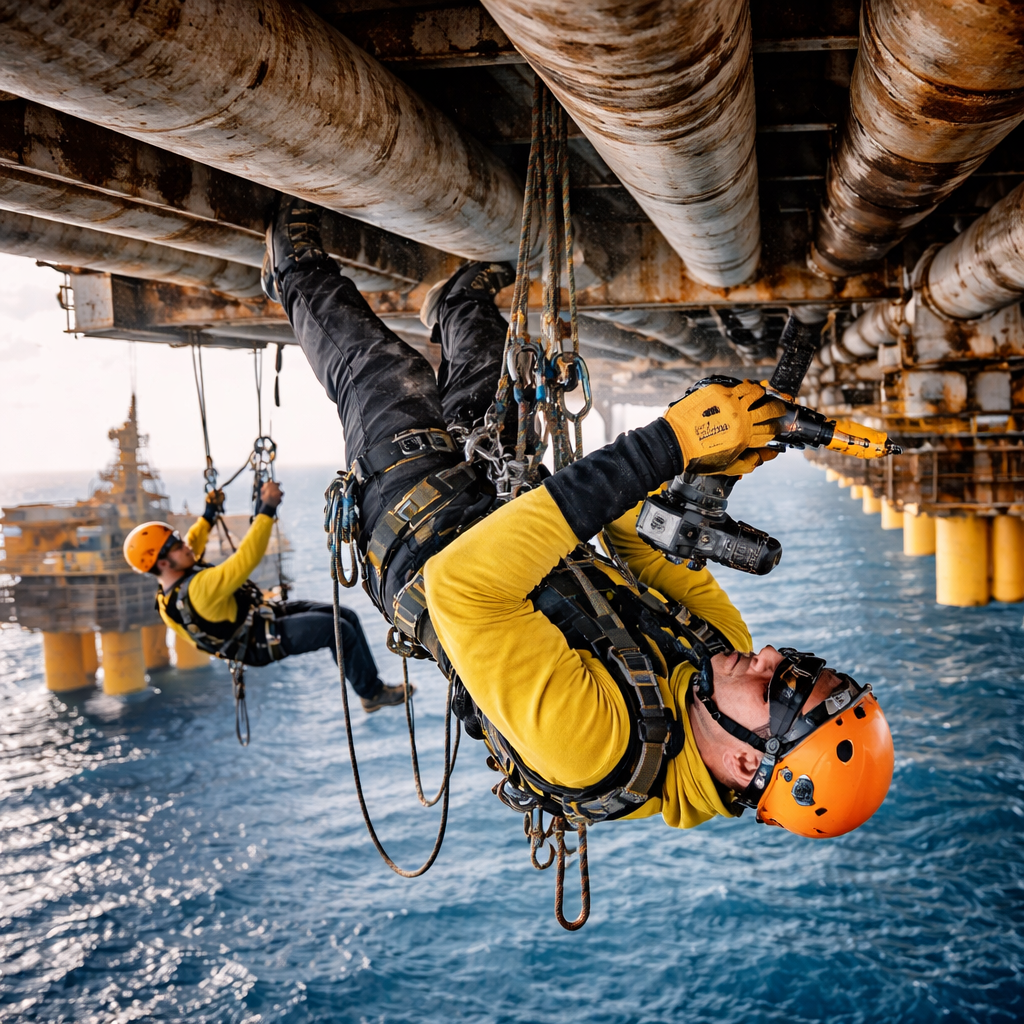
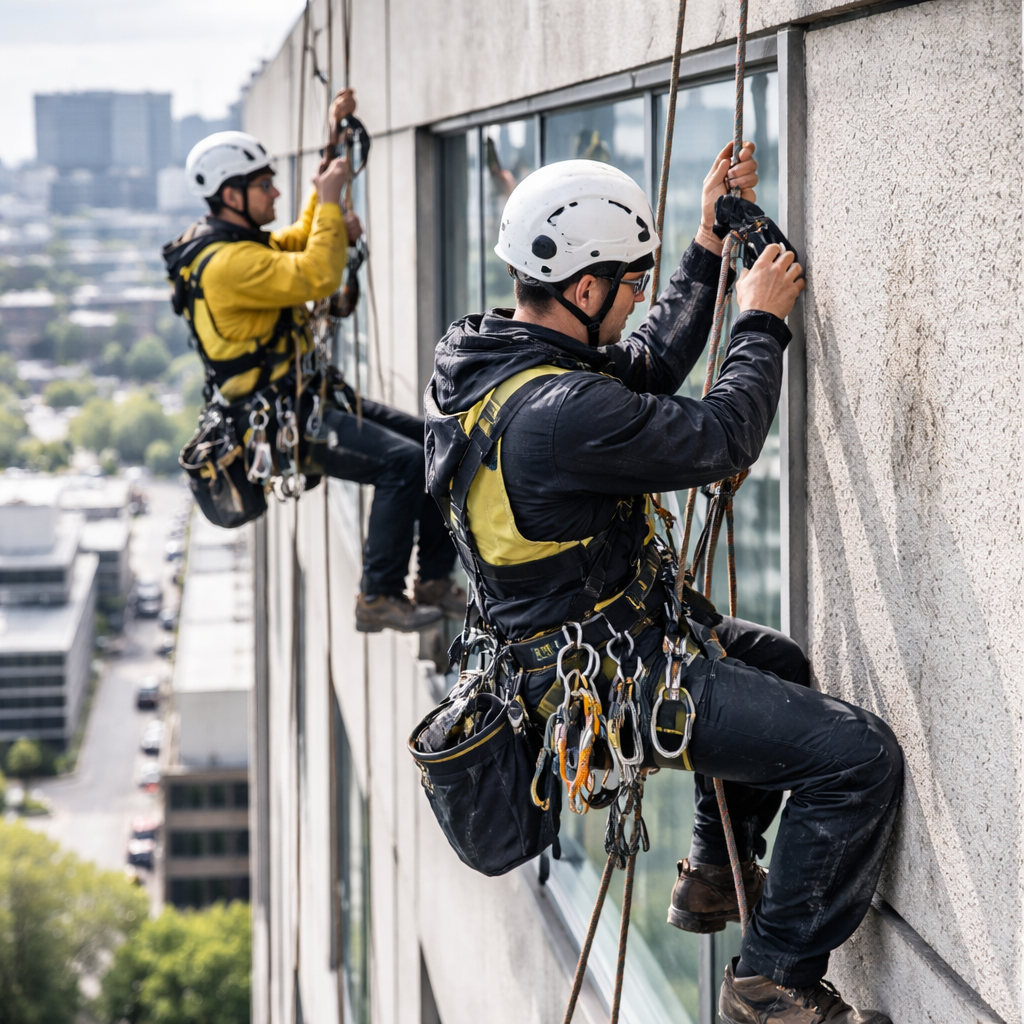
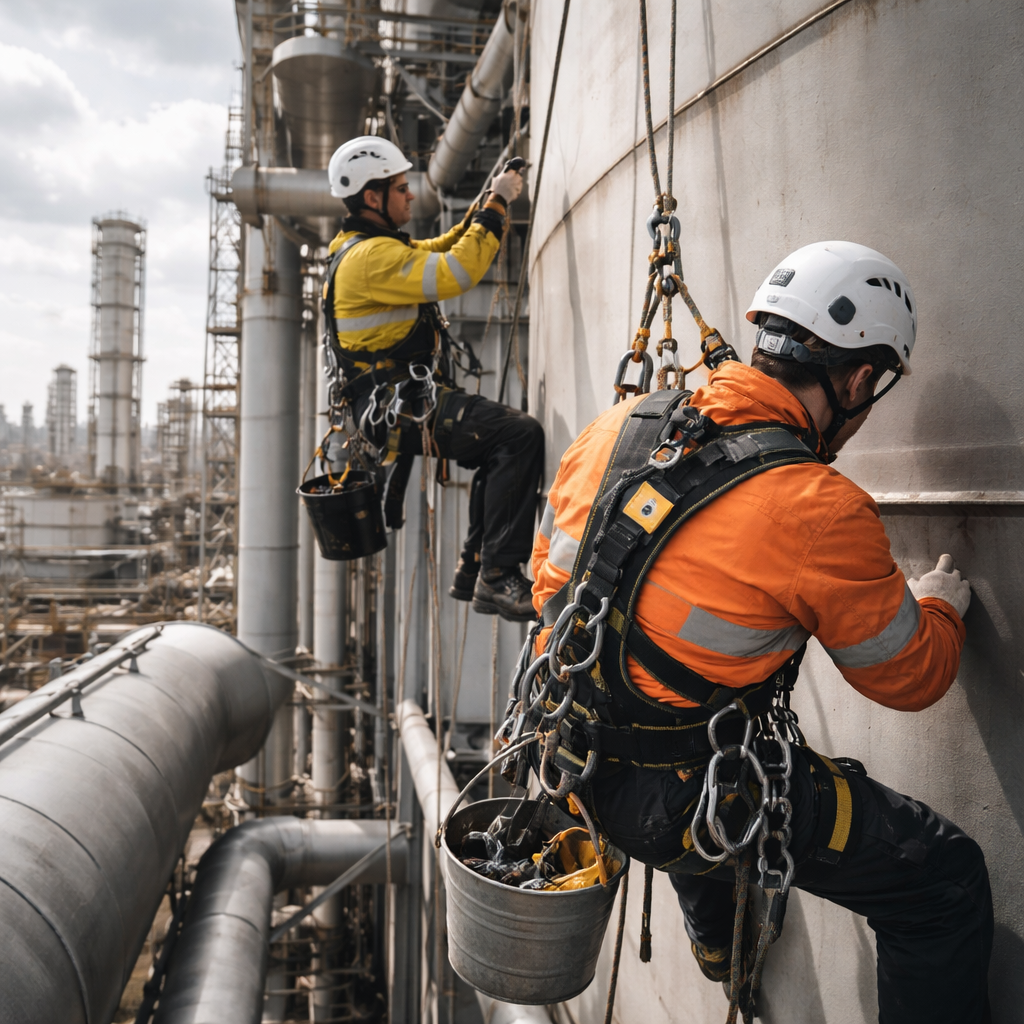
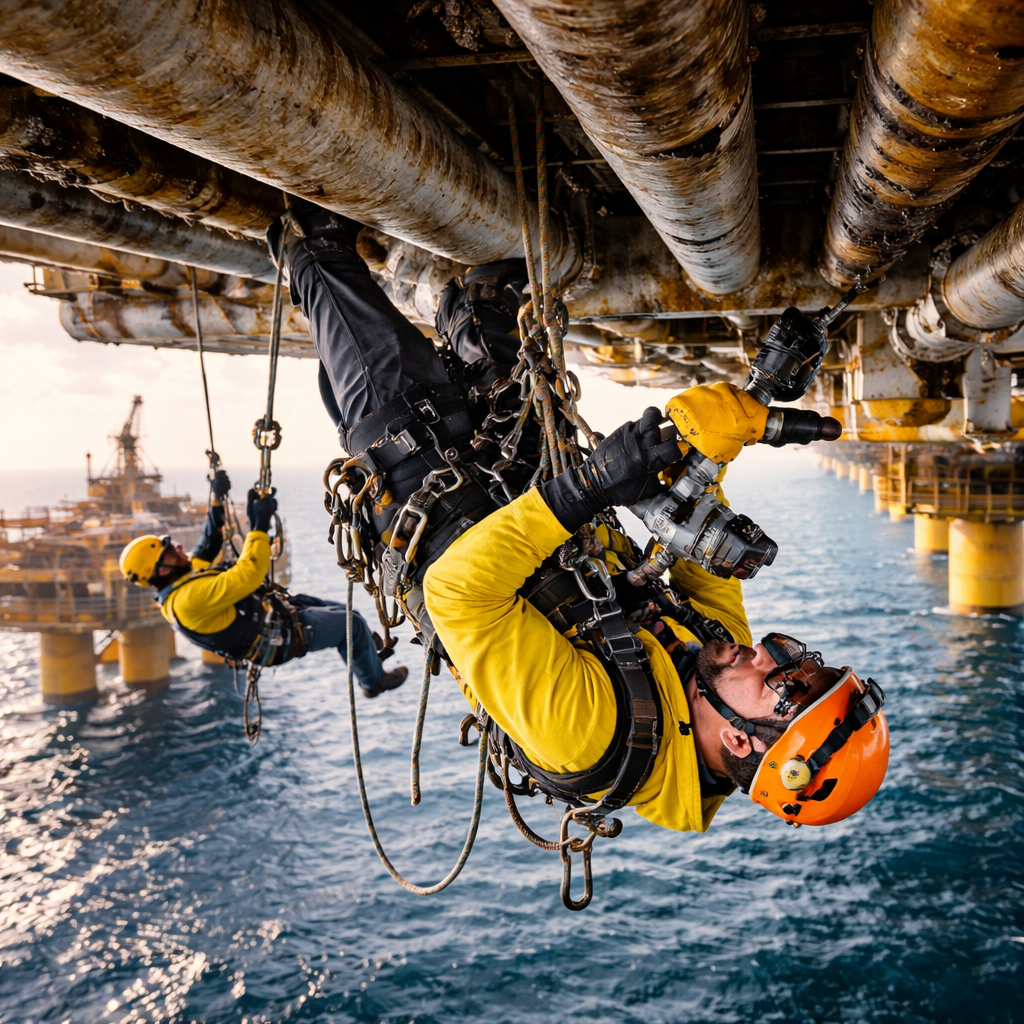
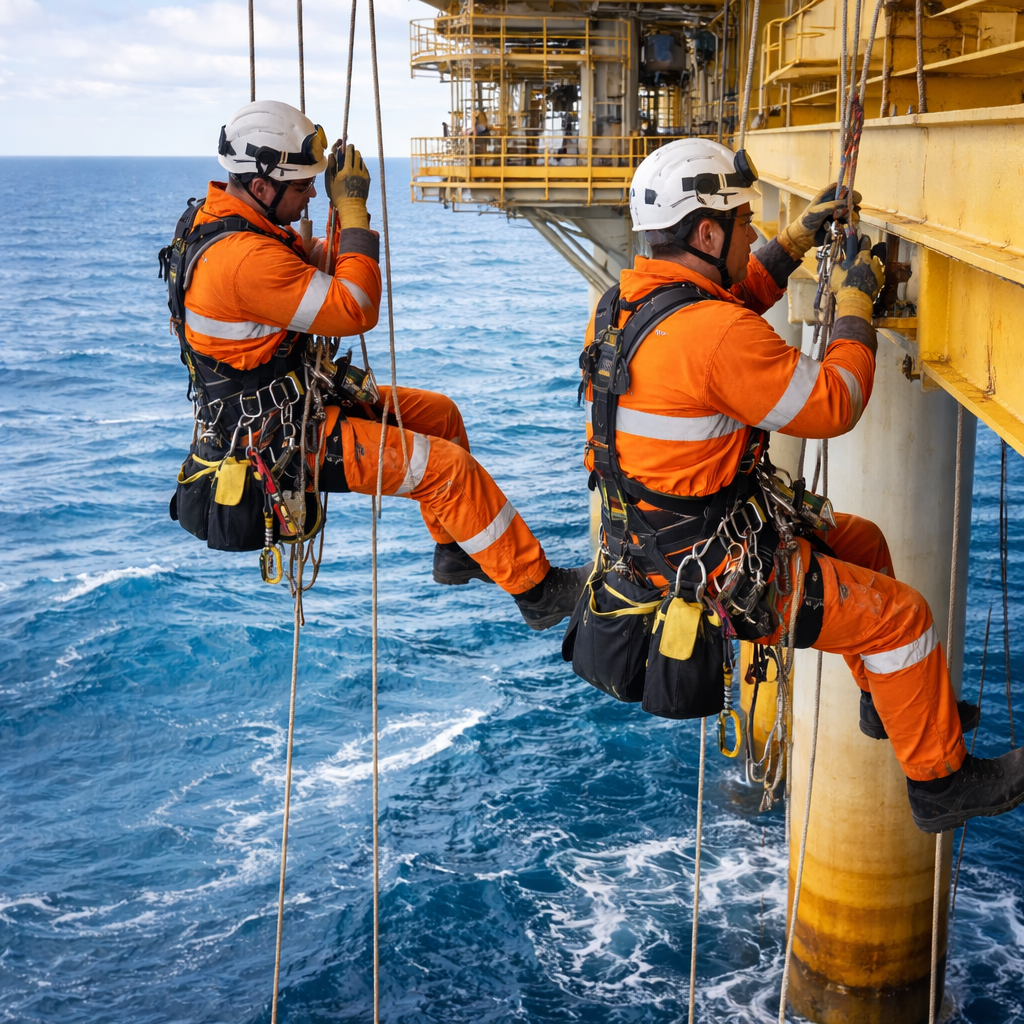
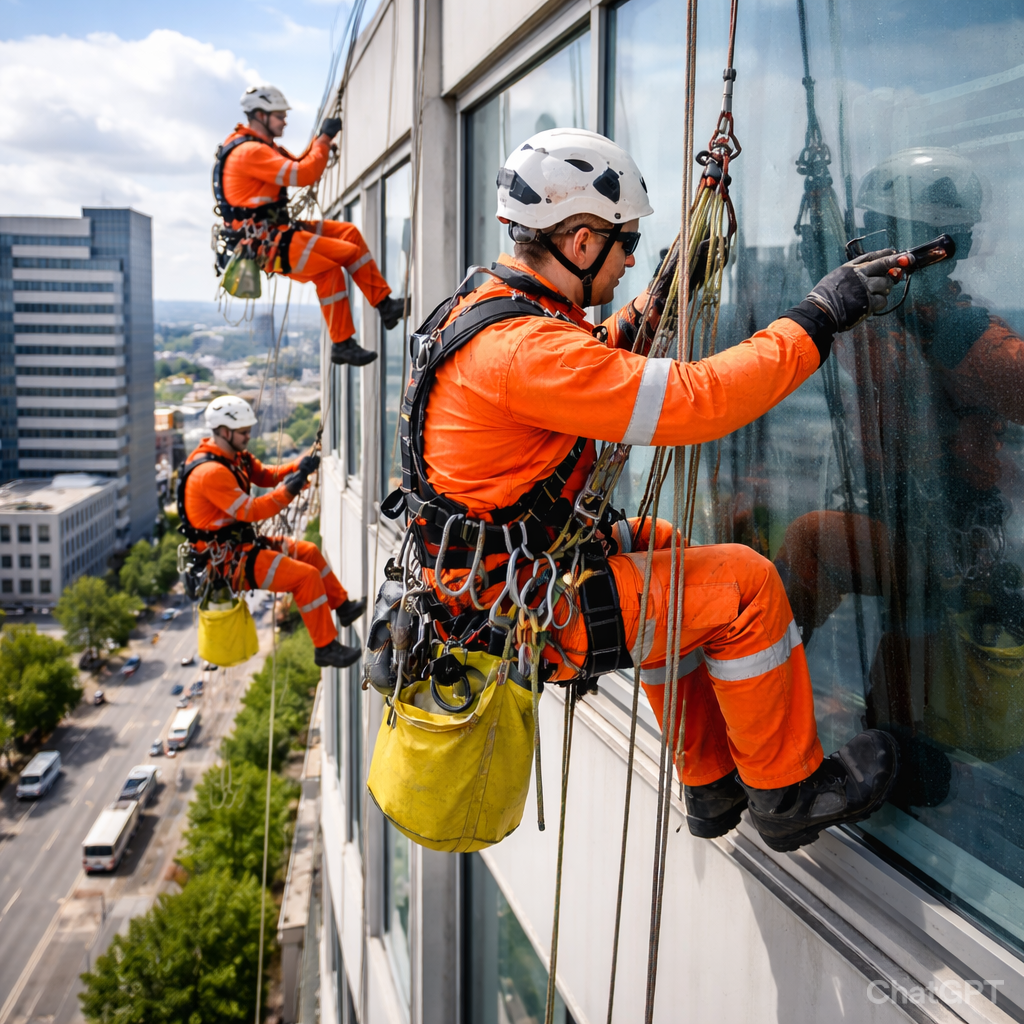
    Rope access training helps reduce height risks while improving safety, efficiency, and workforce performance.

    All personnel involved in working at height, including maintenance staff, inspection teams, and safety officers, should undergo training. It ensures everyone is prepared for safe execution of high-risk tasks.
    ned and certified staff, giving you a competitive edge.

Learn more about Evolution Access’s Rope Access Services and how integrated training can complement your operational capabilities.


FAQs: Rope Access & Height-Safety Training
Who should undergo IRATA-standard rope access training?
All personnel involved in working at height, including maintenance staff, inspection teams, and safety officers, should undergo training. It ensures everyone is prepared for safe execution of high-risk tasks.
Training varies by level (1–3). Level 1 focuses on basic rope access, Level 2 on supervision, and Level 3 on planning and rescue. Courses combine theory, practical exercises, and safety protocols.
Can trained staff perform both onshore and offshore rope-access operations?
Yes. IRATA training equips workers for diverse environments, including offshore platforms, industrial sites, and urban high-rise projects. It covers equipment handling, emergency response, and risk assessment in all conditions.
Posted on Leave a comment

Rope Access in 2026: Drone Inspections & Remote NDT Tech

rope access

Rope access has evolved far beyond traditional manual inspections. In 2026, innovation continues to reshape how industrial and high-rise maintenance is performed, making operations safer, faster, and more data-driven. Companies like Evolution Access are advancing this evolution by integrating drone-assisted inspections and remote Non-Destructive Testing (NDT) into rope access services, delivering highly efficient solutions for complex and challenging projects.
______________________________________________________________________________________________________________

Drone-Assisted Inspections: Extended Reach with Greater Safety

Drones have become a core component of modern rope access strategies, enabling inspection of hard-to-reach areas without unnecessary human exposure. From tall chimneys and industrial stacks to offshore platforms and silos, drones capture high-resolution images and video footage in minutes — tasks that previously required extensive manual setup and prolonged rope access operations.

At Evolution Access, drone technology is seamlessly integrated with rope access services, allowing engineers to assess structural conditions remotely before deploying technicians where necessary. This approach improves inspection speed, enhances safety planning, and reduces overall risk — particularly in offshore, high-risk, or confined environments.

Learn more about Evolution Access’s inspection services and how drones are used alongside rope access.
______________________________________________________________________________________________________________

Remote NDT Solutions: Precision Without Proximity

Non-Destructive Testing (NDT) remains essential for evaluating structural integrity without causing damage. In 2026, remote NDT technologies enable technicians to operate testing equipment from safe distances while maintaining high accuracy and compliance with industry standards.

By combining rope access with sensor-driven remote NDT methods, Evolution Access delivers detailed insights into corrosion, cracking, and material degradation. Clients benefit from faster data collection, reduced downtime, and minimal site disruption — all while maintaining stringent safety requirements.

Explore NDT and maintenance services to understand how technology enhances inspection reliability.
______________________________________________________________________________________________________________

Technology Integration with Rope Access

The defining advancement in 2026 is the seamless integration of drones, remote NDT, and rope access techniques. This hybrid approach enables inspection teams to:

  • Reduce man-hours spent working at height
  • Capture high-resolution visual and technical data efficiently
  • Deliver near real-time reporting to clients
  • Support preventive maintenance before minor issues develop into major failures

Evolution Access continues to demonstrate that modern rope access is no longer limited to manual techniques — it is technology-enabled, data-driven, and highly precise.
______________________________________________________________________________________________________________

Why This Matters for Clients

Clients partnering with Evolution Access benefit from:

  • Safety-focused operations with reduced human exposure
  • Faster project execution through drone-assisted and remote inspection methods
  • Improved decision-making driven by accurate, real-time inspection data

The combination of IRATA-certified technicians and advanced inspection technology ensures efficient, reliable outcomes — even in the most complex industrial and high-rise environments.
______________________________________________________________________________________________________________

FAQs
What types of structures can be inspected with drones in rope access projects?
Drones can inspect high-rise buildings, industrial silos, offshore platforms, chimneys, bridges, and other hard-to-access structures. Evolution Access integrates drone imaging with rope access to deliver comprehensive inspections.
How does remote NDT improve safety and efficiency?
Remote NDT allows technicians to conduct testing from safe distances, reducing time spent at height while providing accurate, actionable data for maintenance planning.
Can rope access, drones, and remote NDT be used together?
Yes. Evolution Access combines these technologies into hybrid inspection solutions, integrating human expertise with advanced data capture for precise and efficient project delivery.
Posted on Leave a comment

Which Rope Access Services Do You Need?

rope access

When it comes to industrial projects, maintenance, or inspections at height, traditional scaffolding and cranes often fall short. That’s where rope access services come into play — a safer, faster, and more cost-effective solution. But with so many options available, how do you know which rope access service suits your needs? Let’s break it down.


Understanding Your Project Requirements

The first step is to identify the nature of your project. Are you handling routine inspections, industrial maintenance, surface repairs, or specialized tasks like welding or coatings? Rope access services are versatile and can cater to:

  • Inspection & NDT (Non-Destructive Testing): Perfect for structural audits, corrosion checks, and safety evaluations. Technicians can access confined spaces or challenging structures like chimneys, tanks, and towers with minimal disruption.
  • Maintenance & Repairs: Whether it’s cleaning, minor welding, painting, or surface repairs, rope access allows trained professionals to perform high-quality work safely and efficiently.
  • Specialized Coatings & Industrial Application: Ideal for protective coatings, anti-corrosion layers, or any treatment that requires precision at height.
  • Confined Space Access: Some projects involve tight or restricted areas where scaffolding cannot fit. Rope access teams can maneuver safely in these zones, ensuring full coverage.

By understanding your project’s complexity, height, and workspace limitations, you can pinpoint the exact service your team needs.


Why Rope Access Could Be Your Best Choice

Unlike cranes or scaffolds, rope access minimizes setup time and costs while maximizing safety. At Evolution Access, all technicians are IRATA-certified and trained to handle various surfaces and heights efficiently. This approach ensures that your maintenance, inspection, or repair work does not interrupt ongoing operations, which is particularly valuable in industrial or offshore projects.

Moreover, rope access is environmentally friendly. Since it requires minimal equipment and no heavy machinery, it reduces site congestion and carbon footprint — a bonus for projects where space and compliance matter.


Choosing the Right Service for You

To select the perfect rope access service:

  1. Assess the Task Type: Is it inspection, repair, cleaning, or coating?
  2. Evaluate Access Constraints: Is it a high-rise, offshore platform, or confined area?
  3. Consider Equipment & Expertise Needed: Some tasks require NDT specialists, welding-certified technicians, or coating experts.
  4. Plan for Safety & Compliance: Ensure all work meets IRATA and industry safety standards.

With Evolution Access, you can customize services based on your specific requirements, ensuring efficiency, safety, and quality.


FAQs

Q1: Can rope access be used in offshore or marine environments?
Yes! Evolution Access provides fully equipped rope access teams for offshore platforms, ship maintenance, and marine inspections, ensuring safety and minimal disruption.
Q2: How do I know if my project requires inspection, welding, or coating services?
Start by evaluating the project type, height, and access constraints. Our experts can assess your site and recommend the exact service needed.
Q3: Are Evolution Access technicians certified?
Absolutely. All technicians are IRATA-certified, trained in safety protocols, and experienced across industrial, marine, and confined-space projects.
Posted on Leave a comment

How Can Rope Access Cut Maintenance Costs and Downtime Up to 50%?

rope access

Traditional maintenance methods like scaffolding, heavy lifts, or rope‑suspended platforms often mean long setup times, high labour costs, and extended downtime. Evolution Access brings a smarter solution: industrial rope access.

Using certified IRATA technicians, rope access allows direct vertical and confined-space entry without scaffolding or crane setups. This reduces manpower requirements, eliminates unnecessary equipment, and ensures tasks are completed faster — often cutting maintenance costs and downtime up to 50%.

Explore our rope access services to see how we serve industrial, offshore, and renewable projects efficiently.
______________________________________________________________________________________________________________

Faster, Safer, and More Flexible

One of the major benefits of rope access is speed and flexibility. Technicians can reach hard-to-access areas on tall structures, offshore platforms, or industrial facilities without dismantling existing infrastructure.

  • Reduced downtime: Equipment or plant shutdowns are minimized, keeping operations running.
  • No heavy machinery required: Saves rental and operational costs of cranes or lifts.
  • Safety-first approach: IRATA-certified rope access reduces risks compared to makeshift scaffolds.

Check out our offshore rope access solutions for detailed industry-specific applications.
______________________________________________________________________________________________________________

Real-World Use Cases

Across oil & gas, marine, and industrial sectors, rope access has proven its value:

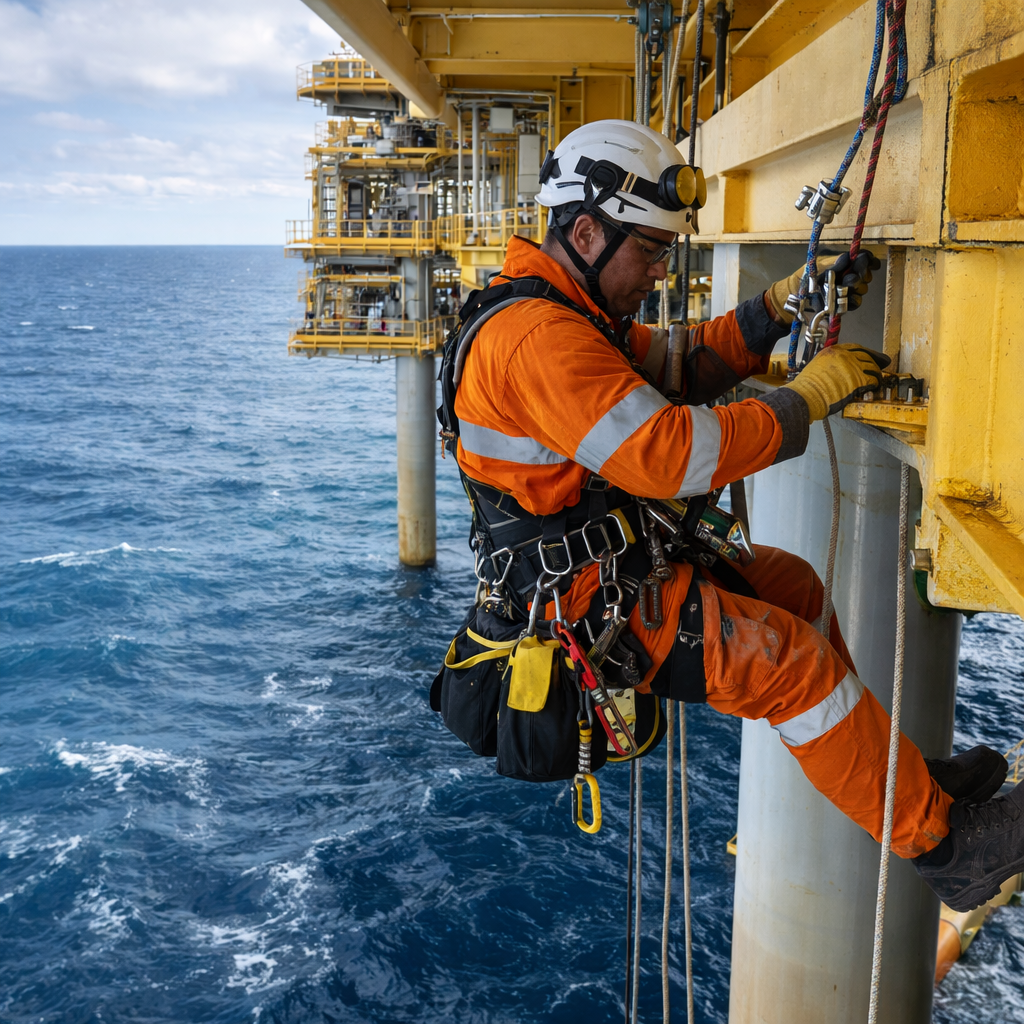
  • Offshore platforms: Rapid inspection and maintenance with minimal vessel or platform downtime.
  • Industrial plants: Maintenance of large machinery, chimneys, or storage tanks without halting production.
  • Renewables: Wind turbines or solar panel inspections done efficiently at height.

By choosing rope access, companies save on labour, equipment hire, and project overruns, while maintaining top-notch safety and operational standards.
______________________________________________________________________________________________________________

Why Evolution Access?

Evolution Access stands out with:

  • Certified technicians (IRATA Level 1, 2, 3)
  • Advanced equipment & rope systems for safe, reliable access
  • Nationwide service across offshore, industrial, and renewable projects
  • Proven track record in reducing downtime and operational costs

Discover our industrial rope access services to plan your next maintenance project smarter.
______________________________________________________________________________________________________________

FAQs

Q1: How much can rope access actually save compared to traditional methods?
A: Depending on the project scale, rope access can reduce labor, equipment, and setup costs by up to 50%, and minimize downtime significantly.

Q2: Is rope access safe for industrial maintenance at height?
A: Yes. All technicians are IRATA-certified, use tested safety equipment, and follow strict safety protocols, making rope access safer than scaffolding or cranes for many tasks.

Q3: Which industries benefit most from rope access?
A: Rope access is ideal for oil & gas, marine, industrial plants, renewables, and large commercial infrastructure, especially where conventional access methods are time-consuming or costly.

Posted on Leave a comment

Rope Access Safety Standards Every Client Should Know

rope access safety

When it comes to working at heights, safety isn’t optional — it’s everything. If you’re hiring a rope access provider, knowing the standards they adhere to can save lives, reduce downtime, and protect your investment. But with so many companies claiming “safe practices,” how do you separate the certified experts from the amateurs?


IRATA Certification: The Gold Standard

The Industrial Rope Access Trade Association (IRATA) certification is widely recognized worldwide. It ensures that technicians are trained, assessed, and competent to carry out rope access work safely. At Evolution Access, all rope technicians are IRATA certified, which means every climb, inspection, and repair follows international protocols.

Why does it matter? Imagine a high-rise facade or an offshore structure. A small mistake could be catastrophic. Certification ensures every move is checked, monitored, and backed by industry best practices.


Safety Planning & Rescue Protocols

Safety isn’t just about ropes and harnesses. A reputable rope access company implements a detailed site-specific safety plan. This includes:

  • Pre-inspection of anchors and access points
  • Emergency rescue plans and drills
  • Continuous monitoring of weather conditions and risks

At Evolution Access, every project begins with a thorough risk assessment, and rescue protocols are tested before work begins. It’s like having a safety net before stepping on the tightrope — literally.


Equipment Standards & Maintenance

Ever wondered how reliable rope access gear really is? Certified providers use only industry-approved harnesses, ropes, and descent devices. But it doesn’t stop there — regular inspections, maintenance, and replacement schedules are critical.

Evolution Access adheres to EN and ISO standards for all equipment, and each rope, harness, and pulley is checked before every project. This ensures that your team and site stay protected, even in challenging environments like offshore platforms or industrial plants.


Why Compliance Matters for B2B Clients

For corporate clients, insurers, and project managers, rope access safety isn’t just a box to tick — it’s a legal and operational requirement. Choosing a certified provider like Evolution Access minimizes liabilities, insurance risks, and project delays. Plus, a certified approach boosts confidence for employees and stakeholders, showing you value both safety and efficiency.

  • Learn more about our Rope Access Services
  • Explore our Industrial Maintenance Solutions
  • Check out Our Training Programs

FAQs

  1. What certifications should rope access technicians have?
    Rope access technicians should be IRATA certified, which ensures they have completed formal training, passed assessments, and can operate safely in high-risk environments.
  2. How often is rope access equipment inspected?
    All ropes, harnesses, and descent devices must be inspected before every job and undergo scheduled maintenance according to EN and ISO standards to prevent equipment failure.
  3. What is included in a rope access safety plan?
    A proper safety plan includes risk assessment, rescue protocols, anchor inspections, continuous monitoring, and contingency procedures. Evolution Access ensures every site has a comprehensive plan before work starts.
Posted on Leave a comment

Why Choose Rope Access for Offshore & Onshore Projects in Oil, Marine or Renewable Sectors?

offshore and onshore rope access

When it comes to maintaining assets in the oil & gas, marine, and renewable energy sectors, challenges like extreme weather, restricted access, and hazardous environments are part of everyday operations. Traditional access methods—like scaffolding or heavy lifting platforms—often slow down work, increase risk, and drive-up costs.

This is exactly why rope access has become the preferred choice for offshore rigs, ships, refineries, ports, wind turbines, and energy facilities. And companies like Evolution Access Technologies deliver these solutions with certified IRATA professionals and industry-proven safety systems.
offshore and onshore rope access


  1. Rope Access Is Built for Hard-to-Reach Environments

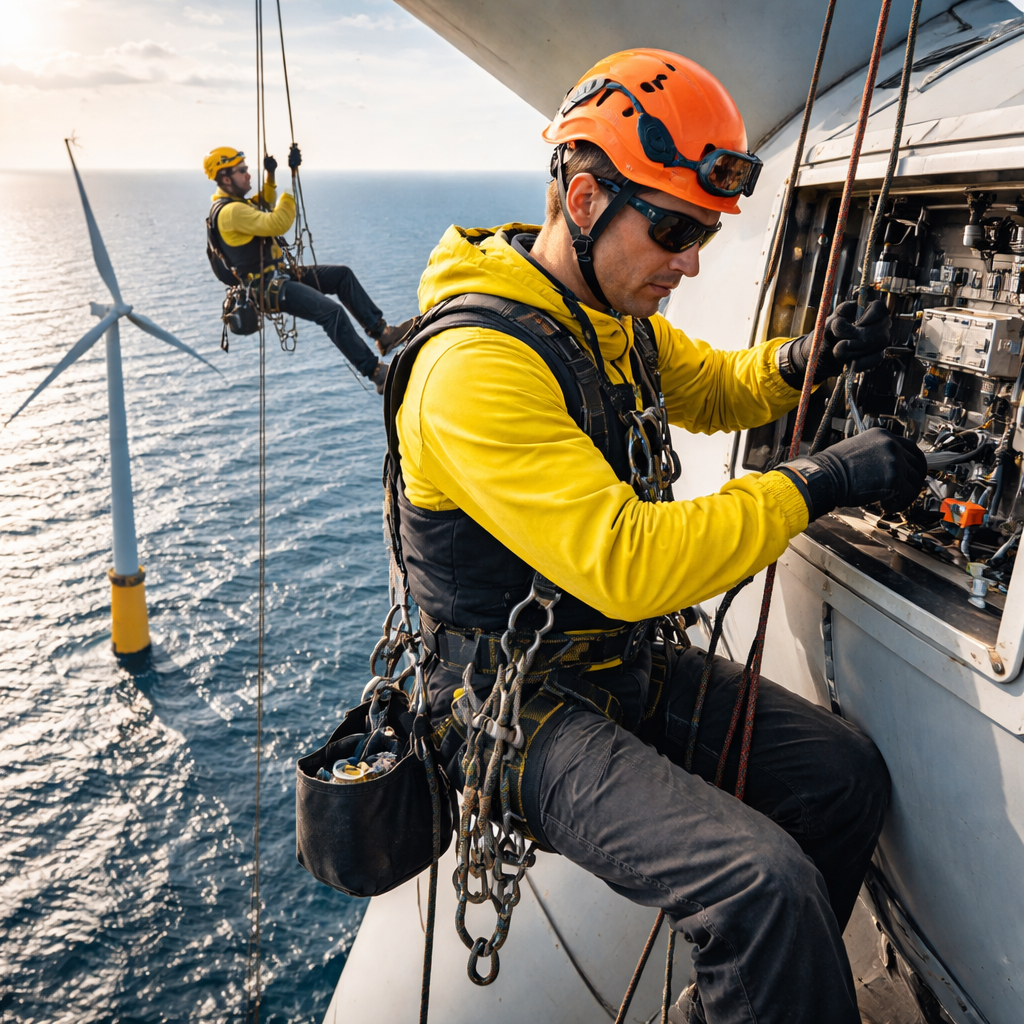
Offshore platforms, floating vessels, and wind farms have countless areas where installing scaffolding is nearly impossible. Rope access teams can reach verticals, confined spaces, high elevations, underdecks, turbine blades, hulls, and structural frameworks with unmatched speed.

Because rope access relies on compact equipment and trained technicians, it avoids logistical complications like:

  • Heavy transport
  • Structure modifications
  • Shutdowns required for scaffolding
  • Long erection and dismantling hours

This makes rope access ideal for time-critical maintenance in offshore and coastal environments.


  1. It Reduces Project Downtime & Operational Costs

Offshore shutdowns can cost millions. Rope access cuts those hours dramatically by allowing technicians to be deployed quickly without disrupting ongoing operations.

Rope access eliminates:

  • Material & labour required for scaffolding
  • Crane or MEWP mobilization
  • Permit delays
  • Long setup/teardown time

For the oil, marine, and renewable sectors, this translates to faster turnaround, lower operational costs, and minimal disruption to production.


  1. Safety Standards Are Higher Than Most Traditional Methods

Contrary to outdated assumptions, rope access is statistically one of the safest access methods in the world. IRATA certification, redundant rope systems, continuous monitoring, strict rescue preparedness, and advanced training ensure extremely low incident rates.

Evolution Access follows:

  • IRATA best practices
  • International safety compliance
  • Advanced rescue protocols
  • Specialized offshore & confined space procedures

This makes rope access the right choice for hazardous and sensitive environments like FPSOs, rigs, ship hulls, turbine blades, chimneys, bridges, and jetties.


  1. Perfect for Inspection, NDT, Repairs & Preventive Maintenance

Whether it’s corrosion treatment, bolting, welding, blade repair, hull inspection, ultrasonic NDT, or coating application—rope access allows technicians to perform complex tasks safely and efficiently.

This versatility is why rope access dominates in:

  • Wind turbine inspections
  • Offshore rig maintenance
  • Ship repair & hull cleaning
  • Jetty & port structure repairs
  • Tank & refinery NDT


Frequently Asked Questions (FAQ)

  1. Why is rope access preferred in offshore projects?

Because offshore structures are complex and weather-exposed, rope access provides faster, safer, and more flexible access than scaffolding or cranes, while reducing cost and minimizing downtime.

  1. Is rope access safe for wind turbine and marine maintenance?

Yes. Rope access uses IRATA-certified professionals, redundant rope systems, and strict safety procedures—making it ideal for turbine blades, towers, hulls, jetties, and port structures.

  1. What services can be done through rope access?

Inspection, NDT, welding, coating, cleaning, repair, confined-space tasks, blade maintenance, thickness testing, and corrosion prevention—making it suitable for offshore, marine, and renewable assets.

Posted on Leave a comment

Rope Access Inspection & NDT: A Complete 2025 Guide

rope access

When it comes to maintaining complex industrial structures, rope access inspection and NDT (Non-Destructive Testing) have become the preferred choice for maintenance managers worldwide. Whether it’s a refinery column, wind turbine blade, offshore rig, bridge span or high-rise façade—rope access allows technicians to reach difficult areas safely, quickly, and with minimal downtime.

At Evolution Access, our IRATA-certified teams combine rope access efficiency with advanced NDT techniques to deliver precise, reliable inspection results that help facility managers plan maintenance with confidence.


Why Rope Access for Inspection?

Traditional access methods like scaffolding or heavy equipment can take days to install—delaying maintenance and increasing operational costs. Rope access solves this by offering:

  • Fast setup and dismantling
  • Minimal disruption to operations
  • Safe access to confined, elevated and complex environments
  • Cost savings up to 50% compared to scaffolding
  • Highly trained IRATA-certified teams

It’s not just about reaching the location—it’s about performing high-precision inspections while suspended safely.


How Rope Access NDT Actually Works

NDT is carried out while technicians are securely positioned using rope access systems. Here’s how the process flows:

  1. Site Assessment & Risk Planning

Before any work begins, the team conducts a full risk assessment and rescue plan. This ensures compliance with IRATA guidelines, local safety regulations, and client requirements.
(https://evolution-access.com/who-we-are/


  1. Positioning the Technicians

Rope access allows technicians to land exactly where inspection is required—no matter how awkward the geometry. Using two-rope systems (working + safety rope), they can move vertically, horizontally, or diagonally with full control.


  1. Performing the NDT

Depending on the structure and material, Evolution Access specialists use advanced techniques such as:

  • Ultrasonic Testing (UT) – detects internal defects, wall thickness loss, corrosion
  • Magnetic Particle Testing (MPT) – identifies cracks on ferrous surfaces
  • Dye Penetrant Testing (PT) – great for surface cracks in welds & joints
  • Visual Inspection (VI) – detailed condition assessments
  • Coating & Surface Integrity Checks

The advantage? NDT is done without dismantling equipment — saving huge time and cost.

  1. Reporting & Maintenance Recommendations

Every job ends with a detailed inspection report, photographic evidence, and actionable recommendations for your maintenance schedule.
(https://evolution-access.com/services/other-services/)


Why This Method Builds Trust

For maintenance managers, accuracy and safety matter more than anything else. Rope access NDT ensures:

  • Reliable inspection in hard-to-reach areas
  • Less downtime for production
  • Lower operational costs
  • Compliance with global IRATA and industry standards

This is why Evolution Access continues to support oil & gas, marine, civil, renewable and industrial sectors with professional rope access inspection services.


FAQs

  1. Is rope access safe for NDT work on large industrial structures?

Yes. Rope access is considered one of the safest work-at-height methods when performed by IRATA-certified technicians. Evolution Access follows strict two-rope systems, rescue planning, and industry-standard safety protocols.

  1. What types of NDT can be performed using rope access?

Almost all key techniques: Ultrasonic Testing, Magnetic Particle Testing, Dye Penetrant Testing, Visual Surveys, and Coating Inspections—making it ideal for refineries, offshore platforms, wind turbines, steel structures, and high-rise assets.

  1. How does rope access save costs compared to scaffolding?

Rope access eliminates scaffold erection, manpower, transport, and dismantling costs. This reduces overall project time and can cut inspection costs by up to 50%, especially for short-duration or hard-to-reach tasks.

Posted on Leave a comment

What Is Industrial Rope Access? How Does It Beat Traditional Scaffolding & Cranes in 2025?

Industrial rope access has become one of the most efficient ways to perform inspection, repair, maintenance, and high-altitude work — especially in environments where traditional scaffolding or cranes create delays, high costs, and major site disruptions. In 2025, industries across offshore platforms, marine structures, wind farms, high-rise buildings, and infrastructure projects are choosing rope access because it delivers fast, controlled, low-impact access with unmatched safety.

At Evolution Access, rope access is performed by certified IRATA technicians who combine advanced safety systems with precise operational skills, making it a reliable solution for even the most complex sites.

industrial rope access
______________________________________________________________________________________________________________


What Exactly Is Industrial Rope Access?

Industrial rope access is a method where trained technicians use a dual-rope system (main working rope + backup safety rope) to access difficult-to-reach areas. Instead of constructing large platforms or deploying heavy machinery, technicians descend, ascend, or position themselves using harnesses and equipment designed according to international safety standards.

The system is flexible, mobile, and suitable for:

  • Offshore structures
  • Vessel hulls & marine assets
  • Refineries & power plants
  • Wind turbines & renewable infrastructure
  • Bridges & high-rise façades
  • Confined-space environments

Explore Evolution Access services here: https://evolution-access.com
______________________________________________________________________________________________________________


Why Rope Access Beats Scaffolding in 2025

Traditional scaffolding is stable and useful, but it demands time, manpower, permissions, and significant space. For reference, scaffolding providers build excellent engineered systems — but those systems still require hours or days to install.


Rope access eliminates that delay.

Technicians can be deployed within minutes, not days. There is no need for heavy installation, dismantling, or transport. For short-duration tasks such as inspection, NDT, cleaning, painting, and maintenance, rope access is dramatically faster and more cost-effective.

Key advantages over scaffolding:

  • Zero structural footprint
  • No blocking of walkways/operations
  • High flexibility on uneven or limited-access sites
  • Ideal for offshore environments where scaffolding is impractical

______________________________________________________________________________________________________________


Why Rope Access Beats Cranes & Heavy Lifting Equipment

Cranes are powerful and essential for lifting heavy loads. Companies provide world-class crane & hoist systems — but cranes are not ideal for precise hands-on work like inspection or maintenance.

Rope access excels where human control and close-up access are required. It enables:

  • Rapid personnel positioning
  • Minimal setup time
  • Zero ground disturbance
  • Safe operations in confined or sensitive zones

For buildings with complex shapes, offshore rigs with narrow platforms, or towers exposed to wind, rope access offers precise access that cranes cannot match.

______________________________________________________________________________________________________________


The 2025 Advantage: Safer, Faster, Smarter

In 2025, industries demand solutions that reduce downtime and risk.
Rope access gives you:

  • Exceptional safety (dual-rope fail-safe system)
  • Lower cost of access
  • Faster job completion
  • Minimal operational interruption
  • Highly trained IRATA-certified technicians

This combination makes rope access not just an alternative — but the preferred method for maintenance and inspection.

______________________________________________________________________________________________________________


FAQs

  1. Is industrial rope access safe for high-risk sites like offshore rigs or wind turbines?

Yes. Rope access follows IRATA-level safety systems, uses dual-rope protection, and is globally recognized as one of the safest access methods with extremely low incident rates.

  1. Can rope access replace scaffolding or cranes completely?

Not always. Scaffolding and cranes have their place. Rope access is ideal for inspection, maintenance, repair, and difficult-reach areas — while scaffolding is suited for long-duration construction, and cranes for lifting loads.

  1. How long does it take to deploy a rope access team?

Most rope access jobs begin within minutes of arrival. No large-scale assembly is required, making it much faster than scaffolding or crane setup.


Posted on Leave a comment

How Weather Impacts Rope Access Work — And What We Do About It

rope access

The forecast said clear skies. But now, 30 stores up with the city sprawling below, the wind is starting to howl. It whips around the edge of the building, turning a routine inspection into a battle against an invisible force. Your gear is secure, your training is locked in, but nature has decided to change the rules of the game. This is a moment every rope access technician knows well. Working at height isn’t just about ropes and harnesses; it’s a constant negotiation with the elements.

Most people see a finished project—a gleaming window, a secure panel, a freshly painted facade. They don’t see the meticulous planning that goes into making sure the work can happen safely, especially when the weather decides not to cooperate. So, how do we handle the wind, rain, and heat that are part of the job? It comes down to preparation, procedure, and an unwavering respect for Mother Nature.


The Unseen Opponent: Battling the Wind

Wind is arguably the most significant weather factor in rope access. It doesn’t have to be a gale-force storm to pose a serious risk.

  • The Risks:
    • Uncontrolled Swings: A strong gust can turn a technician into a pendulum, risking impact against the structure, windows, or other obstacles.
    • Material Hazards: Wind can snatch tools, equipment, or building materials, turning them into dangerous projectiles for anyone below.
    • Communication Breakdown: The roar of the wind can make it impossible to hear commands or warnings, compromising team safety.
  • Our Mitigation Strategy:
    • Constant Monitoring: We don’t just check the morning forecast. We use live, on-site anemometers (wind speed meters) and hyper-local weather apps to get real-time data.
    • Setting Strict Limits: Every project has a pre-defined maximum wind speed limit. If the gusts exceed that number, work is paused. There is no negotiation on this.
    • Secure Everything: All tools and equipment are tethered, and materials are secured before ascent. We operate on a “zero-drop” policy, regardless of the weather.


Working in the Wet: The Challenge of Rain

Rain introduces a new set of challenges that affect everything from grip to visibility. Working through a downpour isn’t just uncomfortable; it’s hazardous.

  • The Risks:
    • Slippery Surfaces: Both the structure’s surface and the ropes themselves can become incredibly slick, compromising grip and footing.
    • Reduced Visibility: Heavy rain can make it difficult to see anchor points, potential hazards, or team members.
    • Water Ingress: For jobs like sealant application or painting, rain can ruin the work, leading to costly rework.
  • Our Mitigation Strategy:
    • Assessing the Surface: Before starting, we assess how the specific work surface (glass, metal, concrete) reacts to water.
    • Specialized Gear: We use ropes with low water absorption and wear high-grip gloves and footwear designed for wet conditions.
    • Work-Specific Pauses: While some inspection work might be possible in light rain, tasks requiring dry surfaces are immediately postponed. We plan our work phases around the forecast to maximize productivity in dry windows.


Temperature Extremes: From Searing Heat to Biting Cold

Extreme temperatures directly impact the technician’s physical and mental performance, which is a critical safety factor.

  • The Risks:
    • Heat Exhaustion & Dehydration: Working on a sunbaked facade can quickly lead to heatstroke, impairing judgment and physical ability.
    • Cold Stress & Frostbite: In cold weather, dexterity suffers. Numb fingers make it difficult to operate equipment safely, and the risk of hypothermia is real.
    • Equipment Integrity: Extreme temperatures can also affect the performance of certain materials and equipment.
  • Our Mitigation Strategy:
    • Hydration & Shade Protocols: In hot weather, mandatory water breaks, electrolyte supplements, and scheduling work to avoid the peak sun hours are standard practice.
    • Layered & Insulated Gear: For cold environments, we use thermal base layers and insulated gloves that still allow for fine motor skills.
    • Work/Rest Cycles: We implement strict work/rest cycles in extreme temperatures to prevent fatigue and allow the body to recover, ensuring our team remains alert and focused.


Professionals Don’t Gamble with the Weather

Ultimately, working safely at height means accepting that you can’t control the weather—but you can always control your response to it. A professional rope access team doesn’t take chances. We don’t “tough it out” when conditions are unsafe. We plan, we monitor, and we have the discipline to make the right call, every single time.

This commitment to safety and preparedness is what allows us to operate effectively in challenging environments where others can’t.

Have a high-access project where conditions are a concern?

Don’t leave it to chance. Contact Evolution Access today to discuss how our expert team can get your job done safely and efficiently, no matter what the forecast says.

Posted on Leave a comment

5 Key Safety Myths in Rope Access — Busted!

rope access

You’ve seen them before. The men and women suspended hundreds of feet in the air against the glass of a skyscraper or the side of a bridge, looking like something out of a spy movie. And if you’re like most people, a few thoughts probably crossed your mind: “That looks dangerous,” or “Are they crazy?” or the classic, “I could never do that.”

It’s an understandable reaction. Rope access looks extreme, and our brains are wired to see a person on a rope and immediately think “risk.” But what if we told you that, statistically, a properly trained rope access technician is often safer than a worker standing on traditional scaffolding?

The truth is, professional rope access is one of the safest industries in the world, thanks to rigorous training, redundant systems, and an unwavering commitment to safety protocols. It’s time to separate the Hollywood-fueled fiction from the on-the-job reality. Let’s bust five of the biggest safety myths, one by one.


Myth 1: “It’s all just one rope! If it snaps, you fall.”

The Reality: This is the most common misconception, and it’s 100% false. Every professional rope access technician operates on a mandatory two-rope system.

  • The Working Line: This is the primary rope that bears the technician’s weight and allows them to ascend and descend.
  • The Safety Line (or Backup Line): This second rope is connected to a separate anchor point and a different harness attachment. It runs alongside the working line and is attached to a backup device that will automatically engage and arrest a fall if the main line ever fails.

Think of it like flying a modern passenger jet. There isn’t just one engine; there are backups for the backups. The two-rope system is the fundamental principle of our industry, ensuring that a single point of failure is never catastrophic.

Myth 2: “The equipment must wear out quickly and be unreliable.”

The Reality: Rope access gear is the opposite of disposable; it’s meticulously engineered, incredibly robust, and obsessively inspected.

Think of it less like regular climbing rope and more like the critical components of an aircraft.

  • Rigorous Standards: All gear—from ropes and harnesses to carabiners and descenders—is manufactured to meet or exceed strict international safety standards (like those from IRATA).
  • Daily Inspections: Before a single boot leaves the ground, every piece of equipment for the day’s work is thoroughly inspected by the technician using it.
  • Formal Logging: Every item has a logged history. We track its age, usage hours, and inspection records. If a piece of gear shows even minor signs of excessive wear or is involved in a significant event (like arresting a fall), it’s retired immediately.

Myth 3: “It must be a job for reckless adrenaline junkies.”

The Reality: This couldn’t be further from the truth. The people drawn to professional rope access are typically calm, methodical, and detail-oriented problem solvers.

You won’t find daredevils on our crews. You’ll find skilled tradespeople—welders, inspectors, and maintenance experts—who have chosen rope access as the safest and most efficient way to do their job at height. The training process weeds out anyone looking for a cheap thrill. It rewards slow, deliberate, and safe movements. An effective technician is a cautious one.

Myth 4: “You need superhuman strength to do rope access work.”

The Reality: Rope access is about technique, not brute force. The system is designed to be incredibly efficient.

Modern equipment uses clever physics involving cams, levers, and friction devices to make ascending and descending surprisingly low-effort. It’s more about understanding the mechanics of the gear and using your body weight intelligently. While a good level of fitness is required, the job relies far more on technical skill and mental focus than on raw physical power.

Myth 5: “Scaffolding or a crane is always the safer option.”

The Reality: While traditional methods have their place, rope access often presents a lower overall risk profile for a project.

  • Fewer Drop Hazards: Scaffolding creates a large, multi-level platform where tools or materials can be accidentally kicked off, endangering people below. A rope access technician keeps their tools attached directly to their harness.
  • Minimal Disruption: Building and dismantling large scaffolding structures introduces its own set of risks and can take days, creating a prolonged hazard zone. Rope access teams can rig their ropes and be at the work site in a matter of hours, and they are completely gone when the job is done.
  • Less Equipment Failure: Scaffolding collapses and crane failures, while rare, can be catastrophic events involving massive amounts of weight and energy. The failure of a rope access system, thanks to the redundant two-rope principle, is almost statistically zero.

See Past the Myth, See the Safety

Rope access might look like a high-wire act, but it’s actually a carefully calculated science. It’s a method built from the ground up on the principle of redundancy and practiced by meticulous professionals. It’s not just a way to get to hard-to-reach places; it’s the proven safest and most efficient way to do it.

Have a complex project at height? Don’t let myths hold you back from finding the smartest solution.

Contact the experts at Evolution Access today. We’d be happy to assess your needs and show you how our commitment to safety can make your next project a success.