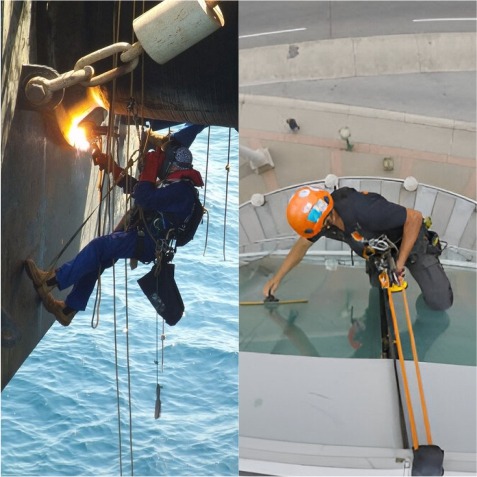
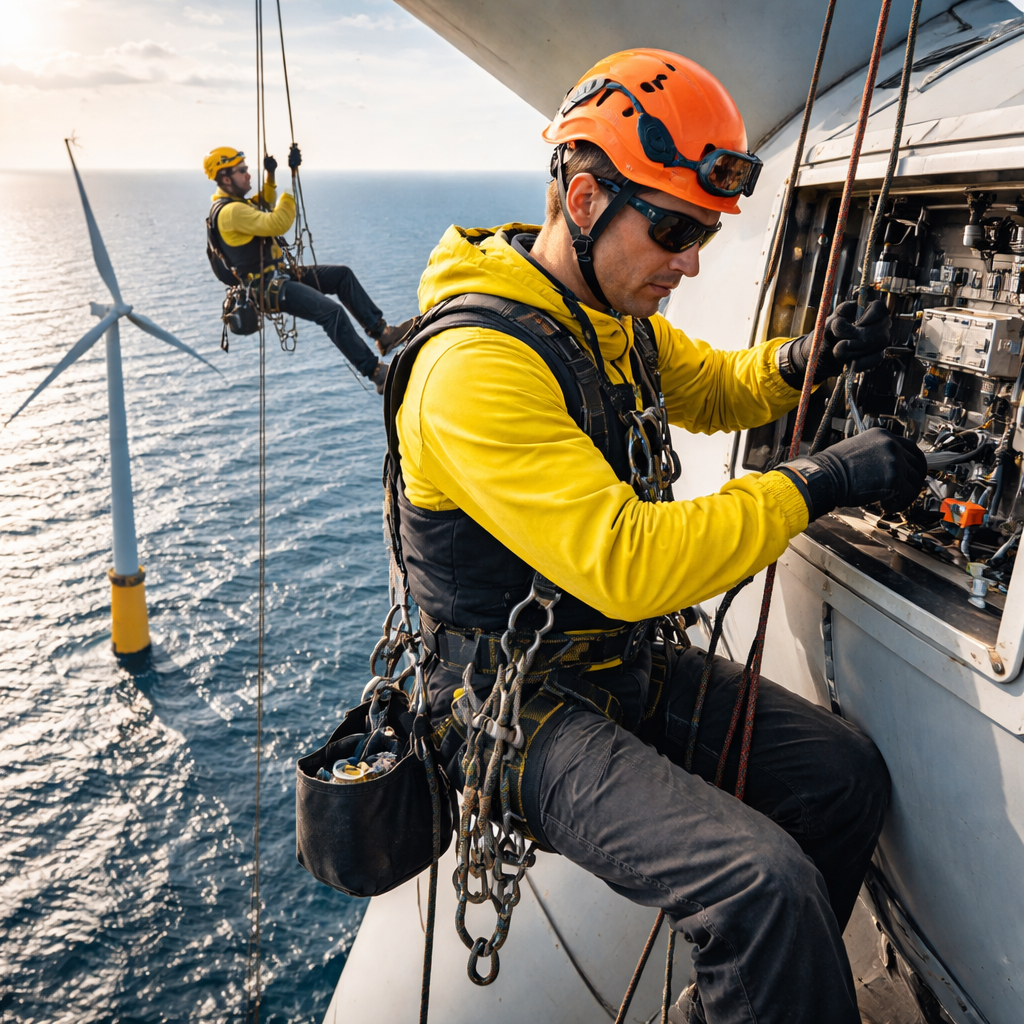
Industrial infrastructure often includes tall, complex, and difficult-to-reach structures. Performing maintenance on these assets can be challenging when using traditional access methods like scaffolding or heavy equipment. Onshore rope access provides a faster, safer, and more flexible solution for reaching elevated areas and completing critical tasks efficiently.
Here are eight common applications of onshore rope access in industrial infrastructure.
- Structural Inspections
Rope access technicians can easily reach high structures such as towers, bridges, and storage tanks to perform visual inspections and identify structural issues early. - Corrosion Control
Steel structures exposed to weather conditions often develop corrosion. Rope access helps technicians carry out cleaning, surface preparation, and protective coating work at height. - Industrial Painting
Applying protective paint or coatings on large industrial structures becomes easier with rope access, as it allows direct access without installing large platforms. - Façade Maintenance
Industrial buildings sometimes require façade cleaning or repairs. Rope access allows technicians to perform these tasks efficiently and safely. - Equipment Installation
Many industrial facilities require installation of sensors, lighting, or monitoring systems at height. Rope access makes these installations faster and more cost-effective. - Cleaning and Maintenance
Structures such as silos, towers, and pipelines require regular cleaning and preventive maintenance, which rope access technicians can perform with minimal disruption. - NDT Inspection Support
Rope access teams often support inspection specialists by providing safe access for non-destructive testing on critical structures. - Emergency Repairs
In urgent situations, rope access teams can quickly reach damaged areas and carry out repairs without the delay of installing large access systems.
Conclusion
With its flexibility, safety, and efficiency, onshore rope access has become an essential solution for maintaining modern industrial infrastructure. It allows companies to complete maintenance, inspections, and repairs quickly while minimizing downtime and operational disruption.