Posted on Leave a comment

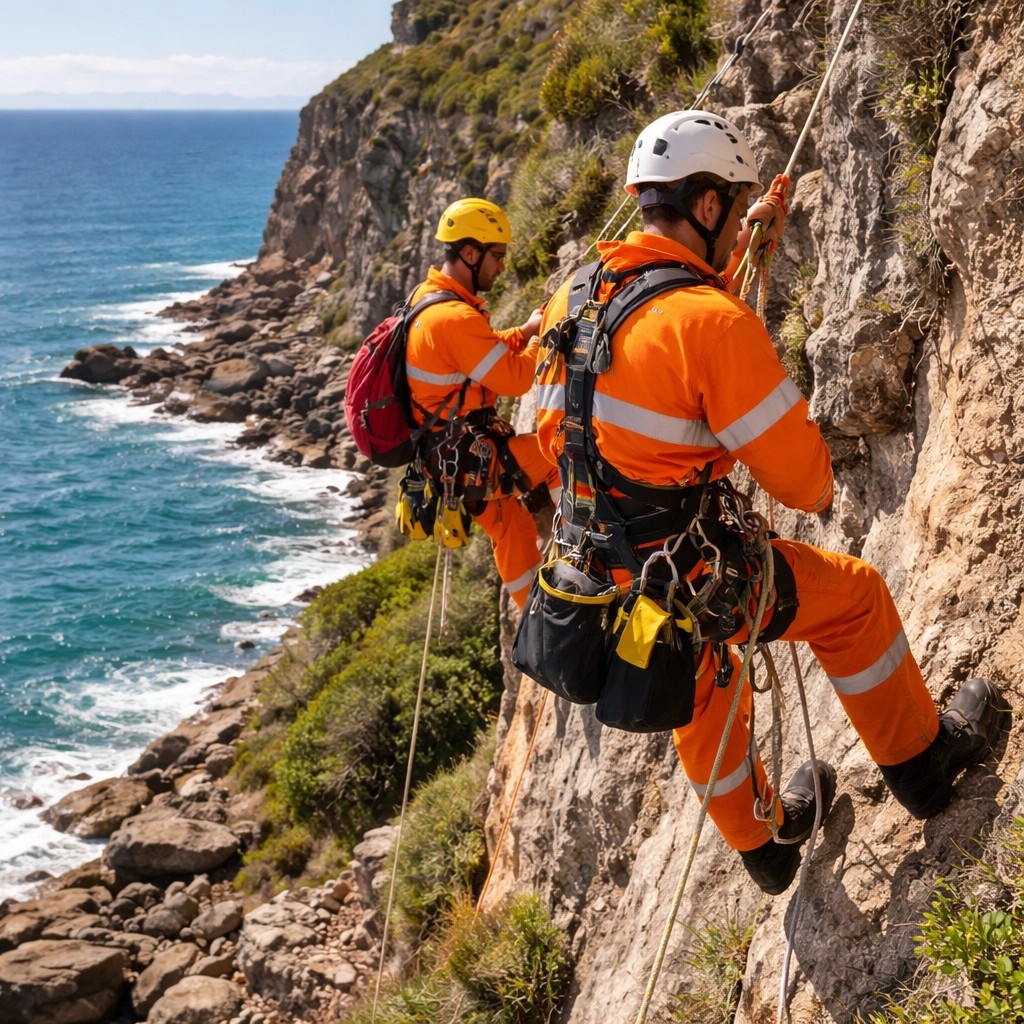
How Can Rope Access Be Used for Post-Construction Defect Identification?

rope access
The Importance of Post-Construction Inspections

After a project is completed, every structure should undergo a thorough inspection to identify defects before handover or during the initial operational phase. Common issues such as façade cracks, loose fittings, coating breakdowns, waterproofing gaps, and installation errors must be detected early to avoid long-term structural damage and expensive repairs. Rope access construction has emerged as a dependable and efficient solution for carrying out detailed post-construction defect inspections, especially in hard-to-reach areas.

______________________________________________________________________________________________________________

Challenges with Traditional Inspection Methods
  • Limited Reach on Complex Structures

Modern buildings often feature curved façades, glass elevations, towers, and architectural projections. Using scaffolding or lifts for short-term inspections can be time-consuming and may not provide close visual access to every detail.

  • High Setup for Small Inspection Tasks

Post-construction defect identification usually involves targeted checks rather than large-scale work. Installing heavy access systems for minor inspections can delay project timelines and increase costs unnecessarily.

______________________________________________________________________________________________________________

How Rope Access Supports Accurate Defect Identification
  • Close Visual and Hands-On Inspection

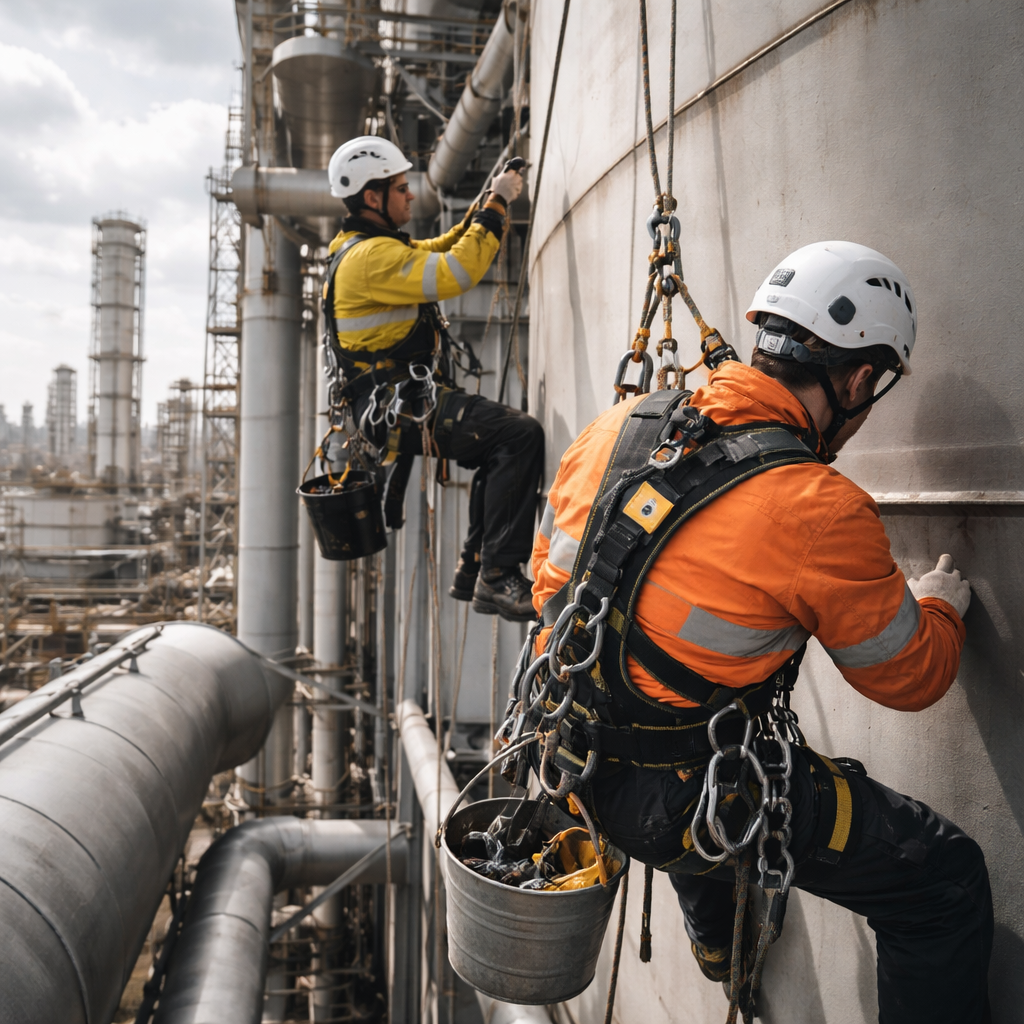
Rope access technicians can position themselves directly against structural surfaces to inspect joints, sealants, fixings, and finishing elements. This allows for precise defect detection that might be missed from a distance.

  • Quick Deployment for Immediate Assessments

With minimal equipment and fast setup, inspections can begin soon after construction completion. This helps project teams address defects quickly before occupancy or final approvals.

  • Documentation and Reporting Support

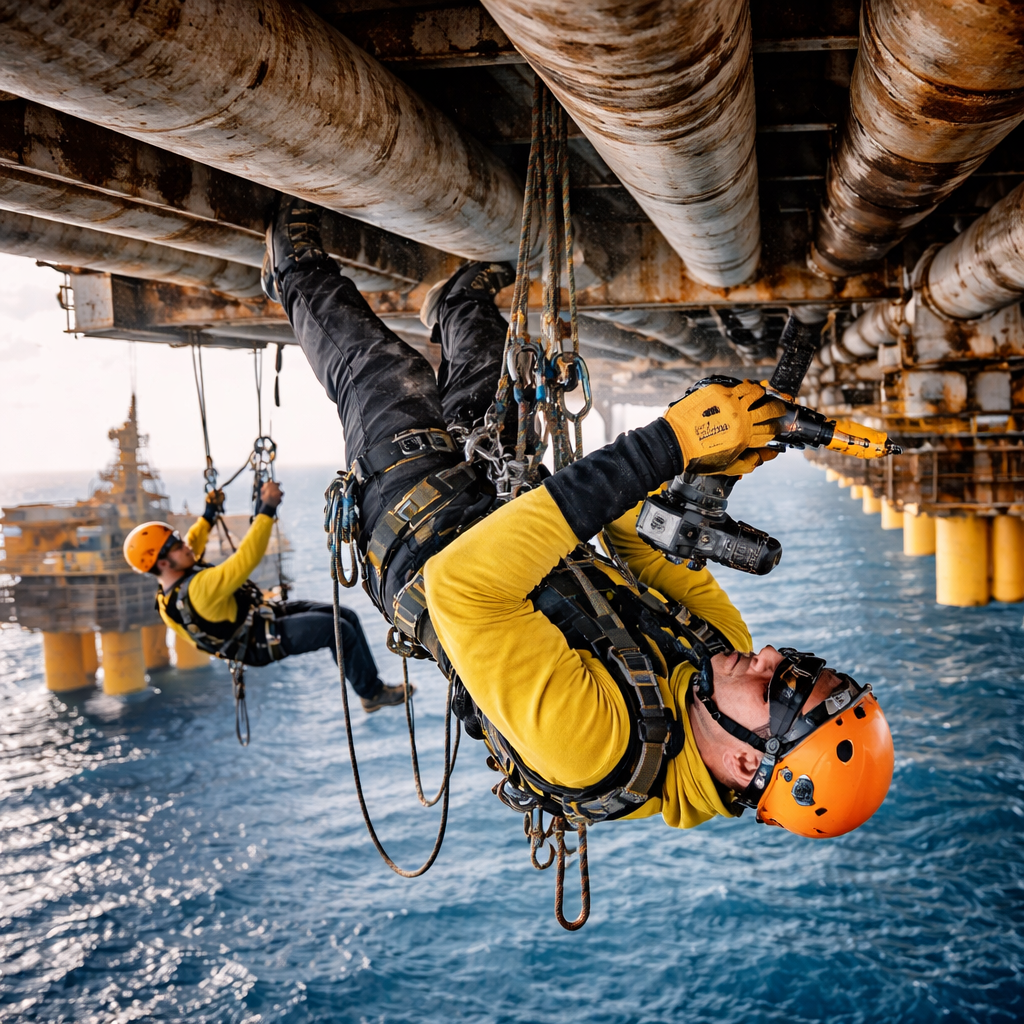
Technicians can capture high-resolution photos, videos, and measurements while suspended, providing engineers with clear data for defect analysis and repair planning.

______________________________________________________________________________________________________________

Advantages for Active Construction and Occupied Buildings
  • Minimal Disruption and Greater Flexibility

Rope access requires limited ground space and fewer workers, making it suitable for buildings already in use or undergoing final finishing works. Inspections can proceed without blocking entrances, disturbing tenants, or slowing surrounding activities.

______________________________________________________________________________________________________________

Final Thoughts

Post-construction defect identification is critical to ensure quality, safety, and long-term performance of structures. Rope access offers a practical and efficient inspection method by providing direct access, faster mobilization, and detailed assessment capabilities. By enabling accurate defect detection without large access setups or operational delays, it helps project owners and contractors resolve issues early and maintain high construction standards.

Posted on Leave a comment

Why Is Rope Access Critical for Splash Zone Inspection on Offshore Structures?

offshore rope access
Understanding the Splash Zone Challenge

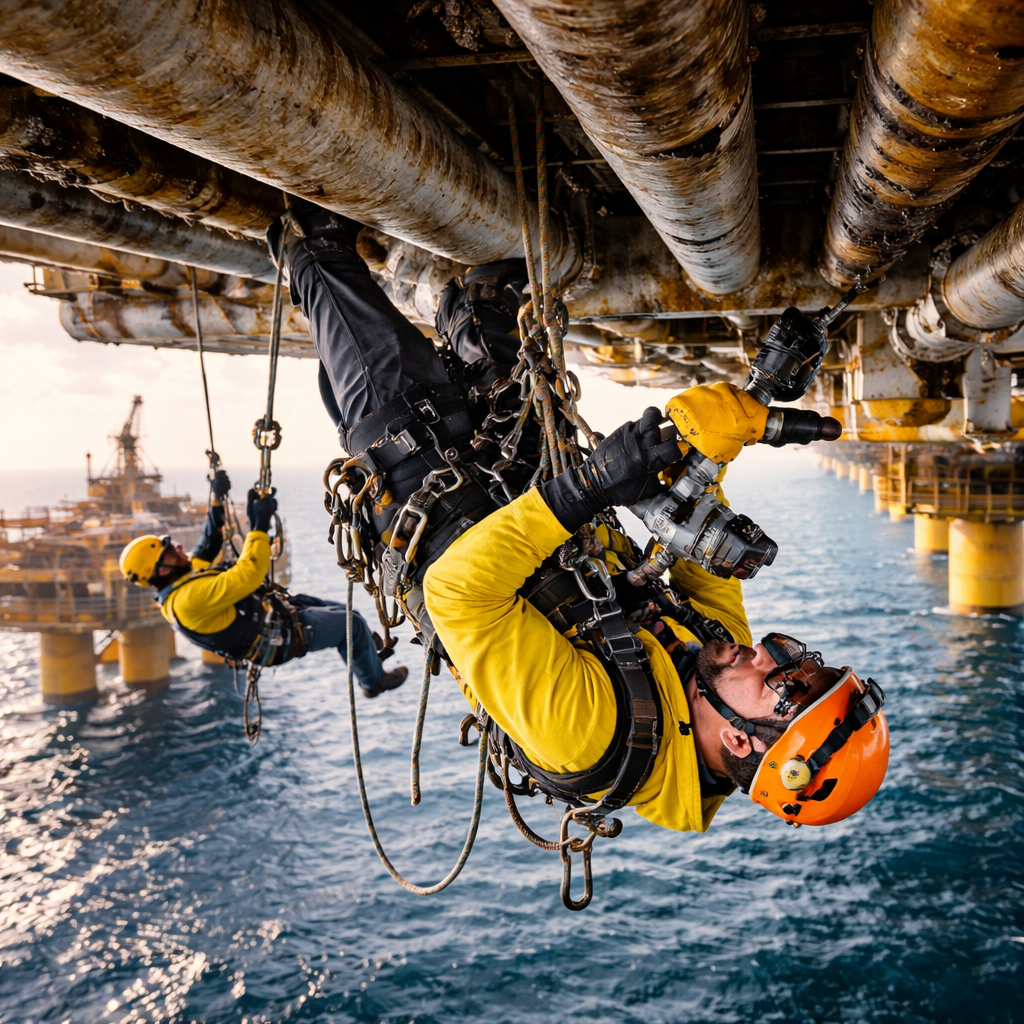
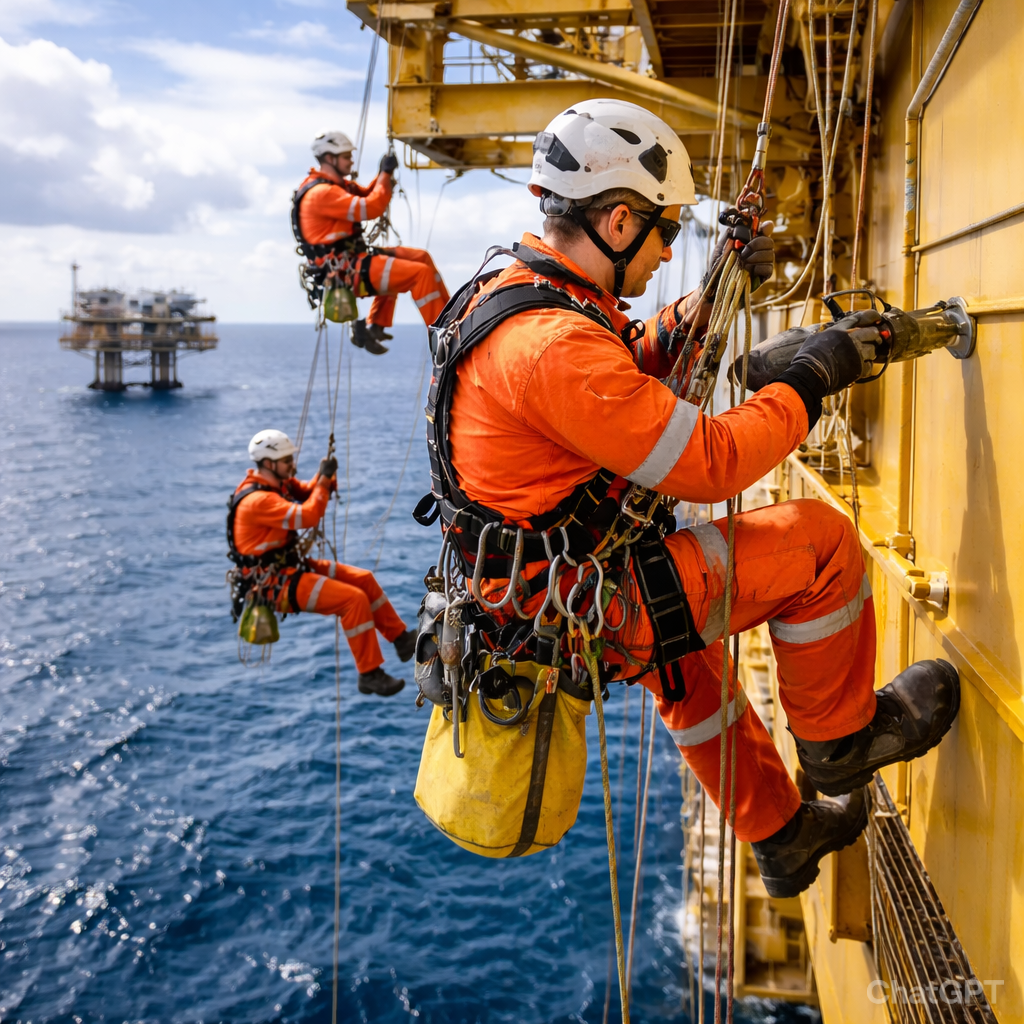
Offshore rope access is essential for working in the splash zone—one of the most aggressive environments on any offshore structure. Positioned where seawater, oxygen, and continuous wave impact converge, this area faces accelerated corrosion, coating deterioration, and structural fatigue. Regular inspections are critical, yet traditional access methods such as scaffolding or workboats can be hazardous, time-consuming, and heavily dependent on weather conditions.
______________________________________________________________________________________________________________

Why Conventional Inspection Methods Fall Short
  • Limited Accessibility

Offshore platforms, jackets, and wind turbine foundations often have complex geometries. Setting up large access systems around these areas is time-consuming and may require partial shutdowns or vessel support.

  • High Operational Costs

Using cranes, barges, or heavy access equipment increases logistics costs and extends inspection timelines, making frequent monitoring difficult.

______________________________________________________________________________________________________________

How Rope Access Solves Splash Zone Inspection Problems
  • Rapid Deployment in Harsh Conditions

Rope access technicians can mobilize quickly with minimal equipment. This allows inspections to start faster and adapt to changing offshore weather windows.

  • Close-Proximity Structural Assessment

Technicians can position themselves precisely to inspect weld seams, corrosion spots, marine growth, and protective coatings. This level of control improves inspection accuracy and helps identify early damage.

  • Reduced Impact on Ongoing Operations

Since rope access requires minimal deck space and fewer personnel, inspections can often continue while normal offshore activities remain operational.

______________________________________________________________________________________________________________

Safety Advantages in Dynamic Marine Environments
  • Controlled and Certified Work Systems

Modern rope access follows strict international safety standards, including dual-rope protection and continuous supervision. Compared to suspended platforms or temporary structures exposed to waves, rope systems provide greater stability and controlled movement during splash zone work.

______________________________________________________________________________________________________________

Final Perspective

Splash zones are among the most vulnerable parts of offshore infrastructure, demanding regular and precise inspection. Rope access offers a practical solution by combining speed, flexibility, and safety in challenging marine conditions. By enabling efficient inspections without major operational disruption, it helps asset owners maintain structural integrity, extend service life, and ensure safer offshore operations.

Posted on Leave a comment

Why Choose Rope Access for Offshore & Onshore Projects in Oil, Marine or Renewable Sectors?

offshore and onshore rope access

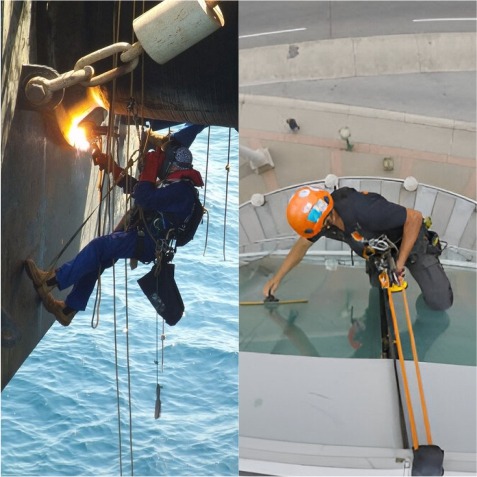
When it comes to maintaining assets in the oil & gas, marine, and renewable energy sectors, challenges like extreme weather, restricted access, and hazardous environments are part of everyday operations. Traditional access methods—like scaffolding or heavy lifting platforms—often slow down work, increase risk, and drive-up costs.

This is exactly why rope access has become the preferred choice for offshore rigs, ships, refineries, ports, wind turbines, and energy facilities. And companies like Evolution Access Technologies deliver these solutions with certified IRATA professionals and industry-proven safety systems.
offshore and onshore rope access


  1. Rope Access Is Built for Hard-to-Reach Environments

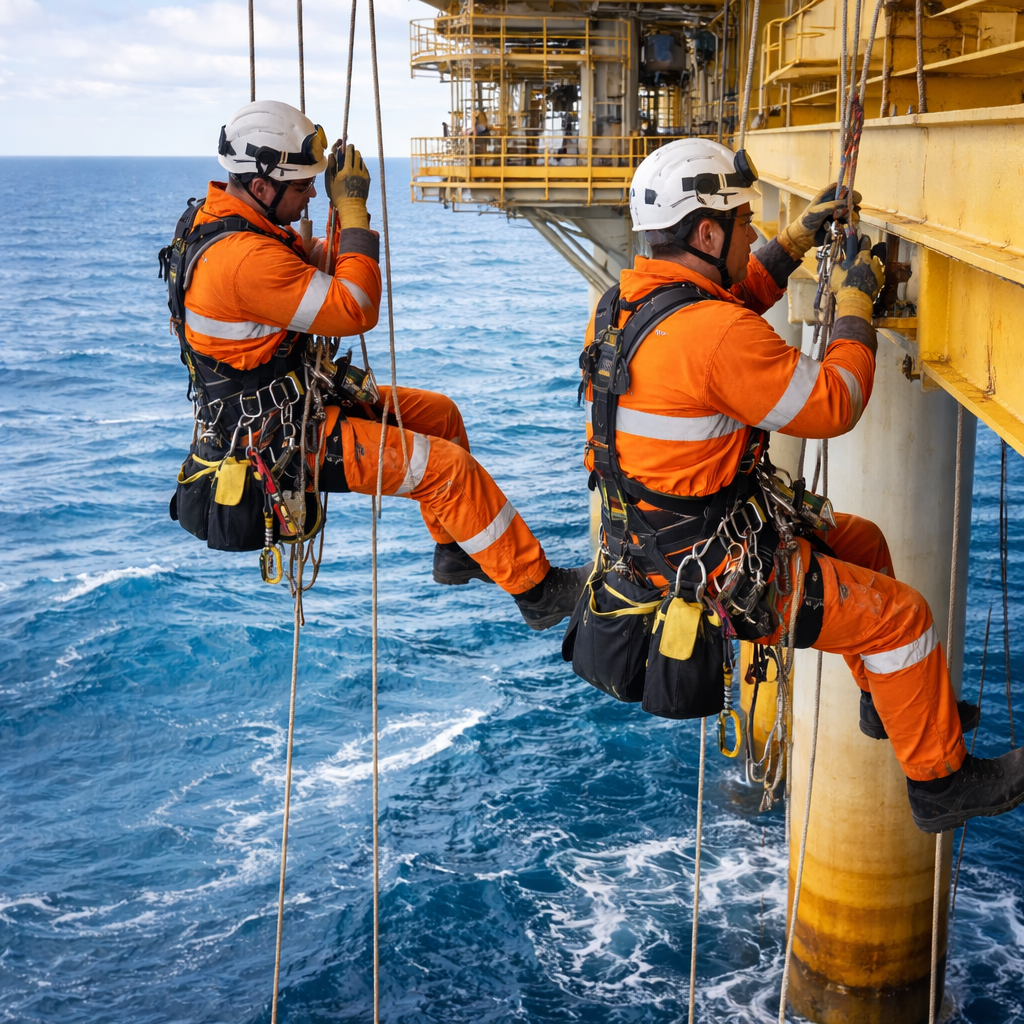
Offshore platforms, floating vessels, and wind farms have countless areas where installing scaffolding is nearly impossible. Rope access teams can reach verticals, confined spaces, high elevations, underdecks, turbine blades, hulls, and structural frameworks with unmatched speed.

Because rope access relies on compact equipment and trained technicians, it avoids logistical complications like:

  • Heavy transport
  • Structure modifications
  • Shutdowns required for scaffolding
  • Long erection and dismantling hours

This makes rope access ideal for time-critical maintenance in offshore and coastal environments.


  1. It Reduces Project Downtime & Operational Costs

Offshore shutdowns can cost millions. Rope access cuts those hours dramatically by allowing technicians to be deployed quickly without disrupting ongoing operations.

Rope access eliminates:

  • Material & labour required for scaffolding
  • Crane or MEWP mobilization
  • Permit delays
  • Long setup/teardown time

For the oil, marine, and renewable sectors, this translates to faster turnaround, lower operational costs, and minimal disruption to production.


  1. Safety Standards Are Higher Than Most Traditional Methods

Contrary to outdated assumptions, rope access is statistically one of the safest access methods in the world. IRATA certification, redundant rope systems, continuous monitoring, strict rescue preparedness, and advanced training ensure extremely low incident rates.

Evolution Access follows:

  • IRATA best practices
  • International safety compliance
  • Advanced rescue protocols
  • Specialized offshore & confined space procedures

This makes rope access the right choice for hazardous and sensitive environments like FPSOs, rigs, ship hulls, turbine blades, chimneys, bridges, and jetties.


  1. Perfect for Inspection, NDT, Repairs & Preventive Maintenance

Whether it’s corrosion treatment, bolting, welding, blade repair, hull inspection, ultrasonic NDT, or coating application—rope access allows technicians to perform complex tasks safely and efficiently.

This versatility is why rope access dominates in:

  • Wind turbine inspections
  • Offshore rig maintenance
  • Ship repair & hull cleaning
  • Jetty & port structure repairs
  • Tank & refinery NDT


Frequently Asked Questions (FAQ)

  1. Why is rope access preferred in offshore projects?

Because offshore structures are complex and weather-exposed, rope access provides faster, safer, and more flexible access than scaffolding or cranes, while reducing cost and minimizing downtime.

  1. Is rope access safe for wind turbine and marine maintenance?

Yes. Rope access uses IRATA-certified professionals, redundant rope systems, and strict safety procedures—making it ideal for turbine blades, towers, hulls, jetties, and port structures.

  1. What services can be done through rope access?

Inspection, NDT, welding, coating, cleaning, repair, confined-space tasks, blade maintenance, thickness testing, and corrosion prevention—making it suitable for offshore, marine, and renewable assets.