Posted on Leave a comment

How Can Rope Access Solve Geotechnical Challenges in Slope Stability and Rockfall Mitigation?

geotechnical rope access

Geotechnical investigations and interventions on steep slopes, cliffs and cuttings present a unique access problem: the site you must study or fix is often the hardest place to stand. For engineers who need accurate, close-up data and targeted remediation, Geotechnical rope access methods are increasingly the preferred solution — combining safety, speed and minimal disruption to deliver reliable slope stability assessments and rockfall mitigation works.

______________________________________________________________________________________________________________

Why rope access matters for modern geotechnical work

Traditional access solutions — scaffolds, mobile platforms, heavy cranes or temporary roads — can be slow, expensive and environmentally intrusive. Rope access services for geotechnical projects let experienced technicians and geotechnical engineers work directly on the rock or soil face with minimal setup. The advantages include faster mobilization, reduced ecological footprint, and the ability to inspect or treat areas that would otherwise be unreachable without major civil works. Recent industry analyses show the rope access market growing quickly as infrastructure, mining and civil projects prioritise safer, more cost-effective ways to work at height.

______________________________________________________________________________________________________________

Core geotechnical applications for rope access

  • Site-scale inspections and data collection

Rope access enables detailed discontinuity mapping, joint and fracture surveys, point sampling, in-situ testing and photogrammetric surveys directly from the face. These close-range observations often reveal trigger features (e.g., exfoliation, undermined blocks, seepage paths) that remote or overhead surveys miss. Papers and practice notes highlight rope access as a high-value method in slope risk assessments and remediation monitoring.

  • Rockfall mitigation and removal

Where loose blocks pose an imminent hazard, rope teams can execute controlled removal (scaling), install anchors, bolts, or stitch blocks into place, and fit protective systems such as barriers or nets. These targeted interventions are faster to deploy and less disruptive than large-scale regrading. Case studies from industry providers show successful rockfall mitigation above critical infrastructure using rope techniques.

  • Installation & inspection of stabilization systems

Moreover, rope teams are ideal for installing and inspecting rock bolts, shotcrete patches, drainage measures, and mesh—especially in confined or steep environments (quarries, cuttings, hydropower intakes). Regular inspections by rope access technicians help validate the performance of remediation measures under real site conditions.

______________________________________________________________________________________________________________

How rope access improves slope stability workflows

  • Faster reconnaissance and safer diagnostics

A rapid rope access inspection can replace days of scaffold erection or earthmoving. With trained technicians and geotechnical engineers on ropes, teams can rapidly verify key design assumptions — material layering, joint orientation, weathering patterns — improving the confidence of slope stability models and design decisions. This on-face intelligence is particularly valuable where numerical models require accurate discontinuity and geometry inputs.

  • Cost and time savings

Because rope teams travel light and require minimal ground support, mobilization time and direct access costs are usually lower than heavy equipment alternatives. The combination of reduced site preparation, fewer specialist vehicles and quick deployment often shortens project timelines and lowers total cost of remediation.

  • Environmental and operational benefits

Rope access minimizes the need for earthworks, heavy lifting and ground disturbance—important when working near protected areas, hydropower assets, or active transport corridors. Additionally, rope access can be scheduled with minimal disruption to operations (railways, mines, roads) because it often requires only small exclusion areas rather than full closures.

______________________________________________________________________________________________________________

Technology and trends strengthening geotechnical rope access

  • 3D photogrammetry & LiDAR from the face: In addition, close-range photogrammetric surveys and handheld/rig-mounted LiDAR capture as-built geometry for detailed rockfall simulations and monitoring. These datasets reduce uncertainty in kinematic and numerical analyses.
  • Integrated monitoring systems: Additionally, coupling rope-access inspections with instrumented monitoring (inclinometers, crack meters, visual time-lapse) improves early-warning capability and verifies remediation effectiveness.
  • Data-driven decision making: geotechnical teams increasingly use high-resolution face surveys together with rockfall frequency studies and statistical analyses to priorities interventions and quantify residual risk.

These trends mean rope access is no longer just an access technique — it’s a platform for data collection and precision intervention that feeds modern geotechnical practice.

______________________________________________________________________________________________________________

Real-world case study — mitigating rockfall above a hydro facility

When a hydropower facility experienced repeated rockfall events threatening critical assets, a specialist team used rope access to both assess and remediate the source slopes. Key points from the project:

  • Problem: Frequent small-to-medium rockfalls originating from steep, highly weathered slopes (≈60°) directly above powerhouse structures. Conventional machinery access was unsafe because of powerlines and constrained site geometry.
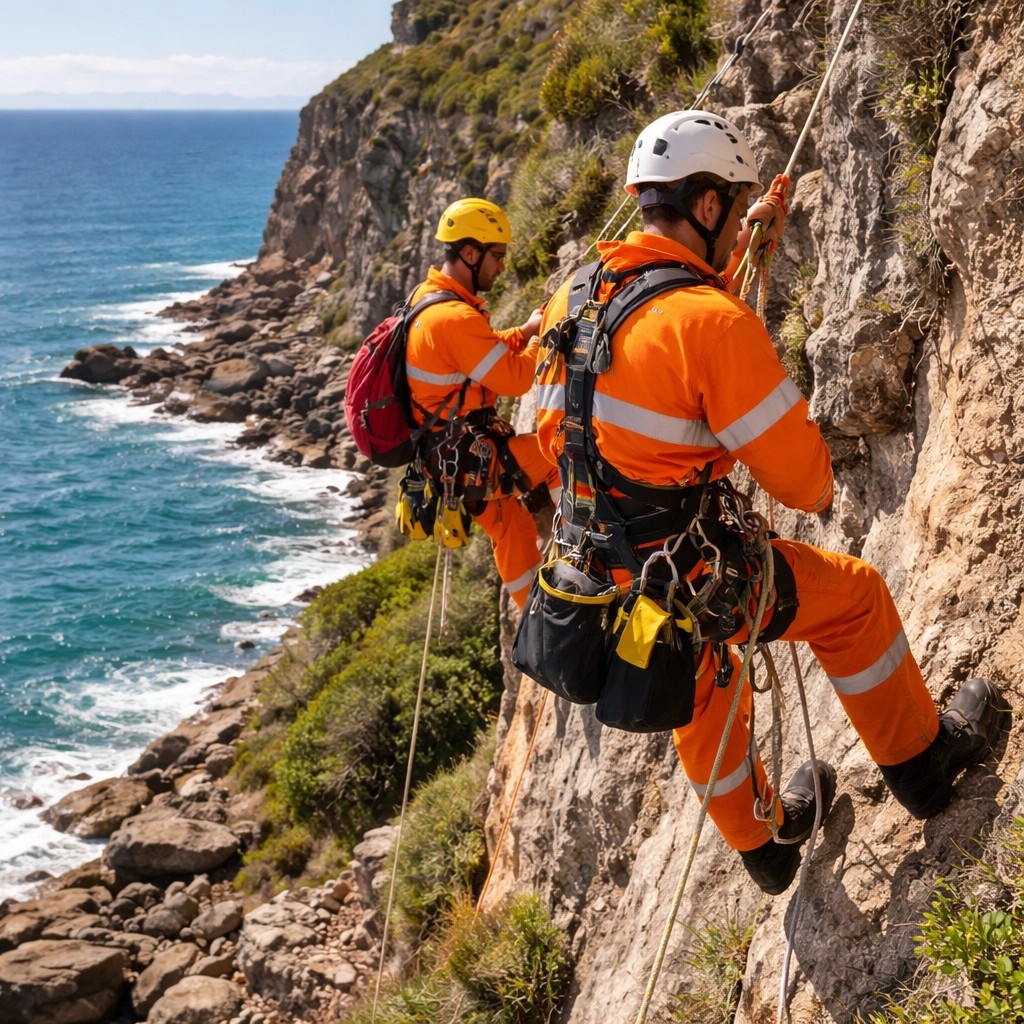
  • Rope access role: Initially, certified rope teams performed close-range mapping, removed unstable blocks by controlled scaling, installed rock bolts and mesh, and placed rock-fall barriers at key runout locations. Afterward, photographic and survey records were captured from the face to verify interventions.
  • Outcome: As a result, targeted remediation eliminated the immediate hazard to the powerhouse with minimal project footprint and allowed the facility to resume operation quickly. Subsequently, follow-up inspections from ropes ensured quality control and verified barrier performance.

This example demonstrates how Geotechnical rope access services combine inspection, data collection and remediation in constrained, high-hazard settings.

______________________________________________________________________________________________________________

Safety, standards and competence

Rope access has a strong safety record when performed by trained, certified technicians operating under established systems (IRATA, SPRAT, industry guidelines). Organizations that combine rope access with geotechnical expertise ensure that rescue plans, anchor assessment, and geotechnical judgement are integrated into every intervention. For work where ropes are the primary support, it’s important to follow documented guidelines and have geotechnical supervision during interventions.
______________________________________________________________________________________________________________

Practical workflow: from reconnaissance to remediation

Step 1: Desktop study & risk prioritization

Gather available maps, aerial imagery, and previous reports to identify suspect slopes, probable failure mechanisms and sensitive assets.

Step 2: Rope access reconnaissance and detailed mapping

Deploy a rope team with geotechnical survey tools: joint/spacing measurements, high-resolution photography, and if needed, point sampling and in-situ tests.

Step 3: Modelling & mitigation design

Use the on-face data to inform kinematic checks, limit equilibrium or numerical models, and rockfall trajectory simulations.

Step 4: Targeted remediation by rope teams

Apply scaling, bolting, mesh, shotcrete patches or install barriers as designed. Keep interventions as localised as possible to reduce cost and impact.

Step 5: Verification & monitoring

Schedule follow-up rope inspections and instrument monitoring to validate remediation performance and detect changes early.

 _____________________________________________________________________________________________________________

Measurable benefits (evidence-based)

  • Faster project completion and lower mobilization: In fact, industry reports and providers note rapid setup and execution compared with scaffolding or heavy plant, resulting in reduced downtime and cost.
  • Market growth reflects adoption: the global rope access market has shown steady growth as sectors seek safer and more economical access solutions for complex terrains. For example, analyses estimate market expansion from around USD 1.8 billion (2024) with solid projected growth through the decade.
  • Better inspection quality: academic and industry case studies show rope access enables higher-confidence discontinuity mapping and actionable observations that materially change remediation design.

______________________________________________________________________________________________________________


When rope access may not be the best choice

While highly versatile, rope access is not a universal replacement. Large-scale regrading, heavy reconstruction, or interventions requiring continuous heavy plant may still require earthmoving and larger equipment. The optimum approach is often hybrid: use rope teams for diagnostics, targeted fixes and for access where heavy plant cannot reach, then bring in heavier methods only where strictly necessary.

______________________________________________________________________________________________________________

Conclusion — integrating rope access into geotechnical practice

Rope access is a mature, data-centric tool for modern geotechnical engineering. When combined with rigorous site investigation, modelling and monitoring, Geotechnical rope access services enable engineers to diagnose, prioritise and remediate slope hazards efficiently and safely. For projects where access is difficult, risk is high and disruption must be minimized, rope access offers a pragmatic, cost-effective alternative that improves decision quality and reduces downtime.

Call to action: Therefore, if your next slope stability assessment, rockfall mitigation project, or geotechnical inspection demands accurate, low-impact access, commissioning a certified rope access team with qualified geotechnical engineers is a smart choice. Early rope-based reconnaissance cuts uncertainty, lowers downstream cost, and often determines whether you get an approximate fix or a solution that works on the face.

______________________________________________________________________________________________________________

FAQ

Q1 — How does Geotechnical rope access differ from regular rope access?
A: Regular rope access describes the techniques and safety systems used to reach difficult places. Geotechnical rope access specifically pairs those access techniques with geotechnical tasks: discontinuity mapping, in-situ testing, rockfall source identification, and installation/inspection of stabilization systems. The focus is on geological and engineering data collection and remediation.

Q2 — Is rope access safe enough for critical infrastructure projects?
A: Yes — when performed by certified technicians under well-documented procedures and supervised by geotechnical engineers, rope access has an excellent safety record and is widely used for railways, highways, hydropower and mines. Industry guidelines and certification frameworks (IRATA / SPRAT and project-specific rescue and anchor protocols) underpin safe practice.

Q3 — Can rope access be combined with monitoring technologies?
A: Absolutely. Rope access is often used to install instruments (crack meters, tiltmeters) and to perform repeat photogrammetric or LiDAR surveys. This makes rope work an excellent way to both implement and verify long-term monitoring systems for slope stability and rockfall risk.

Posted on Leave a comment

How Rope Access is Shaping Marine Infrastructure Maintenance

rope access services for marine

Riding the Waves of Change in Marine Maintenance

The marine industry is entering a new era — one defined by smarter inspections, faster interventions, and safer operations in some of the world’s most challenging environments. Saltwater corrosion, extreme weather, and aging offshore infrastructure demand solutions that are not just tough but also technologically advanced.

That’s where rope access services for marine maintenance are making waves. Once viewed as a niche technique, rope access has evolved into a vital pillar of modern infrastructure management — combining human precision with cutting-edge innovation.

______________________________________________________________________________________________________________

The Shift: From Traditional Access to Agile Operations

The old way of maintaining offshore and coastal assets involved scaffolding, cranes, and barges — heavy, expensive, and disruptive. These methods still have their place, but the shift toward low-footprint and high-agility operations is unmistakable.

According to recent industry data, over 60% of global offshore operators have incorporated rope access into their inspection and maintenance workflows. The main driver? Downtime reduction. When port or offshore operations stop, the financial impact is immediate — sometimes measured in millions per day.

With rope access, technicians can mobilize quickly, perform targeted work, and leave without interrupting vessel schedules or marine traffic. It’s a lean, modern approach for an industry under pressure to stay efficient.

______________________________________________________________________________________________________________

Innovation at Work: How Rope Access Meets Marine Demands

Modern rope access isn’t just about scaling structures — it’s about integrating technology, data, and precision into maintenance practices.

1. Smart Inspection Systems

Technicians now pair rope access with drone and ROV (Remotely Operated Vehicle) support. While drones cover visual surveys above water, ROVs handle offshore marine inspection services below the surface. Together, they create a 360° picture of asset health — from splash zone to seabed.


2. Digital Reporting & Data Visualization

Gone are the days of handwritten inspection notes. Rope access teams use digital tablets and cloud-linked platforms to record ultrasonic thickness data, corrosion mapping, and crack monitoring in real time. This data feeds directly into maintenance management systems, helping marine operators plan interventions based on evidence, not guesswork.

3. Sustainable Practices

Sustainability is now a global priority, even in industrial sectors. Rope access, by design, uses minimal equipment, which means fewer fuel-hungry machines and less disruption to marine habitats. Many companies’ offering marine maintenance & repairs services now highlight rope access as their eco-efficient alternative to traditional methods.

_____________________________________________________________________________________________________________

A Closer Look: Rope Access for Ports, Platforms, and Piers

Across the marine world, rope access has found specialized applications:

  • Ports and Jetties: Technicians perform coating repairs, weld checks, and corrosion mapping on hard-to-reach areas under piers or berth structures.
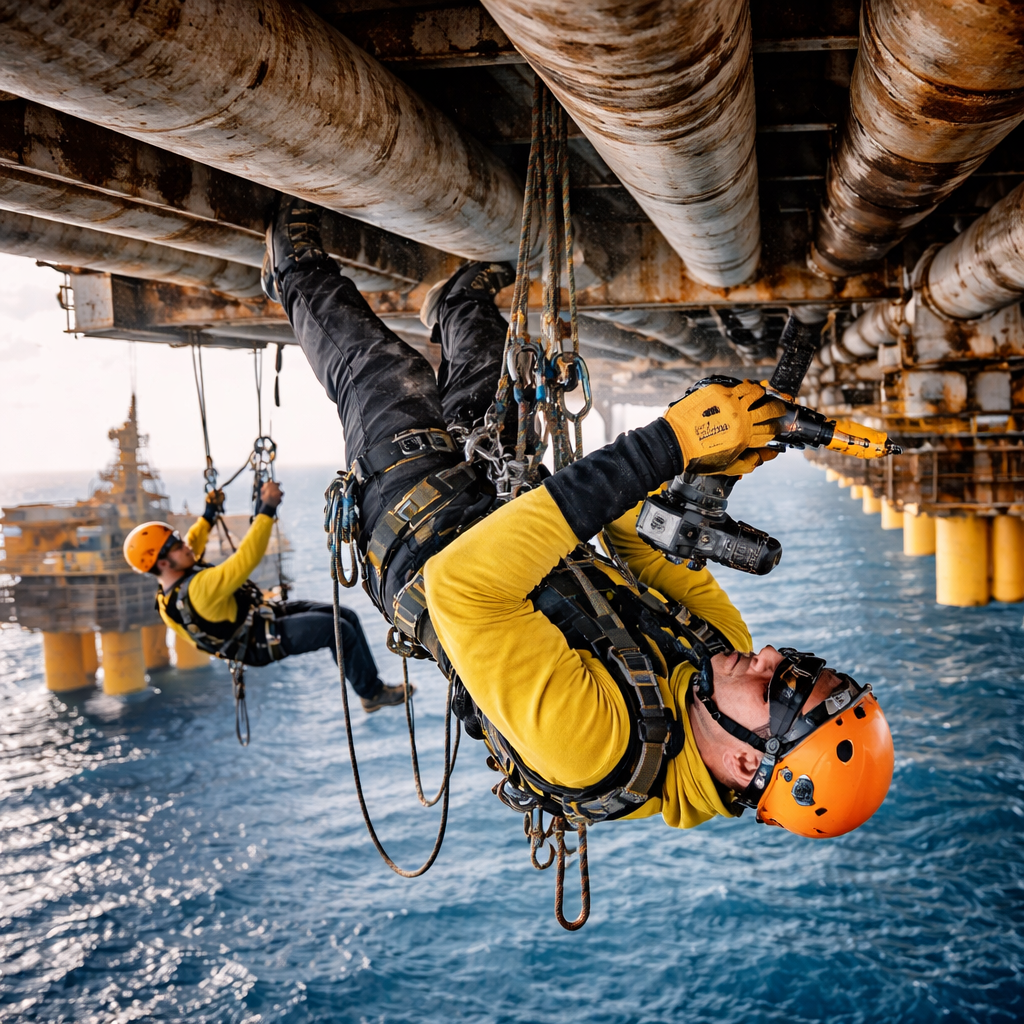
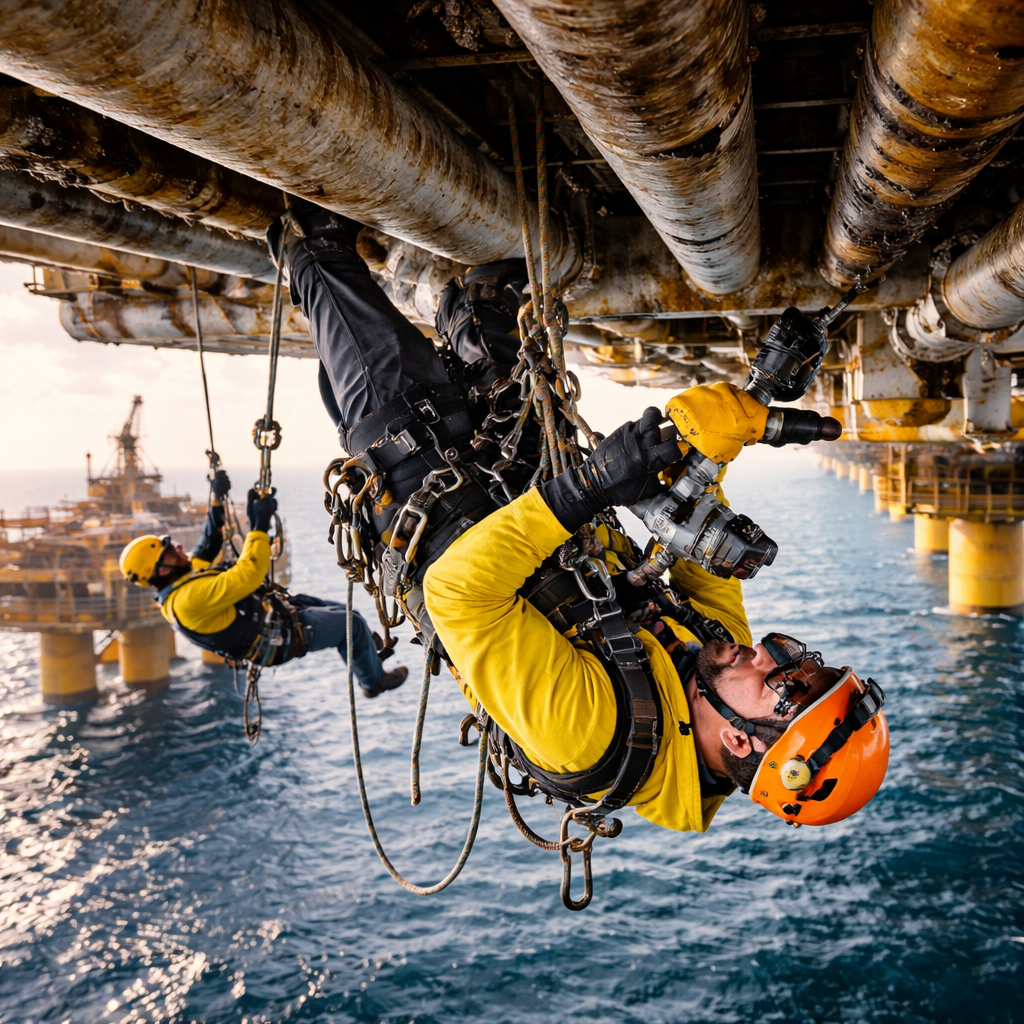
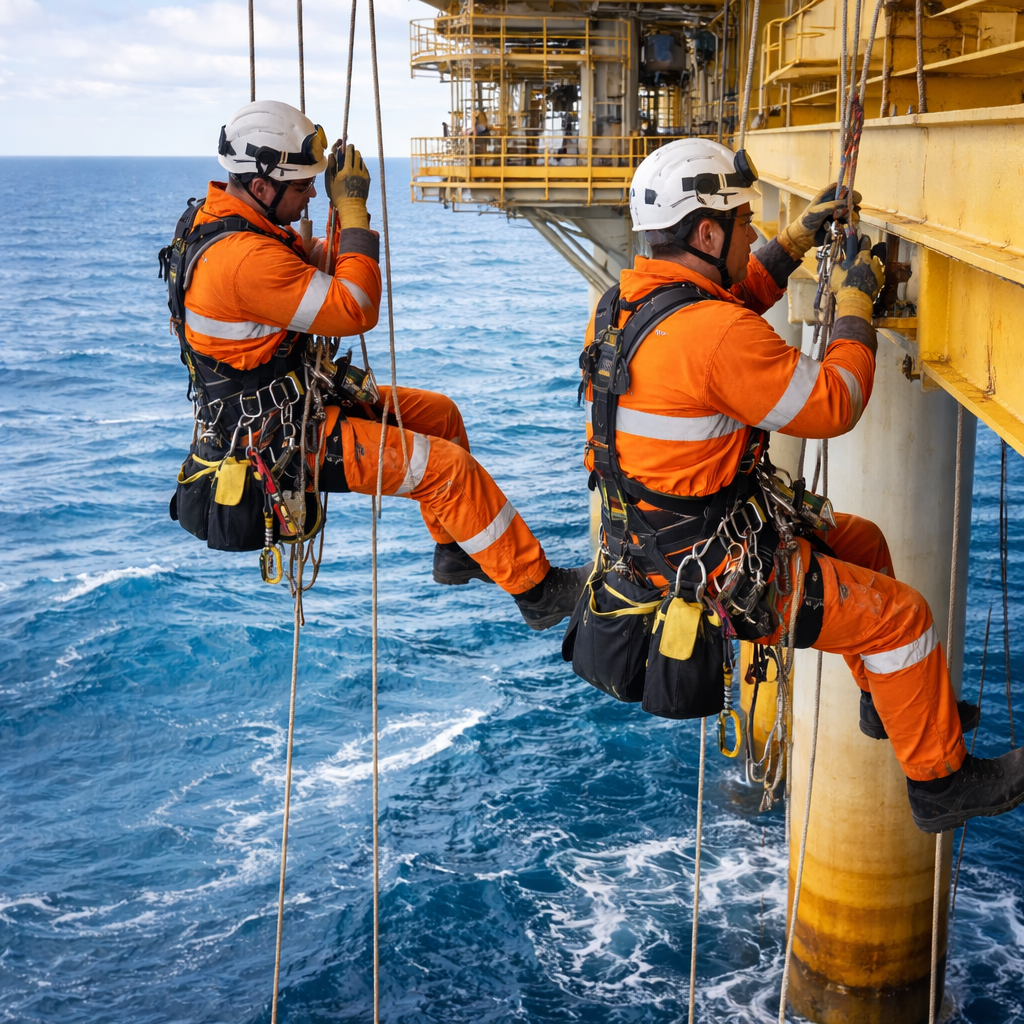
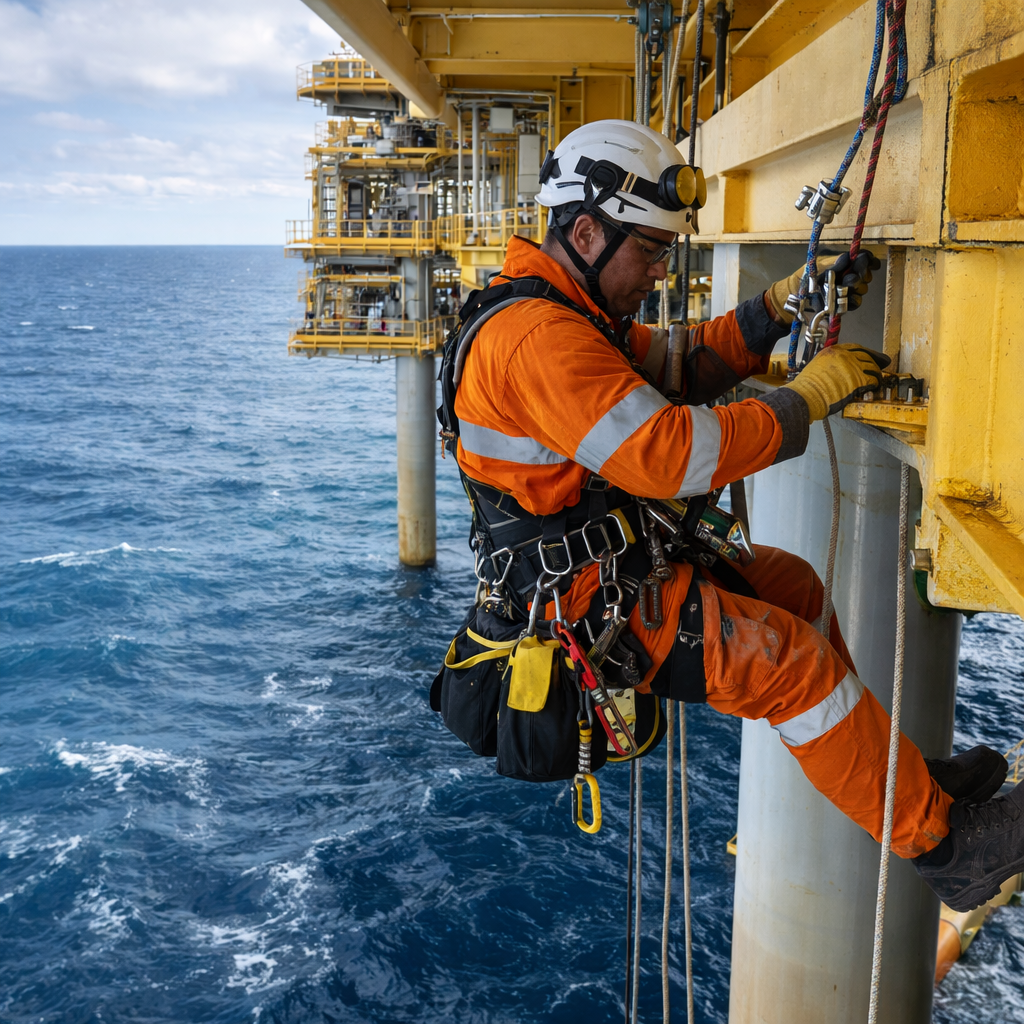
  • Offshore Platforms: Rope teams assist with marine surveyor services, conducting visual and NDT checks on flare stacks, risers, and splash-zone components.
  • Bridges and Coastal Defenses: Rope access enables targeted concrete repairs, sealant applications, and anchorage inspections — often while structures remain operational.

These use cases share one common trait: efficiency through adaptability. Rope access minimizes setup time and maximizes productivity within short tidal or weather windows — a decisive advantage in marine operations.

_____________________________________________________________________________________________________________

Real Example: Offshore Wind Farm Maintenance

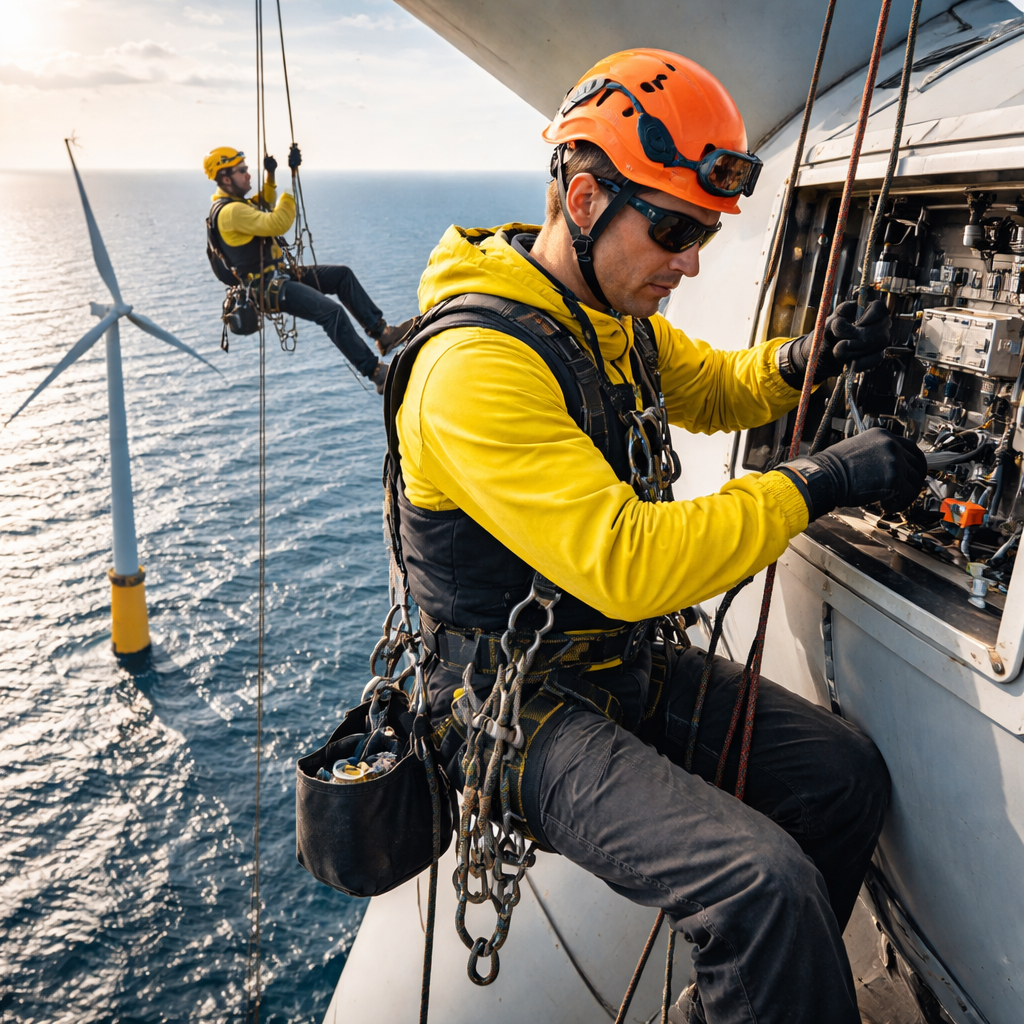
A European offshore wind farm faced recurring corrosion issues around its monopile structures. Deploying jack-up barges was costly and delayed by weather. Instead, the operator turned to rope access services for marine maintenance.

  • Rope technicians, trained in offshore safety and rope rescue, accessed turbine towers directly from small workboats.
  • Using magnetic clamps and certified fall-arrest systems, they performed visual and ultrasonic testing of weld seams.
  • Minor coating repairs were completed on-site — no heavy lifting or shutdown required.

The result? Inspection time reduced by 45%, maintenance cost cut by nearly half, and turbine downtime almost eliminated.

This case is now cited as an example of how rope access aligns perfectly with the offshore sector’s goals of speed, safety, and sustainability.

_____________________________________________________________________________________________________________

The Numbers Behind the Trend

  • Global rope access market (including offshore & marine): estimated at over USD 800 million in 2024 and growing steadily.
  • Marine asset integrity management costs are expected to rise by 6–8% annually — driving the need for efficient inspection methods.
  • Environmental compliance regulations in major ports now encourage low-impact maintenance approaches, giving rope access a regulatory edge.

These statistics highlight a sector embracing transformation — where practical innovation is as valuable as engineering excellence.

_____________________________________________________________________________________________________________

What’s Next: The Future of Marine Rope Access

As digitalization and automation evolve, rope access is set to merge with new technologies:

  • AI-assisted visual analytics for corrosion detection in inspection photos.
  • IoT sensors embedded in structures to provide live data that rope teams can verify on-site.
  • Hybrid inspections, where drones and rope technicians collaborate in real time via wireless data feeds.

The coming decade will see rope access technicians evolve into hybrid field engineers — equally skilled in hands-on work and digital diagnostics.

______________________________________________________________________________________________________________

Conclusion: Rethinking Marine Maintenance

The future of marine maintenance lies in flexibility, data-driven insights, and environmental responsibility — values embodied by rope access.

From offshore marine inspection services to complex marine surveyor services, this approach is setting a new industry benchmark for how infrastructure can be maintained safely, efficiently, and sustainably.

The shift is clear: rope access isn’t just a support technique — it’s the backbone of next-generation marine maintenance & repairs services.

Call-to-Action:
If your organization manages coastal, port, or offshore assets, it’s time to consider a rope-access-based maintenance strategy. Partner with certified professionals who combine experience, safety, and technology — and navigate your operations confidently into the future.


_____________________________________________________________________________

FAQs

Q1: Can rope access be used for underwater marine inspections?
Rope access primarily covers above-water and splash-zone areas. For underwater surveys, technicians work in tandem with divers or ROV teams — creating a seamless inspection process.

Q2: How safe is rope access in offshore environments?
When performed by certified professionals under IRATA or SPRAT standards, rope access boasts one of the lowest accident rates in industrial maintenance. Strict risk assessments and rescue plans are mandatory for marine operations.

Q3: What kind of repairs can rope access teams perform?
Rope technicians handle corrosion treatment, coating touch-ups, welding preparation, bolt tightening, sealant application, and basic structural repairs — all without large equipment or long setup times.

Posted on Leave a comment

How Weather Impacts Rope Access Work — And What We Do About It

rope access

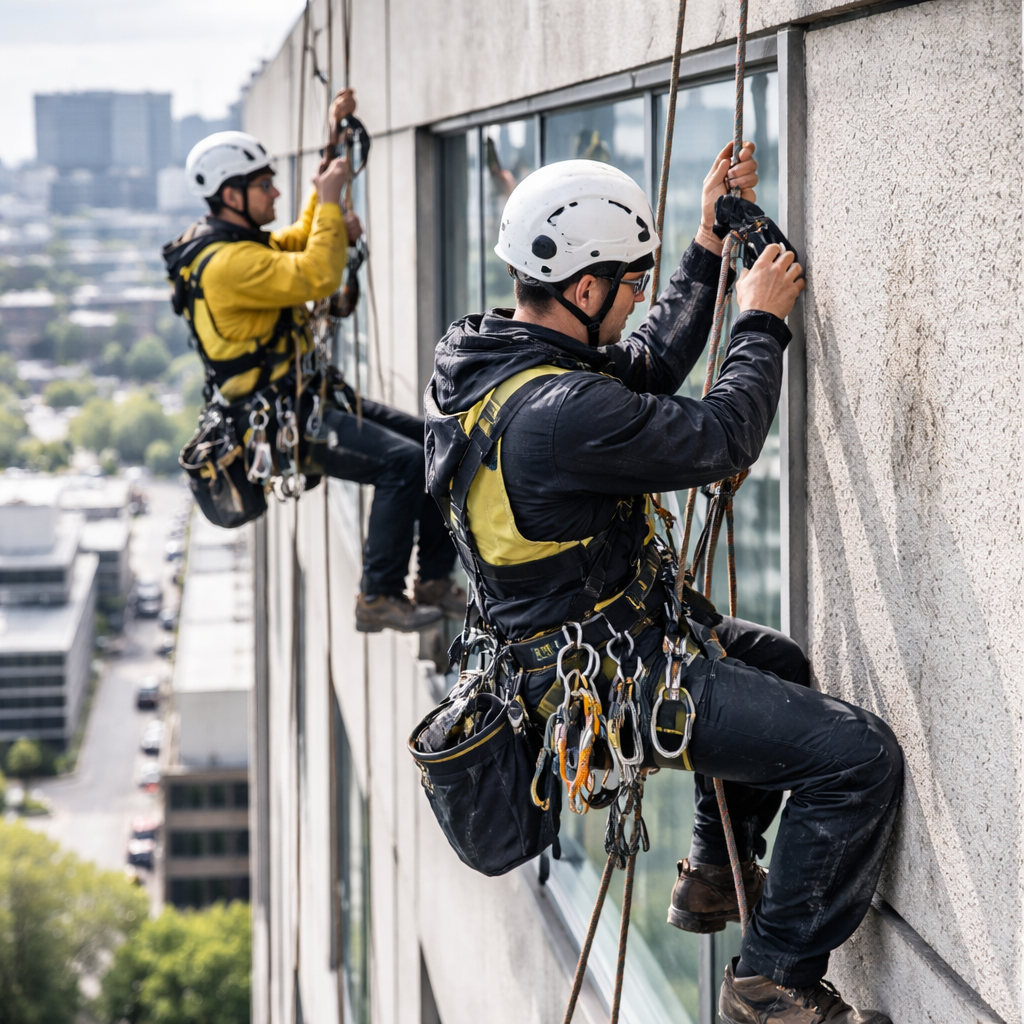
The forecast said clear skies. But now, 30 stores up with the city sprawling below, the wind is starting to howl. It whips around the edge of the building, turning a routine inspection into a battle against an invisible force. Your gear is secure, your training is locked in, but nature has decided to change the rules of the game. This is a moment every rope access technician knows well. Working at height isn’t just about ropes and harnesses; it’s a constant negotiation with the elements.

Most people see a finished project—a gleaming window, a secure panel, a freshly painted facade. They don’t see the meticulous planning that goes into making sure the work can happen safely, especially when the weather decides not to cooperate. So, how do we handle the wind, rain, and heat that are part of the job? It comes down to preparation, procedure, and an unwavering respect for Mother Nature.


The Unseen Opponent: Battling the Wind

Wind is arguably the most significant weather factor in rope access. It doesn’t have to be a gale-force storm to pose a serious risk.

  • The Risks:
    • Uncontrolled Swings: A strong gust can turn a technician into a pendulum, risking impact against the structure, windows, or other obstacles.
    • Material Hazards: Wind can snatch tools, equipment, or building materials, turning them into dangerous projectiles for anyone below.
    • Communication Breakdown: The roar of the wind can make it impossible to hear commands or warnings, compromising team safety.
  • Our Mitigation Strategy:
    • Constant Monitoring: We don’t just check the morning forecast. We use live, on-site anemometers (wind speed meters) and hyper-local weather apps to get real-time data.
    • Setting Strict Limits: Every project has a pre-defined maximum wind speed limit. If the gusts exceed that number, work is paused. There is no negotiation on this.
    • Secure Everything: All tools and equipment are tethered, and materials are secured before ascent. We operate on a “zero-drop” policy, regardless of the weather.


Working in the Wet: The Challenge of Rain

Rain introduces a new set of challenges that affect everything from grip to visibility. Working through a downpour isn’t just uncomfortable; it’s hazardous.

  • The Risks:
    • Slippery Surfaces: Both the structure’s surface and the ropes themselves can become incredibly slick, compromising grip and footing.
    • Reduced Visibility: Heavy rain can make it difficult to see anchor points, potential hazards, or team members.
    • Water Ingress: For jobs like sealant application or painting, rain can ruin the work, leading to costly rework.
  • Our Mitigation Strategy:
    • Assessing the Surface: Before starting, we assess how the specific work surface (glass, metal, concrete) reacts to water.
    • Specialized Gear: We use ropes with low water absorption and wear high-grip gloves and footwear designed for wet conditions.
    • Work-Specific Pauses: While some inspection work might be possible in light rain, tasks requiring dry surfaces are immediately postponed. We plan our work phases around the forecast to maximize productivity in dry windows.


Temperature Extremes: From Searing Heat to Biting Cold

Extreme temperatures directly impact the technician’s physical and mental performance, which is a critical safety factor.

  • The Risks:
    • Heat Exhaustion & Dehydration: Working on a sunbaked facade can quickly lead to heatstroke, impairing judgment and physical ability.
    • Cold Stress & Frostbite: In cold weather, dexterity suffers. Numb fingers make it difficult to operate equipment safely, and the risk of hypothermia is real.
    • Equipment Integrity: Extreme temperatures can also affect the performance of certain materials and equipment.
  • Our Mitigation Strategy:
    • Hydration & Shade Protocols: In hot weather, mandatory water breaks, electrolyte supplements, and scheduling work to avoid the peak sun hours are standard practice.
    • Layered & Insulated Gear: For cold environments, we use thermal base layers and insulated gloves that still allow for fine motor skills.
    • Work/Rest Cycles: We implement strict work/rest cycles in extreme temperatures to prevent fatigue and allow the body to recover, ensuring our team remains alert and focused.


Professionals Don’t Gamble with the Weather

Ultimately, working safely at height means accepting that you can’t control the weather—but you can always control your response to it. A professional rope access team doesn’t take chances. We don’t “tough it out” when conditions are unsafe. We plan, we monitor, and we have the discipline to make the right call, every single time.

This commitment to safety and preparedness is what allows us to operate effectively in challenging environments where others can’t.

Have a high-access project where conditions are a concern?

Don’t leave it to chance. Contact Evolution Access today to discuss how our expert team can get your job done safely and efficiently, no matter what the forecast says.

Posted on Leave a comment

Behind the Rope: A Day in the Life of an IRATA Rope Technician

rope access

The alarm doesn’t just wake you up; it’s a signal. Before the sun has even thought about stretching over the horizon, my mind is already running through a checklist. Not for groceries or daily errands, but for knots, anchor points, and wind speeds. Most people commute horizontally to their office. Mine is a vertical one, and the journey begins long before I ever clip into a rope.

Being an IRATA-certified rope access technician isn’t just a job; it’s a discipline. It’s a world of calculated risks, absolute trust, and views that most people only see from a plane window. Ever wondered what it’s really like to spend your day suspended hundreds of feet in the air? Come spend a day in my harness.

06:00 AM: The Ritual of Preparation

The day doesn’t start on-site; it starts at home. It’s a quiet, focused routine that sets the tone for a safe day.

  • Mental Checklist: While coffee is brewing, I’m visualizing the job site. What’s the weather forecast? What are the specific tasks for the day? Are there any unique challenges we discussed in yesterdays debrief? This mental walkthrough is as crucial as any physical check.
  • Physical Readiness: A good breakfast is non-negotiable. This job is physically demanding. You’re not just hanging; you’re working, maneuvering, and holding positions for extended periods. Fueling your body correctly is paramount.
  • Gear Check, Round One: At home, I give my personal kit a once-over. Harness, helmet, lanyards, and descenders. It’s a habit. I’m looking for any signs of wear or damage that might have been missed. Trust in your gear starts here.

08:00 AM: The Site & The Team Huddle

Arriving on site, the energy shifts. It’s all about teamwork and communication. No one works in isolation in this industry.

  • Permits and Paperwork: First things first, we review the Job Hazard Analysis (JHA) and the work permits for the day. This isn’t just bureaucracy; it’s our blueprint for staying safe.
  • The Gear Layout: All equipment—ropes, carabiners, backup devices, anchor slings—is laid out on a clean tarp. Every single piece is inspected by each team member. We are each other’s keepers. We check our own gear, and then we check our buddy’s. It’s a critical layer of safety.
  • The Plan: The team leader walks us through the day’s specific tasks, anchor points, and rescue plan. Everyone must know the rescue plan. It’s our emergency protocol that we hope to never use, but are always prepared to execute.

10:00 AM: Life on the Line

This is it. The moment you transition from the solid ground to the vertical world. After setting and double-checking our anchors, we rig our ropes. One last buddy check, a thumbs up, and then you lean back into the void.

The initial fear that every technician once had has long been replaced by focused adrenaline. Your world shrinks to your ropes, your tools, and the task at hand. Whether it’s inspection work on a bridge, window cleaning on a skyscraper, or maintenance on a wind turbine, the principles are the same:

  • Efficiency of Movement: Every move is deliberate. You learn to be incredibly efficient, using your body to position yourself perfectly without wasting energy.
  • Constant Awareness: Your head is on a swivel. You’re aware of your surroundings, the changing weather, your rope’s position, and your teammates. Communication via radio is constant, clear, and concise.
  • The “Aha!” Moment: The most fulfilling part of the job is solving a problem that would be impossible to solve from the ground. Reaching that difficult spot, completing a complex repair, and seeing the result of your unique skill set is incredibly rewarding. And the view? It never gets old.

04:00 PM: The Descent and Debrief

As the day winds down, the process is done in reverse, but with the same meticulous attention to detail.

  • The Final Ascent/Descent: The last descent of the day is often the most reflective. You’re tired, but there’s a deep sense of accomplishment.
  • De-Rigging and Gear Care: Back on solid ground, the job isn’t over. Ropes are carefully coiled, and all equipment is cleaned and inspected again before being stored. Proper gear care is essential for longevity and safety.
  • Team Debrief: We end the day as we started: as a team. We discuss what went well, what could be improved, and any observations for the next day. This constant feedback loop is how we maintain such high safety and quality standards.

More Than Just a Job

Being an IRATA technician is about trust. You trust your training, you trust your equipment, and you trust your team with your life. It’s a community built on a shared passion for working in unique and challenging environments.

Here at Evolution Access, that’s the standard we bring to every single project. It’s not just about getting the job done; it’s about the discipline, safety, and expertise woven into every moment of our day.

  • Curious to see how our unique skills can solve your access challenges?
  • Contact our team today to discuss your project. Let us show you what it means to work with the best in the business.


Posted on Leave a comment

5 Key Safety Myths in Rope Access — Busted!

rope access

You’ve seen them before. The men and women suspended hundreds of feet in the air against the glass of a skyscraper or the side of a bridge, looking like something out of a spy movie. And if you’re like most people, a few thoughts probably crossed your mind: “That looks dangerous,” or “Are they crazy?” or the classic, “I could never do that.”

It’s an understandable reaction. Rope access looks extreme, and our brains are wired to see a person on a rope and immediately think “risk.” But what if we told you that, statistically, a properly trained rope access technician is often safer than a worker standing on traditional scaffolding?

The truth is, professional rope access is one of the safest industries in the world, thanks to rigorous training, redundant systems, and an unwavering commitment to safety protocols. It’s time to separate the Hollywood-fueled fiction from the on-the-job reality. Let’s bust five of the biggest safety myths, one by one.


Myth 1: “It’s all just one rope! If it snaps, you fall.”

The Reality: This is the most common misconception, and it’s 100% false. Every professional rope access technician operates on a mandatory two-rope system.

  • The Working Line: This is the primary rope that bears the technician’s weight and allows them to ascend and descend.
  • The Safety Line (or Backup Line): This second rope is connected to a separate anchor point and a different harness attachment. It runs alongside the working line and is attached to a backup device that will automatically engage and arrest a fall if the main line ever fails.

Think of it like flying a modern passenger jet. There isn’t just one engine; there are backups for the backups. The two-rope system is the fundamental principle of our industry, ensuring that a single point of failure is never catastrophic.

Myth 2: “The equipment must wear out quickly and be unreliable.”

The Reality: Rope access gear is the opposite of disposable; it’s meticulously engineered, incredibly robust, and obsessively inspected.

Think of it less like regular climbing rope and more like the critical components of an aircraft.

  • Rigorous Standards: All gear—from ropes and harnesses to carabiners and descenders—is manufactured to meet or exceed strict international safety standards (like those from IRATA).
  • Daily Inspections: Before a single boot leaves the ground, every piece of equipment for the day’s work is thoroughly inspected by the technician using it.
  • Formal Logging: Every item has a logged history. We track its age, usage hours, and inspection records. If a piece of gear shows even minor signs of excessive wear or is involved in a significant event (like arresting a fall), it’s retired immediately.

Myth 3: “It must be a job for reckless adrenaline junkies.”

The Reality: This couldn’t be further from the truth. The people drawn to professional rope access are typically calm, methodical, and detail-oriented problem solvers.

You won’t find daredevils on our crews. You’ll find skilled tradespeople—welders, inspectors, and maintenance experts—who have chosen rope access as the safest and most efficient way to do their job at height. The training process weeds out anyone looking for a cheap thrill. It rewards slow, deliberate, and safe movements. An effective technician is a cautious one.

Myth 4: “You need superhuman strength to do rope access work.”

The Reality: Rope access is about technique, not brute force. The system is designed to be incredibly efficient.

Modern equipment uses clever physics involving cams, levers, and friction devices to make ascending and descending surprisingly low-effort. It’s more about understanding the mechanics of the gear and using your body weight intelligently. While a good level of fitness is required, the job relies far more on technical skill and mental focus than on raw physical power.

Myth 5: “Scaffolding or a crane is always the safer option.”

The Reality: While traditional methods have their place, rope access often presents a lower overall risk profile for a project.

  • Fewer Drop Hazards: Scaffolding creates a large, multi-level platform where tools or materials can be accidentally kicked off, endangering people below. A rope access technician keeps their tools attached directly to their harness.
  • Minimal Disruption: Building and dismantling large scaffolding structures introduces its own set of risks and can take days, creating a prolonged hazard zone. Rope access teams can rig their ropes and be at the work site in a matter of hours, and they are completely gone when the job is done.
  • Less Equipment Failure: Scaffolding collapses and crane failures, while rare, can be catastrophic events involving massive amounts of weight and energy. The failure of a rope access system, thanks to the redundant two-rope principle, is almost statistically zero.

See Past the Myth, See the Safety

Rope access might look like a high-wire act, but it’s actually a carefully calculated science. It’s a method built from the ground up on the principle of redundancy and practiced by meticulous professionals. It’s not just a way to get to hard-to-reach places; it’s the proven safest and most efficient way to do it.

Have a complex project at height? Don’t let myths hold you back from finding the smartest solution.

Contact the experts at Evolution Access today. We’d be happy to assess your needs and show you how our commitment to safety can make your next project a success.

Posted on Leave a comment

Rope Access Innovations: How Evolving Standards & Tech Are Shaping 2025?

rope access

Imagine a coastal oil terminal in Gujarat. A steel structure stands over the water—salt-laden air, relentless monsoon humidity. A customer calls: “We need an urgent inspection on the jetty beams. In two days, a ship docks.”
Scaffolding would take days. A crane can’t reach. The clock’s ticking.
Enter Evolution Access: within 48 hours, IRATA‑certified rope technicians are on site, bolted in. In a day they’ve inspected, identified corrosion, performed minor repairs, and applied protective coatings—while the terminal stayed live and the ship docked on time.
That’s the real‑world power of rope access today—fast, safe, precise.

IRATA 2025: Fresh Standards, Elevated Safety

In early 2025, IRATA (the International Rope Access Trade Association) continues refining the IRATA Code of Practice (ICoP) and training methods, especially in response to evolving industrial-complexity and safety concerns. Evolution Access, as an IRATA member, updates its procedures accordingly:

  • Mandatory scenario-based rescue drills at Level II & III more frequent
  • Use of new materials and anchor-testing protocols
  • Digital logging of safety data and training records

These updates reinforce safety culture, reduce “man-at-risk” hours, and keep Evolution Access aligned with global best practice.

Non‑Destructive Testing (NDT): Smarter, Safer Inspection

Rope access teams at Evolution now routinely combine climbing skill with on‑spot NDT:

  • Ultrasonic Thickness Testing (UT): measures material thickness, monitoring corrosion under harsh coastal conditions
  • Magnetic Particle & Dye Penetrant Inspection: reveal surface cracks without dismantling structures
  • Eddy‑Current Testing: detects near-surface flaws in metals

These NDT techniques, when deployed from rope access positions, let teams inspect and analyse damage precisely and rapidly—without bulky gear or scaffolding.

Remote Inspection Tech: Drones, Sensors, & Robotics

2025 sees wider adoption of remote tools in rope access workflows, and Evolution Access is integrating these innovations on the ground:

a) Rugged Drones with Cameras & LiDAR Sensors

Drones like the Flyability Elios 3 or Flybotix Asio X are used to survey confined or elevated spaces—turbine blades, cooling towers, ship’s undersides. They capture high-resolution video and even LiDAR scans in one pass, reducing reliance on human access into risky zones.

Example: a cooling tower inspection that once required cranes and scaffold now takes just a few hours—monitored remotely with drones, then the rope team addresses the identified hot spots directly.

b) Ultrasonic Remote Sensors & Fixed Arrays

Sensors can now be mounted semi-permanently on structures: they monitor wall thickness continuously, uploading trends to dashboards and alerting operations when corrosion passes certain thresholds. This minimizes the need for repeated climb‑based visits, enabling targeted rope access only when intervention is needed

Evolution Access advises clients on sensor deployment, then supplements data analysis with on‑site visual and ultrasonic spot checks via rope access.

c) Robotic NDT Crawlers & In‑Line Inspection Tools

When inspecting tanks or pipelines internally, Evolution Access collaborates with remote robotic NDT tools—tethered or free-moving crawlers fitted with EMAT, MFL, or Eddy‑Current sensors. This reduces human exposure inside confined spaces while still capturing data for structural integrity assessment

How Evolution Access Blends Rope Access + Tech

Let’s follow a recent real-life scenario—no fiction, only fact-driven workflow:

Project: Offshore Wind Turbine Blade Check

  • Drone Survey First

    A drone flies the blade and tower, capturing gigapixel images and LiDAR. Automated defect detection software flags delamination, cracks or surface erosion.

  • Data Review & Planning

    The rope access team reviews report remotely, plans target areas for hands‑on follow‑up.

  • Rope Access Inspection & NDT

    Certified IRATA rope teams descend to inspect flagged zones. They perform ultrasonic thickness tests, dye-penetrant crack checks, and visual confirmation.

  • Repairs & Coating

    Based on test results, minor repairs—welding, surface prep, repainting—are completed right away.

  • Sensor Setup (if needed)

    If corrosion is ongoing, ultrasonic remote sensors are installed for real-time health tracking.

  • Reporting & Trend Monitoring

    Evolution Access delivers a digital report: drone imagery, test data, repair notes, and sensor trend curves. Clients receive clear timelines for next touch points.

This blended method saves clients time, cuts cost, improves safety—and reduces plant shutdown impact.

Safety & Efficiency Gains: Why It Matters Today

In 2025, industry pressures demand faster turnarounds, stringent safety, and minimal operational interruption. Evolution Access delivers:

  • Up to 40–60% savings vs scaffolding-based inspect/repair workflows (case studies from ports, tanks, turbines)
  • 40% faster or safer inspections when drone-aided compared to traditional methods in confined or hazardous zones
  • Better data quality and decision-making through integrated drones and analytics for early detection

The 2025 Evolution Access Edge

Evolution Access is distinctive because:

  • IRATA Alignment & Certification: full compliance with the latest IRATA standards, safety-first mindset
  • In‑House Rope + Trade Teams: technicians trained in access, inspection, welding, NDT—all in one crew
  • Integrated Tech Capability: drone operations, sensor advisory, remote NDT coordination with robotics
  • Strong Track Record: projects across oil & gas, marine, renewables, civil & geotechnical sectors in India and beyond

Conclusion: The Future Anchored in 2025

As industries evolve, so do access demands. In 2025, rope access isn’t just climbing—it is precision inspection, data-driven decision making, and minimally invasive intervention.

Evolution Access sits at the intersection of:

  • IRATA’s continuously evolving safety standards
  • Cutting-edge NDT and sensor technology
  • Drone- and robotics-mediated inspection
  • Onsite rope‑based trades and repair delivery

The result? Safer, smarter, faster outcomes for clients who need to maintain infrastructure without disruption.

If you’re dealing with high-risk structures, coastal environments, confined components—or skilled maintenance under pressure—this blended model offers the best of modern inspection.

Posted on Leave a comment

How to Integrate Rope Access into Your Maintenance Strategy: A Practical Guide

rope access

Why Rope Access Is Changing the Game

Picture this: You’re managing a massive industrial site—a wind turbine, a refinery tank, or maybe a high-rise façade. Your team needs to handle maintenance tasks like cleaning, inspection, painting, or repairs.

In the past, your options were bulky scaffolding, cranes, or MEWPs (Mobile Elevating Work Platforms). These work, but they come with baggage—long setup times, high costs, safety concerns, and major site disruption.

Enter rope access—a technique born from industrial climbing. Using a dual-rope system (one for work, one for safety), trained technicians can move up, down, and across structures quickly and securely. It’s fast, flexible, and leaves a light footprint, making it the go-to solution for tight schedules or tricky locations.

When Rope Access Makes More Sense

Rope access isn’t always the answer, but it’s the smart choice when:

  • Speed matters – Rope systems can be set up in hours, not days.
  • Space is tight – Works where cranes and scaffolding simply can’t fit.
  • Downtime must be minimized – Jobs are often done 30–50% faster.
  • Safety is critical – Certified technicians follow strict protocols and use backup systems.
  • Disruption must stay low – Minimal noise, no heavy machinery, and no blocked pathways.

That said, scaffolding or cranes might still be better for:

  • Heavy-duty jobs needing large staging areas
  • Long-term projects where scaffolding provides weeks of stable access
  • Tasks involving heavy materials or internal lifts

The Rope Access Process: From Start to Finish
1. Define the job

What needs doing—inspection, repairs, or a deep clean? How high? How complex? Are there time limits or operational constraints?

2. Compare access methods

Make a simple checklist:

  • Setup time
  • Cost
  • Safety
  • Downtime
  • Environmental impact

(Often, you’ll find rope access is quicker, safer, and cheaper—especially for short-term jobs.)

3. Choose certified professionals

Only work with IRATA or SPRAT-certified Ask for:

  • Method statements & risk assessments
  • Proof of technician levels (Level 1, 2, or 3)
  • Rescue plans and insurance

4. Site visit & planning

Your provider inspects the site, identifies safe anchor points, and creates a clear risk assessment and method statement (RAMS)—including equipment lists and emergency procedures.

5. The work begins

A small team rigs rope and gets to work. Because ropes can be moved easily, jobs like inspections, cleaning, and light repairs happen efficiently, with minimal disruption to the site.

6. Wrap-up & review

Once the job’s done, everything is dismantled in minutes. You get a completion report with any issues flagged and suggestions for future maintenance.

Rope Access vs. Traditional Methods

Here’s how rope access stacks up against scaffolding and cranes:

Metric

Rope Access

Scaffolding / Crane

Setup time

Minutes to hours

Days

Crew size

Small team, minimal gear

Large crew, heavy equipment

Cost

30–70% cheaper

Higher (labour + rentals)

Downtime

Minimal

Often significant

Safety

Very low (backup ropes, training)

Moderate

Flexibility

Works on awkward shapes & spaces

Limited reach

Environmental impact

Low noise & material use

High materials, noise, traffic

The bottom line: Rope access can save time, reduce costs, and improve safety.

What to Look for in a Rope Access Partner

A cheap quote isn’t enough—you need professionalism and global safety standards.

Look for:

  • IRATA-certified companies with proven audits
  • Technicians trained to Level 1, 2, or 3 (with Level 3 overseeing safety)
  • Full method statements and rescue plans for every job
  • Insurance and proper equipment (no cutting corners)

For example, Evolution Access stands out by combining rapid deployment, minimal ground footprint, and strict IRATA compliance—serving sectors from wind energy and marine to oil & gas and infrastructure.

A Real-World Example

Imagine a solar farm operator needing blade repairs on 30 turbines.

  1. Old way: Scaffolding or cranes, taking 6–8 weeks per turbine—plus weather delays, blocked access, and massive costs.
  2. Rope access way: A small IRATA-certified crew rigs each turbine in under an hour, completing cleaning, inspection, and repairs in 1–2 days per turbine.
  • Project finished in under 3 weeks
  • Costs cut by 40–60%
  • Minimal downtime and environmental disruption

Technicians even caught early signs of corrosion—helping the operator shift to preventive maintenance instead of costly reactive fixes.

How to Make Rope Access Part of Your Maintenance Plan

Don’t think of rope access as a one-time fix. Build it into your long-term strategy:

  1. Audit your assets – Find the tricky, high-maintenance areas.
  2. Create a decision matrix – Compare methods by cost, time, safety, and impact.
  3. Pre-qualify providers – Build a network of trusted IRATA-certified partners.
  4. Plan proactive inspections – Use rope access for regular low-cost checks.
  5. Log inspection data – Feed findings into your asset management software.
  6. Review & refine – Track results, adjust, and improve for the next job.

Why Choose Evolution Access

If you’re reading this on Evolution Access, here’s why we’re the right partner:

  • Expertise across industries: renewables, oil & gas, marine, and infrastructure
  • IRATA-aligned training and strict safety protocols
  • Fast, efficient setups with minimal disruption
  • Full inspection & reporting capabilities—NDT, thermal imaging, coatings, and more

Final Thoughts

Rope access isn’t just another maintenance option—it’s a smarter way to work.

  • Faster – Less setup, less downtime
  • Safer – Certified technicians, strict safety measures
  • Cheaper – Lower overall project costs
  • Cleaner – Minimal noise, mess, and site disruption

By integrating rope access into your maintenance strategy, you’re not just fixing problems—you’re future-proofing your operations.

If you manage assets where time, safety, and efficiency matter, rope access isn’t just the right choice—it’s the strategic choice.

Contact Us:

Address Location

  • GK Terminal, Floor 1 & 2 Poonamallee High Road, Nerkundram Chennai, Tamil Nadu 600107

Email Address

Phone Number

Posted on Leave a comment

How Onshore Rope Access Services Keep Infrastructure Standing Strong

onshore rope access

A Story from the Onshore Frontlines

Picture this: You’re managing a busy port terminal on India’s eastern coast. The monsoons are fierce. Salt-heavy air corrodes steel faster than you imagined. A critical support beam beneath a jetty starts flaking—and the next shipload arrives in 48 hours.

What do you do?
You don’t have the time to erect scaffolding. Cranes won’t reach that spot. The clock is ticking, and the pressure is mounting.
That’s when onshore rope access steps in—swift, safe, and surgically precise.

What Are Onshore Rope Access Services?

Onshore rope access is a high-efficiency method of working at height—or in hard-to-reach places—without traditional scaffolding or mechanical lifts. Using harnesses, ropes, and highly skilled technicians, these services allow for inspections, repairs, cleaning, and installations on infrastructure based on land or near coastal environments.

And unlike offshore access, which deals with open seas, oil rigs, and oceanic wind farms, onshore rope access focuses on complex, land-based structures—yet still operates in high-risk zones like:

  • Coastal jetties and terminals
  • Industrial tanks and silos
  • Bridges, turbines, and chimneys
  • Refineries and high-rise facilities
  • Ports, harbors, and marine infrastructure

The Harsh Reality of Onshore Coastal Infrastructure

Salt air. High humidity. Monsoon winds. Corrosive grime.

Maintaining assets near the coastline isn’t just challenging—it’s relentless. These environments accelerate wear and tear, leading to:

  • Corrosion in steel structures
  • Weakening of joints and welds
  • Surface damage from waterlogging
  • Frequent need for repainting and reinforcement
  • Urgent inspections to meet safety compliance

Now layer on the operational demand: zero room for shutdowns, tight schedules, and cost constraints.
Traditional solutions like scaffolding or boom lifts? Too slow. Too expensive. Too disruptive.

This is where rope access shines.

Why Rope Access Over Traditional Methods?

Let’s compare:

Feature

Rope Access Scaffolding Cranes

Setup Time

A few hours Several days

Days (if feasible)

Mobility

High Limited

Fixed reach

Site Disruption

Minimal Major

Moderate

Cost

Cost-effective Expensive

Very expensive

Safety

High (with IRATA standards) Variable

Depends on crew

Access Capability Complex/vertical/restricted areas Only what it can be built around

Limited reach

Rope access wins—especially when time, safety, and budget are critical.

What Do Onshore Rope Access Services Include?

At Evolution Access, our onshore teams are IRATA-certified, trained for high-risk environments, and equipped to deliver precision work with minimal disruption. Here’s what our services typically cover:

Structural Inspections

  • Visual surveys
  • Close-range checks
  • Ultrasonic thickness testing
  • Photographic & video documentation

Non-Destructive Testing (NDT)

  • Magnetic Particle Testing
  • Dye Penetrant Inspection
  • Eddy Current Testing

Surface Preparation & Repairs

  • Corrosion removal
  • Minor patchwork
  • Painting & coating
  • Welding in confined spaces

Cleaning & Maintenance

  • Debris removal
  • Pressure washing
  • Tank and silo cleaning

Custom Installations

  • Fall arrest systems
  • Signage and electrical
  • Safety nets and rigging

Common Onshore Pain Points We Solve

You might relate to these:

  • “Our tank inspection has been pending for weeks due to access issues.”
  • “We can’t afford to stop operations just to check corrosion under the jetty.”
  • “The cost of building scaffolding is more than the actual repair job.”
  • “Every minute our plant is offline, we lose lakhs.”

You’re not alone. We’ve heard this from coastal plants, oil terminals, power stations, and infrastructure firms. And we’ve responded—with rapid deployment, zero scaffolding, and 100% compliance.

Real-World Example: Dockside Repairs Without Downtime

Recently, a marine terminal in Gujarat called us with a problem:
Corrosion was building up beneath their loading arms—completely inaccessible from land or standard lifts.

Scaffolding setup would take over a week, shut down operations, and cost depending upon on the projects.

Instead, our onshore rope access team was deployed within 48 hours. In two days, we:

  • Completed a full inspection
  • Identified critical corrosion points
  • Executed minor repairs and coating
  • Provided a detailed assessment report

No shutdown. No disruption. No unnecessary cost.

Who Are Our Rope Access Technicians?

They’re not just climbers. They’re experts.

Every team member is:

  • IRATA Level I–III certified
  • Trained in first aid and emergency rescue
  • Skilled in both access and trade disciplines (inspection, welding, repair)
  • Backed by years of experience in onshore coastal and industrial environments

They don’t just access the problem—they fix it.

How Onshore Rope Access Saves You Time & Money

Let’s break it down:

  • Faster turnaround = less downtime
  • Minimal setup = lower labor cost
  • No scaffolding/crane hire = zero extra rentals
  • Multidisciplinary team = no multiple vendors
  • Work while operations continue = no production loss

In many cases, clients save up to 40–60% by switching from scaffolding to rope access.

Planning an Onshore Project? Here’s What to Do:

  1. Inspect Your Site – Identify hard-to-reach zones
  2. Assess Urgency – Don’t delay critical inspections
  3. Skip the Scaffolding – Talk to a rope access expert first
  4. Ask for IRATA Certification – Always work with certified teams
  5. Request a Demo or Quote – Most reputable providers, like Evolution, will assess and advise you quickly

Ready to Make Onshore Access Safer and Smarter?

From wind farms in Tamil Nadu to harbor terminals in Gujarat, Evolution Access has delivered reliable, rapid, and safe rope access solutions across India.

So, whether you’re racing against corrosion, budgets, or deadlines—our onshore team is ready to anchor your project in success.

Get in Touch

Have a site you need inspected or maintained?

Let’s raise the bar in maintenance—without lifting a single scaffold pole.

Posted on Leave a comment

Scaling New Heights: How Offshore Rope Access is Revolutionizing Infrastructure Maintenance

offshore rope access

Imagine standing on the deck of an oil rig in the middle of the sea—waves crashing around you, winds strong enough to make walking a challenge, and every step needing to be precise. Now imagine being the person responsible for inspecting the legs of that rig, hundreds of feet above the water or tucked beneath its belly. The question is: how do you reach those hard-to-access places—safely and efficiently?

That’s where offshore rope access specialists come in. These are not just technicians with ropes—they’re highly trained professionals who blend engineering expertise with advanced climbing skills to keep offshore infrastructure running safely and smoothly. And the need for their work has never been greater.

The Challenge of Offshore Infrastructure

Whether it’s an oil platform, wind turbine, or subsea pipeline, offshore structures are among the most challenging environments for maintenance and inspections. The conditions are harsh, unpredictable, and often dangerous. Traditional methods like scaffolding or cranes are expensive, time-consuming, and sometimes even impossible due to space and weather constraints.

Offshore projects face immense pressure to maintain uptime, ensure safety, and reduce operational costs—all while operating in remote and complex environments. This creates a clear demand for smarter, safer, and more agile access solutions.

The Smart Alternative: Offshore Rope Access Services

Now, here’s where things start to shift. Instead of constructing bulky scaffolding or halting operations, companies are turning to offshore rope access companies to get the job done quickly and cost-effectively.

Rope access is more than just rappelling down the side of a structure—it’s a methodical, safety-first approach to inspection, repair, and maintenance. Trained rope access teams use specialized climbing and rigging systems to reach every nook and corner of a structure, whether it’s above the sea or beneath it.

From offshore inspections and surveys to welding, painting, or structural testing, rope access offers a complete toolkit for working at height or in confined spaces. The result? Maximum coverage with minimum disruption.

Why It Works: The Benefits That Matter

If you’re wondering whether offshore rope access services are worth considering for your next project, here are a few reasons clients keep coming back:

  • Safety Comes First

    Rope access teams operate under strict international safety standards such thorough planning. It’s not just safe—it’s one of the safest ways to work at height offshore.

  • Speed and Efficiency

    Deploying a rope access team takes hours, not days. This means reduced downtime, fewer delays, and lower costs without compromising quality.

  • Cost-Effective

    No scaffolding. No heavy equipment. No transport of large structures. Just highly skilled technicians with the right gear. That’s a huge saving, especially in offshore environments.

  • Versatility

    Whether it’s topside, splash zone, or subsea, rope access can go where others can’t. This flexibility makes it ideal for offshore inspection services that demand precision and adaptability.

  • Environmental Considerations

    Lighter footprints, fewer emissions, and a quieter approach—rope access aligns well with today’s sustainability goals.

  • IRATA Certified

    All our operations are carried out by IRATA-trained technicians to ensure the highest standards of safety and professionalism.

Real Results from Real Specialists

The truth is, choosing the right team makes all the difference. Not all offshore rope access specialists are created equal. A reliable team brings not only technical know-how but also a deep understanding of offshore compliance, logistics, and risk mitigation.

We’ve worked with some of the leading names in the energy and maritime sectors, supporting everything from emergency repairs to long-term inspection campaigns. Our technicians are certified, seasoned, and ready to adapt to the unique demands of every project.

Whether you’re dealing with corrosion in remote flare stacks, structural cracks deep below the waterline, or simply need routine offshore inspections and surveys, our solutions are designed to be smooth, safe, and successful from the very start.

Let’s Make It Happen—Together

Every offshore structure tells a story—of innovation, of endurance, of risk and reward. But behind each story is a need for reliability, safety, and ongoing care. And that’s where we come in.

If you’re ready to take the next step in maintaining or repairing your offshore infrastructure the smarter way, reach out to us today. Let’s talk about how our offshore rope access services can help you build safely from the ground up—no matter how far out to sea you are.

  • Ready to explore how rope access can transform your offshore project?
    Get in touch with our team today. Your infrastructure deserves the best care—from the best hands.
Posted on Leave a comment

The Expert Guide to Industrial Rope Access: Safe, Smart & Efficient Work at Height.

rope-access-service

In today’s rapidly evolving industrial landscape, industrial rope access has become a go-to solution for safe and efficient work at height — especially in sectors like construction, offshore platforms, civil infrastructure, and renewables. Designed to minimize risks while maximizing accessibility, this technique has revolutionized how companies handle inspection, maintenance, and repair tasks in hard-to-reach places.
Whether you’re managing complex offshore operations or maintaining tall onshore facilities, rope access provides unmatched versatility, cost-effectiveness, and safety when executed by trained professionals.

rope-access-service

What is Industrial Rope Access?

Industrial rope access is a system of work positioning techniques derived from climbing and caving methods. It allows trained technicians to access high or difficult areas using ropes, harnesses, and specialized safety equipment — eliminating the need for traditional access solutions like scaffolding or heavy machinery.

Unlike conventional access systems, rope access offers:

  • Rapid setup and dismantling
  • Minimal ground footprint
  • Enhanced safety when following IRATA guidelines
  • Lower project cost

Why Choose Industrial Rope Access Over Traditional Methods?

Choosing rope access over scaffolding, aerial lifts, or cranes is often not just a matter of convenience — it’s a strategic decision. Here’s why:

1. Greater Safety Standards

  • Rope access has one of the lowest incident rates in the access industry.
  • Double-rope systems always ensure backup support.
  • Operators undergo rigorous IRATA training.

2. Faster Mobilization

  • Ideal for projects that require quick deployment.
  • Minimal time is spent setting up compared to scaffolding.

3. Cost-Efficiency

  • Reduces labor, equipment, and setup costs.
  • Avoids obstructing daily operations at the job site.

4. Flexibility in Challenging Environments

  • Perfect for confined spaces, tall structures, offshore rigs, and complex industrial setups.

Applications Across Industries

Rope access is not a one-size-fits-all solution — it’s incredibly adaptable. Here’s how it applies across the major industries Evolution Access serves:

Oil & Gas

  • Flare stack inspections
  • Tank maintenance
  • NDT (Non-Destructive Testing) at height

Renewables (Wind & Solar)

  • Blade inspections and repairs
  • Solar panel cleaning at elevation
  • Lightning protection system checks

Marine

  • Hull inspections
  • Corrosion monitoring
  • Port facility maintenance

Geotechnical & Civil

  • Bridge inspections
  • Slope stabilization
  • Dam wall surveys

Construction

  • Facade maintenance
  • Expansion joint repairs
  • Post-construction inspections

Core Services Offered with Rope Access

At Evolution Access, our rope access professionals are skilled in providing a wide range of support services, such as:

Inspection

  • Structural assessments
  • Thermal imaging
  • Ultrasonic testing
  • Visual checks for corrosion, cracks, or damage

Maintenance & Repair

  • High-rise cleaning
  • Painting and coating
  • Mechanical repair work
  • Leak detection and sealing

Installation

  • Signage installation
  • Fall protection system setup
  • Electrical component mounting

These services are performed in accordance with industry safety standards and tailored to each client’s project needs.


Benefits of Partnering with Certified Rope Access Experts

Partnering with trained rope access professionals ensures:

  • Compliance with IRATA standards
  • Reduced downtime and operational disruption
  • Minimal environmental impact (ideal for sensitive sites)
  • Customizable solutions for your specific industry

At Evolution Access, our technicians are not just climbers — they’re multi-skilled tradespeople who specialize in various disciplines like welding, NDT, rigging, and electrical work. This multi-competency approach ensures fewer personnel on-site, faster project turnaround, and better value.


How to Know If Your Project is Suitable for Rope Access

Not every project is a perfect match — but many are. Here’s a checklist to determine if rope access might be right for you:

  • Is the area hard to reach using conventional equipment?
  • Are you looking to reduce setup and teardown time?
  • Do you need highly skilled technicians to perform the task at height?
  • Are you concerned about minimizing safety risks?

If you answered yes to any of these, rope access could be your most efficient and cost-effective solution.


Choosing the Right Rope Access Provider

When choosing a rope access company, consider the following:

  • Certification & Training: IRATA certification is non-negotiable.
  • Experience in Your Industry: Ensure they understand the specific challenges in your sector.
  • Safety Record: Look for a provider with a track record of zero major incidents.
  • Technical Expertise: Rope access is only part of the solution — technicians should be skilled in inspections, repairs, and installations.

Evolution Access brings years of cross-industry experience backed by a strong commitment to safety, compliance, and client satisfaction.


Conclusion:

Industrial rope access is not just an alternative method — it’s the future of safe, smart, and agile access for high-risk and high-reach jobs. It allows professionals to reach places that were previously inaccessible or unsafe using traditional means — all while minimizing costs and maximizing efficiency.
At Evolution Access, we combine advanced rope access techniques with hands-on industry expertise across construction, oil & gas, civil infrastructure, marine, renewables, and more. If your project demands precision, speed, and safety — we’re ready to scale new heights with you.


Commonly Asked Questions:

What are the advantages of rope access ?

What is rope access inspection ?

How to train your team to meet rope access safety requirements ?